Quick Guide: This article compares five practical tools and accessories commonly used for cutting, removing, or fitting baseboards and trim. Below is a compact summary table of the selected products to help you scan options quickly.
| Product | Type | Key Feature |
|---|---|---|
| Hammerhead 2.2-Amp Oscillating Multi-Tool | Oscillating Multi-Tool | Variable speed, flush cut blade |
| WORKPRO Oscillating Multi-Tool Kit | Oscillating Multi-Tool | 3.0 Amp, 7 speeds, quick-lock |
| ENERTWIST Oscillating Multitool | Oscillating Multi-Tool | 4.2 Amp, 5° oscillation, 31pc accessories |
| Goldblatt Trim Puller (Tile/Trim Removal) | Trim Removal Pry Tool | Wide contact area, heavy-duty steel |
| Saker Contour Gauge (10″) | Profile/Measuring Tool | Adjustable lock for precise duplications |
Hammerhead 2.2-Amp Oscillating Multi-Tool With Flush Cut Blade
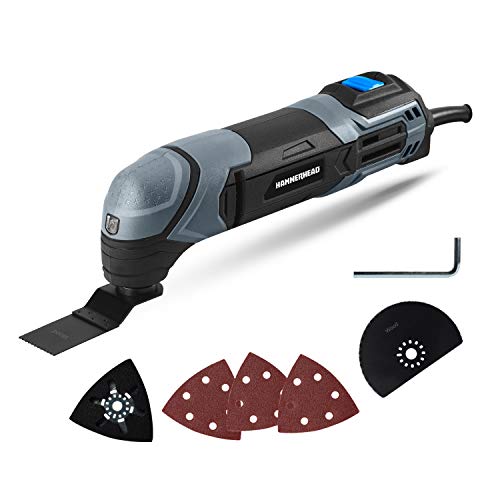
The Hammerhead HAMT022 is a compact oscillating tool built for trimming and flush cuts on moldings and baseboards. The 2.2-Amp motor produces up to 20,000 OPM, suitable for plunge cuts and cutting through nails or caulk lines when removing old baseboards. The kit includes a flush cut blade, semicircle saw blade, and sanding accessories, enabling cutting and finishing in one tool. Its variable speed dial gives control for delicate trim work while the ergonomic soft grip supports one-handed maneuvering for tight corners.
WORKPRO Oscillating Multi-Tool Kit, 3.0 Amp Corded Quick-Lock
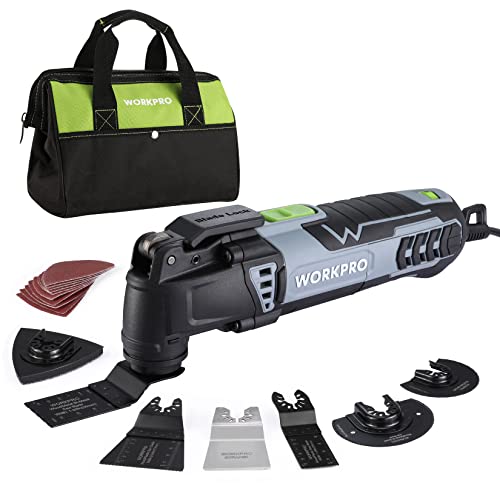
The WORKPRO kit expands capability with a 3.0 Amp motor, seven speed settings, and a tool-less quick-lock accessory system. The 3° oscillation angle optimizes cutting efficiency for trim materials like baseboard and door casings. The kit’s wide accessory set and carrying bag make it versatile for cutting, sanding, and scraping tasks encountered during baseboard replacement, while the multi-speed range helps match blade speed to material hardness.
ENERTWIST Oscillating Tool 4.2 Amp With 31pcs Accessories
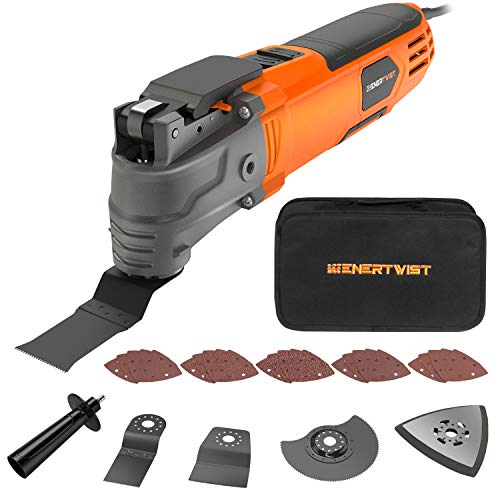
ENERTWIST’s ET-OM-500 delivers a 4.2 Amp pure copper motor and a 5° oscillation angle for faster cutting and smoother operation. The tool’s variable 6-speed range and large accessory count suit contractors working on diverse materials—from hardwood baseboards to nails, tile trim, and drywall. The higher torque and accessory selection make it appropriate for demanding removal or retrofit jobs where cutting speed and endurance matter.
Goldblatt Trim Puller For Baseboard And Molding Removal
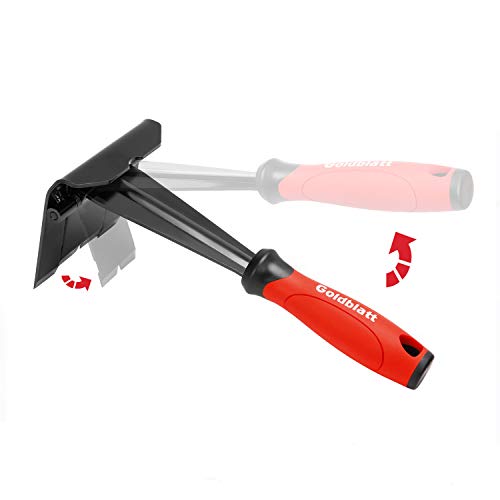
The Goldblatt trim puller is a purpose-built hand tool for removing baseboards, molding, and tile with minimal surface damage. It features a wider, flatter contact area and an integrated wedged center to increase removal efficiency and reduce wall damage. Constructed from carbon steel and 65Mn steel with protective finishes, the tool is designed for repeated striking and prying during remodels. It’s intended for precision removal rather than cutting, making it a useful complement to cutting tools.
Saker 10″ Contour Gauge With Adjustable Lock For Trim Fitting

The Saker contour gauge duplicates irregular profiles such as baseboard heights, door casings, and rounded corners. Its adjustable locking feature secures the captured profile for precise transfer to the workpiece. This non-powered tool is especially useful when scribing baseboards to uneven walls or fitting trim around pipes and molding. It pairs well with saws and oscillating tools for accurate marking before making cuts.
Buying Guide: Choosing The Right Tool For Cutting And Removing Baseboards
Selecting the right tool depends on the task: cutting new baseboards to length and angle, trimming in place, or removing old trim. Consider these factors.
Task Type
- Cutting Straight And Mitered Ends: A mitre box and saw or a powered miter saw provide the cleanest angled cuts for joining corners. (Note: a mitre box product is available separately for fine hand-cut work.)
- Trimming In Place Or Flush Cuts: An oscillating multi-tool is ideal for plunge cuts, trimming door casings, or making flush cuts where the baseboard meets flooring or casings.
- Removing Existing Trim: Use a trim puller or pry bar to lift nailed baseboards with less wall damage before cutting or reinstalling.
Power And Control
- Motor Size: Higher amp motors (3–4+ Amp) deliver more cutting power and sustain speed under load; smaller motors are lighter and fine for occasional use.
- Variable Speed: Adjustable speed helps prevent tear-out on delicate moldings and adapts to different materials (softwood, hardwood, MDF).
- Oscillation Angle: Smaller angles typically yield smoother, controlled cuts and can increase cutting speed efficiency.
Accessories And Compatibility
- Blade Types: Look for flush-cut blades, segmentation blades, and carbide or bi-metal blades for nails and embedded fasteners.
- Accessory Interface: Tool-less quick-change systems speed swap-outs during a job; universal fit interfaces increase cross-brand compatibility.
- Included Accessories: Kits with multiple blades, sanding pads, and a carrying case reduce the need for immediate additional purchases.
Precision And Layout Tools
- Contour Gauges: Use for scribing to uneven surfaces and transferring complex profiles to material before cutting.
- Mitre Box: Inexpensive mitre boxes help cut accurate 45° and 90° angles if you don’t have a powered miter saw.
- Trim Guards And Guides: For painting and finishing, a stainless trim guide preserves clean lines after installation or repair.
Durability And Ergonomics
- Build Material: Heavy-duty steel construction is preferable for pry tools; quality motors and metal accessory clamps extend tool life for powered units.
- Grip And Weight: Consider ergonomics when cutting overhead or in tight spaces; lighter tools reduce fatigue but may offer less sustained power.
Comparison Perspectives
- Contractor vs. DIY: Contractors often favor higher-amp oscillating tools with broad accessory kits and durable pry bars. DIYers may prefer lighter tools with intuitive quick-change systems.
- Single-Tool Versus Specialized Tools: Oscillating tools combine cutting, sanding, and scraping—good for multi-tasking jobs. Dedicated mitre saws or pry bars can outperform combo tools for specific tasks.
- Speed Versus Finish: Faster cutting tools save time on thick or nailed baseboards, but slower variable speeds and finer blades produce cleaner finishes on visible trim.
Use the tool or combination of tools that best matches your workflow: oscillating multi-tools for in-place trimming and detailed work, trim pullers for careful removal, and contour gauges for precise scribing before final cuts.