For outdoor enthusiasts, hikers, campers, and survivalists, a reliable tactical or survival knife is a must-have tool. This guide highlights five top-rated knives, detailing each model’s build, blade design, and practical uses in the wild. Read on to compare features and choose the blade that fits your adventures.
| Product | Brand | Key Feature |
|---|---|---|
| Mossy Oak Survival Hunting Knife | Mossy Oak | 10″ clip-point blade, rugged fixed blade with sheath |
| FLISSA Survival Hunting Knife | FLISSA | Fixed blade with saw-back clip-point and fire starter |
| Gerber Ultimate Survival Knife | Gerber | Half-serrated drop point with integrated tech tools |
| Dragon Creek Kydex Survival Knife | Dragon Creek | Full tang D2 blade with adjustable Kydex sheath |
| ALBATROSS 6-in-1 Survival Knife | ALBATROSS | 6-in-1 with LED, cutter, glass breaker, and fire starter |
Mossy Oak Survival Hunting Knife
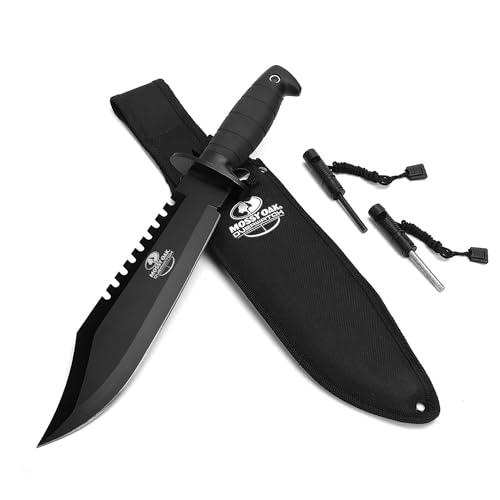
The Mossy Oak model features a 15-inch fixed blade with a 10-inch cutting edge. Its 5/32 inch (3.8 mm) blade thickness contributes to durability while remaining manageable for field use. The stainless steel blade offers hardness and edge retention with rust resistance critical for outdoor exposure. A rubber handle provides a secure grip, and the heavy-duty nylon sheath ensures safe carry with belt compatibility. Ideal for camping, bushcraft, and survival training, this knife pairs rugged construction with practical convenience.
FLISSA Survival Hunting Knife

The FLISSA knife mirrors the Mossy Oak design with a 15-inch overall length and a 10-inch blade, 5/32 inch thick. The clip-point blade, built from stainless steel, emphasizes hardness and edge retention while resisting rust. A saw-back feature adds utility for outdoor tasks, and a black anodized finish reduces glare. The rubber handle supplies a reliable, non-slip grip, and the included heavy-duty sheath with easy-open fastening and belt hang ensures convenient transport in campsites or bushcraft setups.
Gerber Ultimate Survival Knife
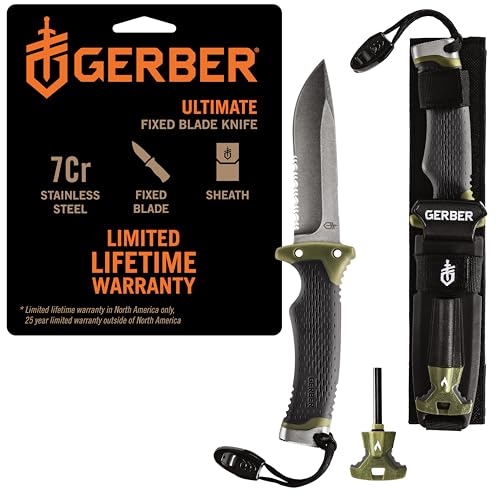
The Gerber Ultimate Survival Knife integrates a half-serrated, stainless steel drop point blade with a textured rubber grip and a hammer pommel. The sheath contains a sharpening stone and a ferrocerium rod fire starter, offering multi-function readiness in emergencies. The blade’s rugged build supports hunting, fishing, bushcraft, and general camping tasks. Its compact design makes it a practical everyday carry option for outdoor professionals and hobbyists alike.
Dragon Creek Tactical Knife Kydex

Dragon Creek’s tactical knife features a D2 steel fixed blade with a hardness of 60 HRC and a 15°V edge for precise cutting. The wavy back offers hand protection while the full-tang G10 handle provides a secure, anti-slip grip. The adjustable Kydex sheath enables versatile carry angles, making it suitable for backpacking and camp work. A hanging hole on the handle tail enhances storage options, and the overall design balances durability with field adaptability.
ALBATROSS 6-in-1 Survival Knife
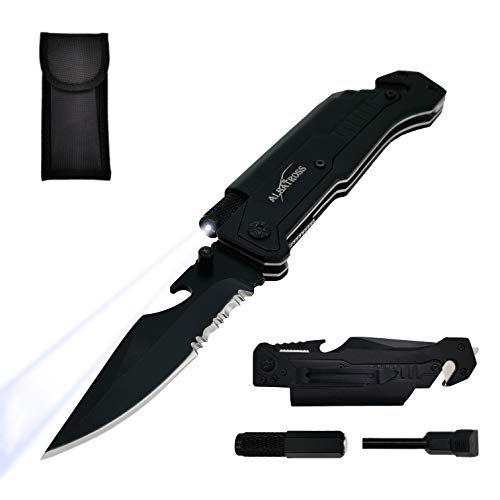
The ALBATROSS model combines durability with versatility through six integrated tools: a high-quality stainless steel blade with LED light, seatbelt cutter, glass breaker, magnesium fire starter, and a bottle opener, all in a compact folding design. Extended to 8.5 inches with a 3.5-inch blade, it folds to a neat 5 inches and weighs about 5.5 ounces. The aluminum handle is corrosion resistant and ergonomically shaped, making this knife a practical EDC option for emergencies and everyday carry in rugged environments.
Buying Guide: Key Purchase Considerations
- Intended use: Choose a blade design suited to your typical activities—camping, bushcraft, or tactical scenarios require different edge shapes and resilient materials.
- Blade material and hardness: Stainless steels offer rust resistance; high-carbon options hold sharper edges longer. Consider a blade hardness around 58-60 HRC for a balance of durability and ease of sharpening.
- Blade length and thickness: Longer blades increase leverage for tasks like batoning, while thicker blades resist bending under heavy use.
- Handle ergonomics: A grippy, non-slip handle reduces fatigue and increases control in wet or cold conditions. Textured rubber, G10, or micarta handles are common choices.
- Sheath and portability: A secure, quick-access sheath with belt or pack attachment is essential for safety and readiness in the field.
- Multi-function features: Integrated tools (fire starter, whistle, glass breaker, seatbelt cutter) add value for emergency preparedness but may increase weight and complexity.
- Maintenance: Stainless blades resist corrosion, but may require more frequent sharpening. Consider rust resistance and ease of sharpening when selecting.
- Legal and safety considerations: Carry laws vary by region; ensure your knife type and length comply with local regulations and always practice safe handling.
These selections provide a spectrum of tactical and survival capabilities, from fixed-blade reliability to multifaceted emergency tools. Evaluating blade design, build quality, and carry options will help align a knife with your outdoor agenda and safety requirements.