Choosing the right table saw ripping blade can dramatically improve feed rate, cut accuracy, and overall project quality. The following selections are optimized for rugged ripping on hardwoods, softwoods, plywood, and laminated surfaces. Each blade here emphasizes kerf control, carbide durability, and design features that reduce tear-out and scorching. Use this guide to compare blades by tooth design, kerf thickness, and overall stability to match your saw’s horsepower and your preferred wood types.
| Product | Brand |
|---|---|
| Freud LU87R010: 10″ Thin Kerf Rip Blade | Freud |
| Diablo D1024X Ripping Blade | Diablo |
| Freud LM72M010: 10″ Heavy-Duty Rip Blade | Freud |
| CMT 256.050.10 ITK Xtreme Industrial Combination Saw Blade | CMT ORANGE TOOLS |
| Freud LM72R010: 10″ Heavy-Duty Rip Blade | Freud |
Across these options, you’ll find a mix of thin-kerf and heavy-kerf designs, different hook angles, and TiCo Hi-Density carbide blends aimed at maximizing life and minimizing burn marks. The following sections break down each blade’s strengths, intended uses, and what kind of wood scenarios they excel in. This overview helps you pick a blade that aligns with your saw’s horsepower and your typical project mix.
Freud LU87R010: 10″ Thin Kerf Rip Blade

The Freud LU87R010 is designed for fast, efficient ripping with a 0.094″ kerf and 24 teeth, delivering smoother cuts with a TiCo Hi-Density carbide blend. Its 5/8″ arbor matches most standard table saws, and the 20° hook angle supports aggressive cutting while managing heat buildup. The combination of a flat grind and a relatively thin kerf enables higher feed rates and reduced waste—beneficial for frequent ripping tasks on hardwoods or plywood panels. This blade emphasizes stability and edge quality, making it a reliable choice for everyday ripping in shop environments.
Key features: 10″ diameter, 0.071″ plate, 0.094″ kerf, 24 teeth, TiCo Hi-Density carbide, 20° hook angle. The design aims to balance speed with finish quality, reducing the need for sanding on glue joints. Suitable for general ripping jobs where a clean edge matters and cutting efficiency is a priority.
Diablo D1024X Ripping Blade

The Diablo D1024X is built for high-performance ripping with TiCo Hi-Density carbide and a 0.098″ kerf. It features a Perma-Shield non-stick coating to resist heat, gumming, and corrosion, extending blade life under heavy use. The 24-tooth, 15° hook-angle design provides clean, efficient passes through wood, plywood, and OSB, making it well-suited for remodels and demolition work that demand durable performance and dependable edge integrity.
Key features include a 5/8″ arbor, 0.071″ plate, and a geometry optimized for aggressive ripping while maintaining cut quality. This blade is a practical choice when you need a robust blade that handles tough materials without excessive smoking or sticking.
Freud LM72M010: 10″ Heavy-Duty Rip Blade

The Freud LM72M010 offers heavy-duty ripping with a .126″ kerf and a large, flat tooth design. Its 24 teeth and 5/8″ arbor pair with TiCo HI-Density carbide to deliver aggressive cutting and a smooth edge suitable for glue-ready surfaces. The blade’s flat tooth design reduces friction and helps maintain a consistent cut across longer rip runs, minimizing the need for secondary finishing. This blade is ideal for frequent ripping of solid wood and thicker panels where longevity and stability are crucial.
Features include a flat grind profile, 20° hook angle, and a sturdy construction that prioritizes stability and flatness during long cuts. The blade is well-matched to demanding workshop tasks where a balance between aggressive ripping and finish quality is required.
CMT ITK Xtreme Industrial Ripping Blade

The CMT ITK Xtreme Industrial blade is designed for both ripping and crosscut versatility with 50 teeth and a 0.071″ plate thickness. The 0.098″ kerf and 15° hook angle—combined with 4/20° alternate teeth—provide balanced performance for solid wood, melamine, laminates, plywood, and chipboard. This blade’s multi-purpose design makes it a solid option for shops that require a blade capable of handling diverse materials with reliable edge quality. It suits radial arm and miter saws as well as table saws, broadening its usable contexts.
Key points: 10″ diameter, 5/8″ bore, 0.126″ kerf, 0.071″ plate, 24 flat + 4/20° alternate teeth grind. The blade emphasizes chip clearance and solid wood performance, making it a versatile pick for mixed tasks.
Freud LM72R010: 10″ Heavy-Duty Rip Blade

The Freud LM72R010 mirrors the heavy-duty rip design with a .126″ kerf and 24 teeth, designed for maximum stability and flatness. The TiCo HI-Density carbide blend provides strong edge retention for long-running cuts in tough woods. The large flat tooth design supports smooth finishes without sanding or jointing, making it a strong option for glue-ready edges. This blade is best suited for ongoing, demanding ripping tasks where longevity and consistent performance are essential.
Highlights include the 5/8″ arbor, 0.071″ plate, and a 20° hook angle. The blade’s robust construction and finish-oriented tooth geometry aim to deliver dependable results across diverse ripping scenarios.
Freud LM75R010: Industrial Thin Kerf Glue Line Ripping Blade
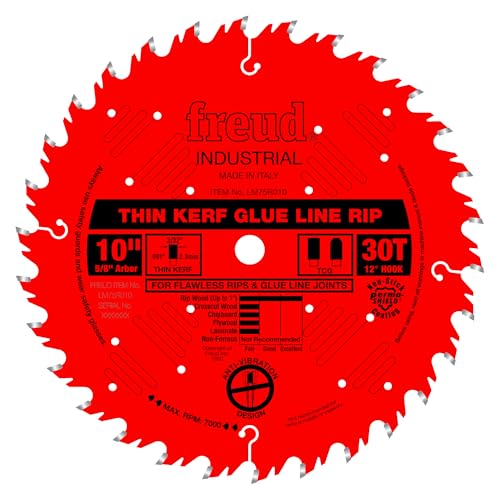
The Freud LM75R010 is built for industrial ripping with a 0.091″ kerf and 0.071″ plate. It uses a 30-tooth TiCo Hi-Density carbide ripping blend for enhanced life and smoother edges when finishing is required. The 12° hook angle and heavy kerf contribute to excellent stability and flatness during long ripping sessions, particularly when accuracy is critical for glue lines and panel edges. This blade targets professional shops where durability and edge quality are a priority.
Key aspects include a 5/8″ arbor and a flat, heavy-duty design intended for long cutting life and reliable performance in demanding environments.
CMT ORANGE TOOLS 285.624.10 Orange Chrome Ripping Blade

This CMT Orange Tools blade features a 10″ diameter, 5/8″ bore, 24 teeth with a flat (0.126″) kerf. It’s optimized for ripping and crosscutting tasks, offering solid chip control and compatibility with various chops and table saw configurations. The blade’s Chrome finish and construction emphasize long-term wear resistance, making it suited for workshop environments where consistent performance is expected across multiple project types.
Important design notes include the flat grind and the 24-tooth arrangement, providing a blend of speed and finish quality for both ripping and crosscuts on solid wood and plywood products.
Freud Industrial Glue Line Ripping Blade
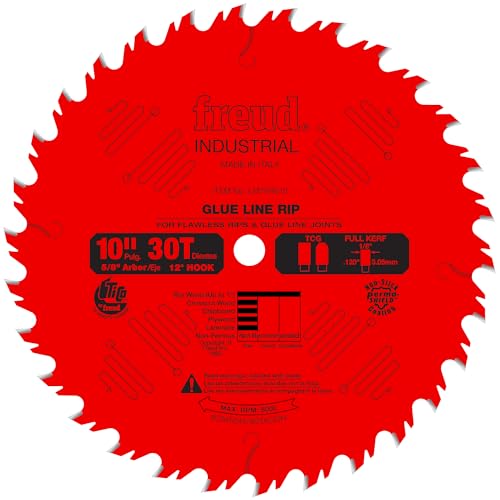
The Freud LM74R010 industrial glue line blade combines a 10″ diameter with a 30-tooth, TCG grind for extended life and smoother glue-line edges. The blade emphasizes a heavy kerf and reinforced plate for stability and flatness in demanding cutting contexts. The premium TiCo carbides maximize cutting performance and edge retention, enabling long obsolescence between sharpenings while producing true cuts suitable for glue lines and finish-ready surfaces. This blade targets workshop professionals performing heavy ripping, edging, and glue-line tasks.
Key traits include a 5/8″ arbor, 0.091″ kerf, and the triple-chip tooth design, which supports consistent, clean results across tough woods and panel materials.
Buying Guide: Key Purchase Considerations
- Material type: Solid hardwoods require aggressive rips with stable edge geometry; plywood and OSB benefit from chips clear and heat-resistant coatings.
- Kerf thickness: Thin kerf blades maximize feed rate and reduce waste but may require more precise setup; standard kerf blades offer durability in heavy-duty tasks.
- Tooth geometry: Flat grind with large flat teeth tends to finish smoother surfaces; alternating tooth patterns can improve chip clearance and reduce tear-out on laminates.
- Coatings and carbide: TiCo Hi-Density carbide blades provide longevity and edge retention; non-stick coatings reduce build-up during cutting.
- Arbor compatibility: Most 10″ blades use a 5/8″ arbor; confirm your saw’s arbor size to ensure proper fit and safe operation.
- Feed rate vs finish: Thinner kerfs enable faster cutting but may require more careful alignment; heavier kerfs provide stability for high-volume ripping and glue-line work.
- Durability vs budget: Industrial or glue-line blades offer longer life in demanding tasks but may be pricier; balance project load with blade longevity expectations.
- Maintenance: Keep blades clean and free of pitch; a light coating of blade oil can aid in extending life and reducing gumming during long sessions.
In practice, select a blade that aligns with the predominant material and workload in your shop. For frequent solid wood ripping with a need for clean glue lines, industrial-grade or heavy-duty ripping blades with TiCo carbide are advantageous. For mixed tasks that include plywood and laminates, a versatile blade with good chip clearance and a robust coating helps maintain edge quality across materials. Always verify saw compatibility and follow manufacturer guidelines for safe mounting and operation.