Cutting aluminum extrusion requires the right combination of saw and blade for clean, burr-free results. Below is a concise comparison of selected tools and blades suited to non-ferrous cutting, followed by focused product overviews and a buying guide.
| Product | Type | Key Feature |
|---|---|---|
| TOMAX 10-Inch 80 Tooth TCG Blade | Table/Miter Saw Blade | Electrophoretic Coating, Carbide Teeth |
| MASTEC 10-Inch 100T TCG Blade | Table/Miter Saw Blade | 100 Carbide Teeth, Smooth Cutting |
| VEVOR 14″ Chop Saw | Cold Cut Chop Saw | Dry-Cut Tech, 0–45° Mitering |
| Evolution S355MCS 14″ Mitering Chop Saw | Mitering Chop Saw | 15A Motor, TCT Blade, Cast Iron Clamps |
| MAZING 12″ 100T TCT Blade | Miter/Table Saw Blade | 1″ Arbor, TCG Triple Chip Grind |
TOMAX 10-Inch 80 Tooth TCG Aluminum And Non-Ferrous Metal Saw Blade

This 10-inch TCG blade is designed for table and miter saws and targets non-ferrous materials like aluminum extrusion and plastics. The blade features construction-grade carbide teeth for extended life and an electrophoretic coating to reduce corrosion. The 80-tooth count balances cut speed and finish quality for thin- to medium-wall extrusions.
- Ideal Use: Miter or table saws for aluminum extrusion, PVC, and similar materials.
- Material Features: Carbide TCG teeth resist wear and chip cleanly.
- Maintenance: Coating helps prevent rust in workshop environments.
MASTEC 10-Inch 100T Carbide Tooth TCG For Aluminum Saw Blade

The MASTEC 10-inch blade offers a 100-tooth configuration with TCG geometry for exceptionally smooth, burr-free cuts. Designed specifically for aluminum, plexiglass, and other non-ferrous metals, the blade emphasizes a clean finish and minimal post-cut filing. The thin kerf and high tooth count favor detailed work and crosscuts on extrusions.
- Ideal Use: Fine finish cuts on aluminum extrusions, trim, and delicate profiles.
- Cut Quality: High tooth density reduces chatter and produces cleaner edges.
- Compatibility: Standard 5/8″ arbor for most consumer miter/table saws.
VEVOR Chop Saw 14″ Cut Off Saw With Dry-Cut Technology

The VEVOR is a cold cut style chop saw engineered for metalwork including aluminum extrusion. Dry-cut technology and ceramic-alloy blade joints minimize sparks and heat, producing a smoother, flatter result. The saw offers 0–45° mitering and a thicker vise for secure clamping, which helps maintain alignment on longer or irregular extrusions.
- Ideal Use: Stationary shop use where controlled, spark-free cutting is preferred.
- Advantages: Reduced heat and sparks preserve material finish and reduce oxidation.
- Adjustability: Tool-less angle adjustments simplify miter cuts on profiles.
Evolution S355MCS 14″ Mitering Chop Saw For Metal Cutting
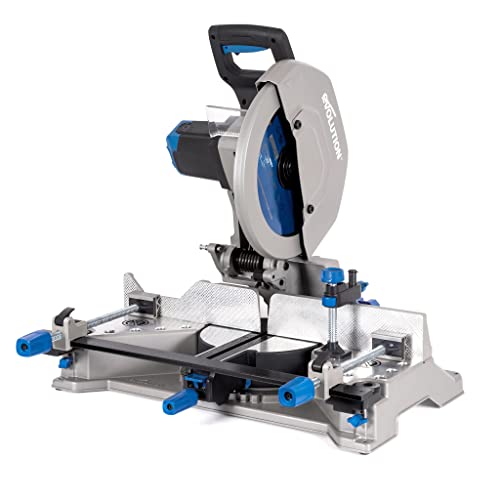
The Evolution S355MCS is a heavy-duty mitering chop saw designed for metalworkers. Equipped with a 15A motor and TCT blade, it supports accurate, repeatable cuts and robust clamping through dual-sliding cast iron clamps and a top clamp. This platform is suitable for larger aluminum extrusions and frequent cutting tasks in a shop setting.
- Ideal Use: Fabrication shops and repetitive cutting of larger extrusions or thick-walled profiles.
- Clamping: Cast iron clamps provide stability for long or irregular pieces.
- Motor/Power: Consistent torque for a variety of metal cutting operations.
MAZING 12 Inch 100T TCT Blade For Aluminum And Non-Ferrous Metals
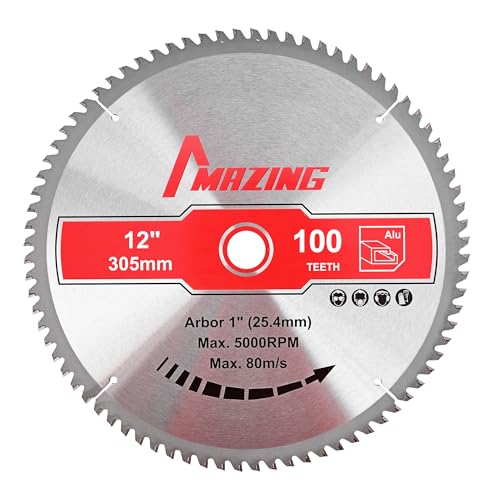
This 12-inch TCT blade emphasizes 100 teeth and TCG geometry for burr-free, high-precision cuts on aluminum and other non-ferrous metals. The blade is specified for a 1″ arbor and higher RPM limits, with tungsten carbide teeth for wear resistance. It’s appropriate where larger diameter blades or specific arbor sizes are required.
- Ideal Use: Larger miter saw tables or specialized saws requiring a 1″ arbor.
- Cut Performance: Triple chip grind yields cleaner edges and minimal secondary finishing.
- Durability: Tungsten carbide teeth resist heat and abrasion for repetitive cutting.
Buying Guide: How To Choose The Best Saw For Aluminum Extrusion
Choosing the right saw for aluminum extrusion depends on material profile, required finish, volume, and the tools you already own.
1. Blade Type And Tooth Geometry
Triple Chip Grind (TCG) blades are preferred for aluminum extrusion because they alternate a flat-top and a trapezoidal tooth to shave and then score, producing clean, burr-free edges. Higher tooth counts (80–100+) deliver finer finishes but slower feed rates; lower counts cut faster but may require deburring.
2. Saw Type: Blade Mounted Vs Chop/Miter Saw
Table/Miter Saws with dedicated non-ferrous blades are good for accurate crosscuts and fine finish work on shorter pieces. Cold-cut chop saws
3. Motor Speed, RPM Limits, And Arbor Compatibility
Aluminum cutting typically benefits from higher RPM
4. Clamping And Workpiece Support
Extrusions can be long and hollow; stable clamping prevents vibration and deflection. Look for saws with robust vises, top clamps, or cast iron fixtures to ensure straight, consistent cuts.
5. Cooling, Sparks, And Finish
Cold-cut technology
6. Kerf, Chip Evacuation, And Cleanup
Thin kerf blades reduce material waste and require less power, but ensure your saw supports the blade. Effective chip evacuation reduces clogging on hollow profiles and speeds finishing.
7. Volume, Duty Cycle, And Durability
For occasional, light-duty cuts, a 10″ table/miter blade is often sufficient. For frequent, heavier-duty cutting, consider a dedicated metal chop saw with TCT blades or a professional mitering chop saw with durable clamping systems.
8. Safety And PPE
Always use appropriate eye protection, hearing protection, and gloves rated for metalwork. Secure long extrusions with support stands to prevent binding or kickback.
Comparison Perspectives
- Finish-Focused: Choose high-tooth TCG blades (80–100T) on a stable miter/table saw for burr-free edges.
- Volume & Durability: Select cold-cut chop saws or heavy-duty mitering chop saws with cast-iron clamping for repetitive long cuts.
- Compatibility: Match arbor and RPM ratings; consider blade coatings if your workspace is humid or corrosive.