Solders with rosin core flux are essential for reliable electrical connections, from hobby projects to professional repairs. The following selection highlights popular, readily available rosin core solder wires and spools that balance easy flow, strong joints, and pocket-friendly sizes. Each option covers common gauges, tin-lead formulations, and practical weights to suit different tasks. The table below provides quick comparisons to help you pick the right one for your project.
| Product | Brand | Alloy | Diameter | Weight |
|---|---|---|---|---|
| MAIYUM 63-37 Tin Lead Rosin Core Solder Wire (0.8mm, 50g) | MAIYUM | 63/37 | 0.8 mm | 50 g |
| MAIYUM 63-37 Tin Lead Rosin Core Solder (0.6mm, 100g) | MAIYUM | 63/37 | 0.6 mm | 100 g |
| HGMZZQ 60/40 Tin Lead Rosin Core Solder (0.8mm, 50g) | HGMZZQ | 60/40 | 0.8 mm | 50 g |
| MAIYUM 63-37 Tin Lead Rosin Core Solder (0.8mm, 100g) | MAIYUM | 63/37 | 0.8 mm | 100 g |
| Kester 24-6337-0010 44 Rosin Core Solder 63/37, 1 lb Spool | Kester | 63/37 | Not specified | 1 lb |
Note: All products listed are rosin-core solders designed for electronics work, featuring leaded alloys and flux in the core to aid wetting, with varying diameters and packaging that affect handling and convenience. This mix provides options for beginners and experienced technicians alike, covering small pocket-friendly wires to larger spools for prolonged projects.
MAIYUM 63-37 Rosin Core Solder Wire, 0.8mm, 50g
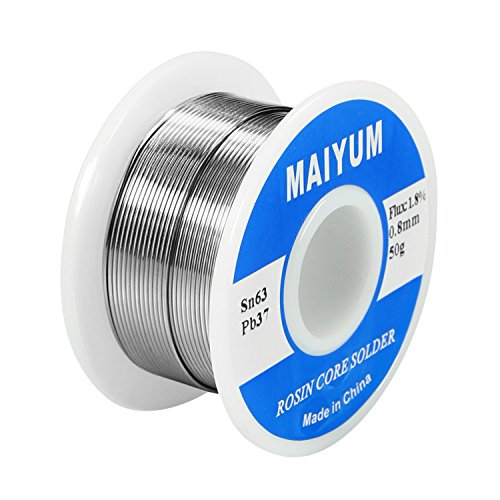
The MAIYUM 63-37 rosin core solder wire is a common electronics alloy with a Tin-Lead composition of 63/37, offering robust mechanical strength and reliable electrical conductivity. The wire diameter is 0.8 mm (0.0315 inch), a versatile size for general circuitry, small connectors, and hobby repairs. A rosin core flux content around 1.8% promotes quick wetting and strong joints with minimal post-solder cleaning. Its small 50 g package makes it easy to store in a tool tote or pocket for field work. This option is well-suited for through-hole components and standard PCB traces where clean, consistent joints are needed. The solder’s balance of flow and set-point helps reduce cold joints in typical home and workshop environments.
MAIYUM 63-37 Rosin Core Solder, 0.6mm, 100g

This MAIYUM variant uses the same 63/37 tin-lead composition but in a thinner 0.6 mm diameter, which is ideal for tighter spaces and denser PCB work. The 100 g weight provides more usable wire for longer tasks or multiple projects, reducing the need for frequent re-purchasing. Flux content remains at a practical level for reliable wetting, easing the soldering of fine-pinish electronics, connectors, and shielded circuits. The pin-point flux flow helps reduce bridging on delicate components, making it a solid option for hobbyists who tackle compact assemblies and fine-pitch components.
HGMZZQ 60/40 Rosin Core Solder, 0.8mm, 50g

The HGMZZQ option uses a classic 60/40 tin-lead alloy, favored for its predictable melting behavior and smooth flow. With a diameter of 0.8 mm (0.031 inch) and a flux content of 2.2%, it provides reliable wetting and stable joints across a range of temperatures. Its 50 g pack is portable for on-site work or small repairs. The slightly higher flux content aids in bridging gaps and filling minor surface imperfections, making it useful for general electronics assembly, hobby kits, and repairs to modestly sized projects where consistent, glossy joints are desired.
MAIYUM 63-37 Rosin Core Solder, 0.8mm, 100g

This large 100 g MAIYUM spool offers the same 63/37 tin-lead ratio with rosin core flux, optimized for longer soldering sessions or larger boards. The 0.8 mm diameter balances ease of use and control, making it suitable for through-hole electronics, power devices, and connectors where moderate wire size is advantageous. The rosin core flux helps with smoother wetting and reduces the chance of cold joints, especially when working with slightly tarnished terminals or oxidized surfaces. It is a practical option for technicians who run multiple assemblies in a single session.
Kester 24-6337-0010 Rosin Core Solder, 63/37, 1 lb

Kester’s 24-6337-0010 offers a long-standing industry standard with a 63/37 Tin/Lead composition and rosin core flux. Packaged in a 1 lb spool, this option is ideal for users with larger project loads, workshops, or production work where consistent soldering behavior over time matters. The rosin core formulation supports good wetting across a variety of metallizations, including electronics-grade copper traces and plated surfaces. Its archival reputation makes it a go-to choice for technicians who require dependable performance from a familiar supplier, with enough material to complete frequent repairs or assembly jobs.
Buying Guide: Key Purchase Considerations
When choosing rosin core solder, several factors influence performance and results. Understanding these helps match a product to your applications and budget across hobby projects, electronics repair, and small-scale manufacturing.
- Alloy composition: Tin-lead ratios like 63/37 or 60/40 affect melting behavior and joint reliability. 63/37 is a eutectic mix that melts smoothly with minimal icing, while 60/40 provides a slightly broader melting range and steady flow.
- Diameter: Smaller diameters (0.6–0.8 mm) are better for dense, fine-pitch components and tight spaces; larger diameters (1.0 mm or more) are faster for larger joints but harder to control on tiny boards.
- Flux content and rosin quality: Flux helps wetting and helps prevent oxidation. Rosin core fluxes vary in activation level; higher flux content can improve flow but may require cleaning for some sensitive boards.
- Packaging and quantity: Small spools or tubes suit quick repairs and portability; larger spools are cost-effective for ongoing projects and production work.
- Lead-free vs. leaded: This list emphasizes leaded rosin-core solders (63/37, 60/40). Leaded solders typically offer easier wetting and lower melting temperatures, but leaded products may be subject to regulatory and safety considerations in certain environments.
- Application fit: For PCB work, ensure the diameter aligns with pad and trace widths. For wire repair or connector work, a slightly thicker wire can provide robust joints.
- Storage and shelf life: Keep rosin-core solder in a dry environment to prevent flux from absorbing moisture, which can affect performance and joint quality over time.
Usage tips for best results
- Pre-tin the tip of your iron and the workpiece pad for consistent heat transfer.
- Clean surfaces before soldering to minimize oxidation and improve wetting.
- Use a suitable heat sink for sensitive components to prevent heat damage during soldering.
- Inspect joints visually for shiny, smooth fillets without gaps or excess solder.
- Store solder away from moisture and flames, and use rosin-core wires within their rated temperature ranges for best results.