When choosing a random orbital sander, you want reliable power, smooth operation, and dust management that keeps your workspace clean. This guide highlights top picks that balance performance and value for American DIYers and professionals alike. Each option below offers variable speed, vibration reduction, and practical features to tackle woodworking, furniture refinishing, and detail work with confidence.
| Product | Brand | Key Feature |
|---|---|---|
| SKIL 5” Random Orbital Sander with Cyclonic Dust Box | Skil | Cyclonic dust container with easy emptying |
| BOSCH ROS20VSC Palm Sander | Bosch | Pad dampening for swirl-free finish |
| DEWALT 20V MAX Orbital Sander (Tool Only) | Dewalt | Brushless motor and variable speed |
| DEWALT DWE6423K 5-Inch Sander Kit | Dewalt | Low-profile, reduced vibration design |
| DEWALT DWE6423 5-Inch Random Orbit Sander | Dewalt | Improved dust-sealed switch and vibration control |
Skil 5” Random Orbital Sander

The SKIL SR211601 sander delivers a robust 2.8-amp motor with up to 13,000 orbits per minute, making it suitable for a wide range of sanding tasks. The standout feature is its cyclonic dust container, which uses cyclone force to collect debris in a transparent, easy-to-empty chamber. A variable speed control helps tailor performance to materials like softwood, hardwood, or paint removal, providing a balanced mix of speed and control for quality finishes.
Bosch ROS20VSC 5-Inch Palm Sander
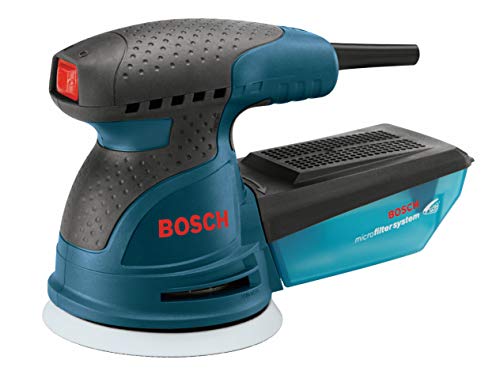
Bosch’s ROS20VSC stands out for its pad dampening system that mitigates swirl marks on flat and contoured surfaces. The Hook-and-Loop disc attachment makes changing pads quick and secure, while a 2.5-amp motor provides reliable speed control for precise work. With a no-load OPM range of 7,500–12,000, it accommodates various materials and finishes, ensuring a smoother final surface and easier dust management through its integrated collection approach.
DEWALT 20V MAX Orbital Sander

This tool-only DEWALT model runs on a brushless motor to maximize runtime and efficiency. It offers variable speed control from 8,000 to 12,000 OPM to match the task, and a low-profile design to allow close work to the surface. The brushless motor helps extend overall tool life while maintaining consistent performance across tasks like finishing, sanding in tight corners, and shaping edges with steady control.
DEWALT 5-Inch Sander Kit (DWE6423K)

The DWE6423K kit from DEWALT uses a 3.0-amp motor with 8,000–12,000 OPM for solid finishing power. A shorter body height helps users reach closer to workpieces, while a separate counterweight design reduces vibration to improve comfort during extended use. This combination supports smooth results on a variety of wood, veneers, and painted surfaces with consistent speed control.
DEWALT 5-Inch Random Orbit Sander

DEWALT’s DWE6423 delivers a 3-amp motor and a pad speed of 8,000–12,000 OPM for versatile finishing tasks. Its design emphasizes reduced vibration through a counterweight system, which translates to improved comfort during longer sanding sessions. The dust management system helps keep the work area cleaner, contributing to better visibility and safer operation on panels and furniture components.
MAXXT Electric Random Orbital Sander

The MAXXT sander features a brushless EC motor for longer life and smoother operation, with two backing pads (5- and 6-inch) to handle a variety of project sizes. It offers two-speed control modes: a speed throttle for maximum speed per setting and a fixed six-speed rpm option for precise control. The system aims to minimize vibration, reducing hand fatigue during extended sanding sessions and improving surface quality.
DEWALT DWE6421 5-Inch Orbital Sander
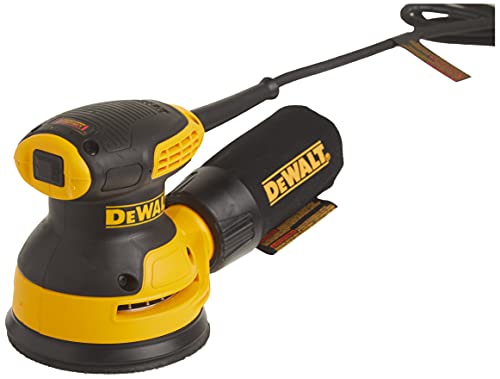
The DWE6421 offers a 3.0-amp motor with 12,000 OPM, a compact height that assists in close work, and a counterweight system that reduces vibration for comfort. A well-sealed design helps protect internal components from dust ingress, supporting longevity in busy shop environments where frequent use is common.
Buying Guide: Key Purchase Considerations For Random Orbital Sanders
- Power and speed range: Look for models with at least 2.5–3.0-amp motors and broad no-load OPM ranges (roughly 8,000–12,000 OPM) to handle finish work and material removal across wood types.
- Dust collection: A reliable dust collection system (cyclonic or bag-based) helps keep the workshop clean and reduces particle resuspension. Consider vac-ready ports for dust extraction systems.
- Vibration control: Counterweights, pad dampening, and well-balanced housings combine to minimize fatigue and produce smoother finishes, especially on large panels.
- Disc attachment: Hook-and-Loop (Velcro) discs enable quick pad changes and secure adherence during operation. Some units include multiple backing pads for different task sizes.
- Ergonomics and access: A low-profile body and compact height improve control in tight spaces, while comfortable grips and weight distribution support longer sessions without strain.
- Battery vs. corded: Corded sanders provide continuous power; cordless tools (e.g., 20V MAX) offer portability for projects without nearby outlets. Consider tool compatibility with existing batteries and chargers.
- Durability and brand support: Reputable brands often provide longer warranties and readily available replacement pads or dust bags, contributing to lower lifecycle costs.
- Access needs: For furniture refinishing or cabinetry, consider models that balance aggressive material removal with fine, swirl-free finishes on both flat and contoured surfaces.
Across the options above, buyers gain a mix of powerful motors, dust management features, and ergonomics suitable for a range of woodworking tasks. When selecting, align the tool’s weight, speed range, and dust collection with your typical projects—whether resurfacing tabletops, refinishing cabinets, or smoothing bare timber for a final coat.