Choosing the right sanding grit and blocks for drywall can speed up finishing and reduce dust. The following selections cover a range of grits from coarse to ultra-fine, plus durable, reusable blocks designed for drywall joints, plaster, and joint compounds. This guide highlights practical options for both DIY projects and professional refinishing, emphasizing versatility, durability, and dust control.
The table below summarizes five top drywall sanding products to help you compare grit options, material quality, and typical applications at a glance.
| Product | Grit Range | Best For | Brand |
|---|---|---|---|
| Romeda 8-Pack Sanding Sponge | 60/80/120/220 | Coarse to finishing on drywall and wood | Romeda |
| S&F STEAD & FAST Sanding Sponge Set | 60/80/120/220 | General drywall prep and finishing | S&F STEAD & FAST |
| 3M Drywall Sanding Screens Pro-Pak 220 | 220 | Final surface sanding before paint | 3M |
| 3M Pro-Pak Drywall Sanding Paper | Various grits; 120 highlighted | Moderate sanding and smoothing | 3M |
| Sunxeke Sanding Sponge 120 Grit (6 Pack) | 120 | Drywall repair, flat and irregular surfaces | Sunxeke |
Romeda 8-Pack Sanding Sponge

Romeda offers an eight-block set that covers four grits: 60, 80, 120, and 220. Each grit appears in two blocks, with distinct color coding for quick identification. The sponges are described as high-density, tear-resistant, and washable, designed to hold up under repeated use. Their flexible nature helps them conform to both flat and contoured drywall surfaces, making them suitable for initial material removal, smoothing joint compounds, and final finishing across furniture and metal applications as well.
Key features include an assortment of grits for progressive sanding, durable construction that resists shedding, and versatility across wood, primer, filler, and drywall projects. The blocks are especially useful for achieving flat seams on drywall joints and smoothing patch areas before painting. Users should expect steady material removal with controlled dust when used with appropriate ventilation and hand pressure.
S&F STEAD & FAST Sanding Sponge Set
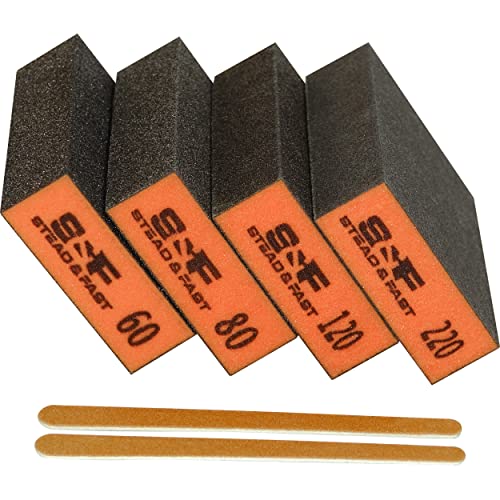
This four-pack offers coarse to fine grits (60, 80, 120, 220) on a premium European high-density foam base. The aluminum oxide abrasive is designed for a broad range of uses, including woodworking, metal finishing, drywall repair, and primer smoothing. The blocks are resilient and reuse-friendly, delivering consistent performance for sanding joints, patches, and surface prep ahead of painting. They are well-suited for both hand sanding and smaller automated sanding tools in tight spaces.
The design emphasizes durability and edge retention, with abrasive particles bonded to resist shedding. For drywall, these blocks are effective in feathering joint compound, smoothing patchwork, and preparing surfaces without gouging. They also translate to other projects like metal polishing or light finishing work on wood, making them a versatile addition to a sanding toolkit.
3M Drywall Sanding Screens Pro-Pak 220

3M Pro-Pak 220-grit sanding screens provide a pre-cut option for fast attachment to hand or pole sanders. They’re designed for final surface sanding on drywall joints, patching compounds, and plaster, with a focus on efficient cutting and a smooth finish. The 4-3/16 by 11-1/4 inch format fits standard sander heads, offering consistency and ease of use for large patches or seams. The screens are intended to deliver a refined finish before painting, reducing the need for additional smoothing work.
These screens balance durability and performance, with a focus on finishing tasks that require a high-quality surface with minimal texture. They pair well with prior rough sanding steps using coarser grits, helping to achieve a uniform flatness across walls. For users, it’s important to manage dust and use proper ventilation to maintain air quality during drywall finishing.
3M Drywall Sanding Sponge (9095DC-NA)

3M’s dual-grit drywall sanding sponge provides two-sided versatility with medium grit for material removal and fine grit for smoothing. The flexible sponge accommodates both flat and contour surfaces, making it suitable for corners and curved patches as well as flat walls. It’s particularly useful for moderate sanding of joint compounds and feathering seams prior to final finish. The dual-grit approach reduces the need to switch tools mid-project.
The sponge’s durability and flexible nature help prevent gouging and ensure an even finish. When used with appropriate technique, users can achieve a consistent texture across repaired areas, reducing the time required for paint prep. This option is commonly selected for smaller repair jobs or touch-ups where precise control matters.
SACKORANGE 4 Pack Hand Sanding Sponge Set

This set includes four sponge blocks with grits of 120, 220, 320, and 400, covering a wide range from rough to ultra-fine sanding. The high-density sponge provides durability and flexibility for drywall, wood, metal, and primer smoothing. The color-coded design aids quick grit identification, helping streamline the workflow on larger projects. The blocks are washable and reusable, supporting repeated use across multiple tasks.
Designed for comfort and control, these blocks reduce hand fatigue during long sanding sessions. They perform well on both flat surfaces and irregular contours, offering reliable performance for drywall transitions, patch feathering, and finishing passes. They’re also suitable for light surface prep on metal or wood before finishing coats, adding to their utility in a multi-material workshop.
Sunxeke 6 Pack Sanding Sponge
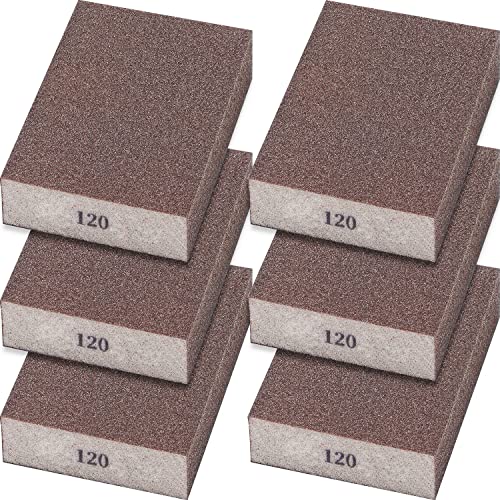
The Sunxeke six-pack features a 120-grit drywall sanding option designed for drywall repair and finishing. The brown fused alumina abrasive and high-density foam provide durability and a balance between aggressive material removal and a smooth finish. The sponge is washable and reusable, suitable for both dry and wet sanding to minimize dust and improve finish quality. Its portability and hand-friendly size make it well-suited for on-site drywall touch-ups and DIY tasks.
Sunxeke emphasizes versatility, with sanding blocks appropriate for flat surfaces as well as irregular shapes. Wet sanding helps reduce dust during long sessions, and the blocks can also be used for wood furniture, metal dust removal, and general polishing tasks. This makes them a practical addition to a kitchen, garage, or workshop where multiple surfaces require smoothing and prep work before painting.
Buying Guide: Key Purchase Considerations And Comparisons
- Grit range and progression: Start with coarser grits (60–120) for material removal and patch leveling, then move to finer grits (220–400) for smoothing and finishing prior to painting. Sets that include multiple grits reduce the need to switch products mid-project.
- Block material and durability: High-density foam or sponge blocks with a strong abrasive bond resist tearing and shedding, delivering longer life and more consistent results on drywall, wood, and metal surfaces.
- Flexibility and shape compatibility: Look for sanding blocks that conform to flat walls and curved corners. Flexible blocks help feather edges and prevent gouging on joints and patches.
- Wet vs dry use: Some blocks support both wet and dry sanding, which can reduce dust and extend the life of the abrasive. Wet sanding is especially useful for final smoothing and dust control.
- Dust management: Consider products designed to minimize dust or compatible with dust extraction systems. Drywall work creates fine particles, so ventilation and PPE are important.
- Reusability and maintenance: Washable or reusable blocks save money over time. Check for color-coded grits to streamline workflow and reduce cross-contamination between grits.
- Compatibility with tools: Ensure the blocks fit your hand sander, pole sander, or manually operated approach. Pre-cut screens and sheets should match your tool dimensions for easy attachment.
- Cost vs value: While premium sets may offer longer life and consistent finishes, reputable brands with multi-grit options provide better overall value for drywall projects versus single-grit blocks.