Metalworking demands gloves that balance cut resistance, abrasion protection, dexterity and grip. Below is a quick comparison of top choices suited for metal fabrication, sheet metal handling, welding support, and general shop tasks.
| Product | Key Feature | Best For |
|---|---|---|
| Schwer ProGuard PR3326 | ANSI A9 Highest Cut Resistance | Extreme cutting hazards |
| Schwer CR3027 (A6) | ANSI A6 cut, sandy nitrile grip | Medium to heavy metalwork |
| Schwer AR3900 (A4 Air-Skin) | Ultra-thin A4 protection, high dexterity | Detail metal assembly, wire handling |
| Schwer CR3088 (A5 PU Pack) | ANSI A4/A5, PU-coated palms | General fabrication & handling |
| WZQH Cowhide Leather Gloves | Full leather, cotton lined, heat & abrasion | Welding support, heavy handling |
Schwer ProGuard Highest Level Cut Resistant Work Gloves PR3326

Features include ANSI A9 cut resistance, reinforced thumb, sandy nitrile coating, breathable 13-gauge knit, and touchscreen capability. These gloves prioritize maximum cut protection for the highest-risk metal handling tasks. The sandy nitrile palm improves grip on oily or greasy parts, and the reinforced thumb crotch increases longevity where wear is concentrated. Lightweight knit aims to reduce fatigue during long shifts while maintaining a 360° protective barrier around the hand.
Schwer 2 Pairs ANSI A6 Cut Resistant Gloves CR3027

These gloves meet ANSI A6 standards for medium-to-heavy cut hazards. They feature a sandy nitrile coating for abrasion resistance and secure grip in wet or greasy environments, plus touchscreen compatibility. The design targets tasks like automotive assembly, slitter blade handling, and heavier sheet metal operations where both cut protection and reliable grip are required. The pair pack adds value for regular replacement.
Schwer A4 AIR-SKIN Cut Resistant Work Gloves AR3900

The AR3900 offers ANSI A4 cut protection in an ultra-thin, 18-gauge seamless knit for close-to-barehand dexterity. It uses advanced composite yarns to deliver puncture and abrasion resistance while keeping fine motor control. This makes it suitable for precision metal tasks—assembly, wiring, deburring, and inspection—where tactile feedback is critical without sacrificing a solid level of cut defense.
Schwer 12 Pairs ANSI A5 Cut Resistant Work Gloves CR3088
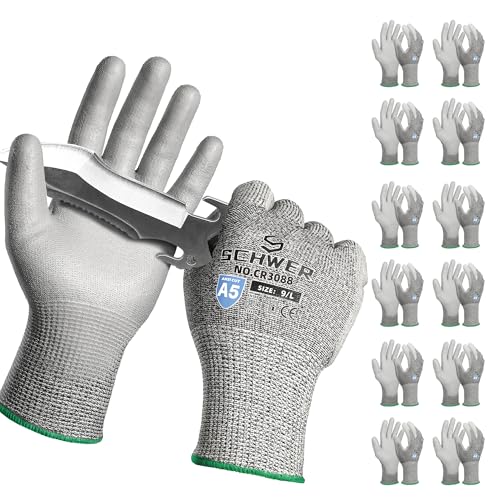
This bulk pack includes multiple pairs rated around ANSI A4/A5 (upgrade process may vary). PU-coated palms provide anti-slip performance and wear resistance for tasks like handling sheet metal, fasteners, and production line work. The gloves balance protection and economy for teams or frequent glove replacement, with a palm coating that helps maintain grip on small metal parts.
WZQH Leather Work Gloves For Welding And Heavy Handling

Made from 100% split cowhide leather with a cotton lining, these gloves emphasize abrasion, puncture and heat resistance. Reinforced palms and adjustable wrists help prevent debris entry and extend service life. While not a cut-glove yarn composite, leather excels at welding support, handling hot metal and heavy-duty moving tasks where thermal and abrasion protection are priorities.
Buying Guide: Choosing Gloves For Metal Work
Metal work covers a range of hazards—sharp edges, hot surfaces, pinch points and oily conditions. Match glove selection to the primary hazard while considering these factors.
- Cut Resistance Level — ANSI cut levels A1–A9 indicate increasing resistance. For general sheet metal handling choose A4–A6; for extreme slicing hazards choose A7–A9.
- Abrasion & Grip — Nitrile, sandy nitrile or PU palm coatings improve grip on oily parts and extend glove life. Choose textured coatings for slippery tasks.
- Dexterity & Gauge — Higher gauge (thinner) knits like 18-gauge provide more dexterity for fasteners, wiring and inspection. Thicker or leather gloves reduce dexterity but increase protection.
- Heat And Welding Compatibility — Leather options provide thermal resistance and spark protection. For welding use gloves specifically rated for heat and sparks; knitted cut gloves are not a substitute for welding gloves.
- Puncture Resistance — For handling jagged scrap or heavy fasteners consider gloves with higher puncture resistance or reinforced palms.
- Fit And Fatigue — A snug 3D fit reduces snagging and improves control; breathable knits minimize sweat and fatigue in long shifts.
- Touchscreen & Tools — If you need to use devices without removing gloves, check for touchscreen compatibility on the fingertips.
- Durability & Reinforcements — Reinforced thumb crotches and double-stitched palms add service life in high-wear areas.
- Compliance & Standards — Confirm ANSI cut ratings and any additional standards relevant to your workplace or industry.
- Quantity & Budget — Bulk packs can reduce per-pair cost for disposable-style work, while premium single pairs suit specialized tasks.
Comparison Perspectives
Protection vs. Dexterity — Choose highest ANSI levels for maximum cut protection but expect thicker material and reduced feel. For fine work, pick A4–A5 thin knits.
Coating Types — Sandy nitrile and micro-foam nitrile are better for oily grips; PU coatings balance abrasion resistance with tactile sensitivity.
Leather vs. Synthetic — Leather excels at heat and abrasion; composite yarns excel at high cut resistance and dexterity. Use leather for welding/heat and cut-resistant knits for sharp-edge handling.
Single-Pair vs. Pack — Single premium pairs are ideal for specialized tasks; multi-pair packs are cost-effective for crews or replacement cycles.