Whether you’re resurfacing a spoilboard, flattening a large slab, or preparing live-edge projects, the right flattening router bit makes every pass smoother and more accurate. This guide highlights five top options that balance insert technology, wing counts, and shank diameter to deliver consistent results on flat surfaces. Each product features replaceable carbide inserts, solid steel bodies, and anti-kickback designs for safer, longer-lasting performance. Use the buying guide below to compare robustness, ease of maintenance, and suitability for your setup.
| Product | Brand | Key Benefit | Link |
|---|---|---|---|
| SICWOOD Slab Flattening Router Bit | SICWOOD | 6-wing carbide inserts for smooth, even cuts | Amazon listing included in product section |
| BINSTAK CNC Spoilboard 1/4″ Shank | BINSTAK | 2+2 inserts with solid carbide blades | Amazon listing included in product section |
| BINSTAK 1/2″ Shank, 2″ Diameter | BINSTAK | 6 wings for efficient stock removal | Amazon listing included in product section |
| POWERTEC Slab Flattening Bit | POWERTEC | Tungsten carbide tips, anti-kickback design | Amazon listing included in product section |
| SpeTool 2+2 Flute Slab Flattening Bit | SpeTool | ATS coating extends life; replaceable edges | Amazon listing included in product section |
Product Details At A Glance
The products listed above prioritize replaceable carbide inserts, multi-wing designs, and robust steel bodies to deliver reliable spoilboard surfacing and slab flattening. When selecting a bit, consider shank diameter compatible with your router collet, cutting diameter for the surface area you’ll flatten, and the number of wings or inserts for surface finish and cutting efficiency. Safety features, such as anti-kickback designs, help manage chatter on dense woods. The following sections provide concise, objective overviews of each option with their featured attributes.
SICWOOD Slab Flattening Router Bit
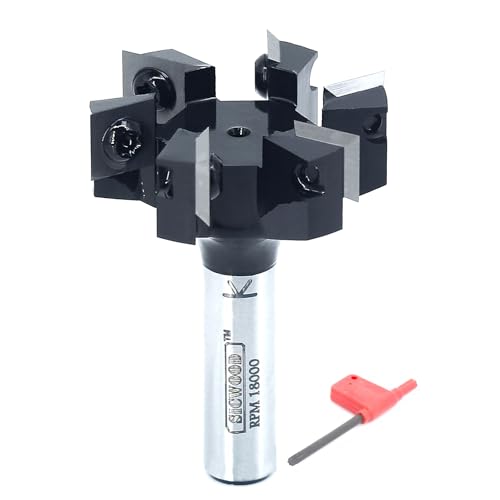
The SICWOOD slab flattening router bit features a 1/2 inch shank and 2 inch cutting diameter, with 6-wing carbide inserts designed for smooth surface finishing. It uses replaceable 4-sided carbide inserts with a 1.5 mm thickness, enabling longer life and economic maintenance. The solid carbide blade provides high hardness and sharpness for flat stock, ideal for spoilboard resurfacing and slab leveling in CNC or manual setups. Maximum RPM is listed at 18,000, supporting efficient removal for larger panels.
BINSTAK CNC Spoilboard 1/4″ Shank

This 1/4″ shank, 1-3/8″ cutting diameter bit uses 12×12 mm carbide inserts in a 2+2 design for balanced running and a smoother surface. It includes replaceable insert blades and emphasizes an industrial-grade steel body with anti-kickback features. The design supports cost-effective maintenance since individual carbide inserts can be replaced rather than the entire bit. Suitable for planing spoilboards, flattening slabs, and minor trimming in woodworking projects.
BINSTAK 1/2″ Shank, 2″ Diameter

With a 1/2″ shank and 2″ cutting diameter, this 6-wing carbide insert slab flattening router bit concentrates cutting power on large surfaces. The 6-wing design improves balance, efficiency, and edge quality during planing, resurface, or top-surface cleaning of spoilboards. TiN-coated carbide inserts offer extended life, helping resist resin buildup and heat during prolonged use. The tool is built to withstand heavy-duty industrial woodworking tasks while maintaining clean finishes on flat surfaces.
POWERTEC Slab Flattening Router Bit

This POWERTEC bit uses a solid hardened steel body with tungsten carbide-tipped edges and anti-kickback design for dependable, precise cuts. It offers a 2″ cutting diameter and 1/4″ shank with a 1/2″ cutting depth, making it suitable for flattening large surfaces, trimming, and creating slots. The blend of durability and performance makes it a versatile choice for CNC machines and handheld routers alike, particularly when flattening live-edge or oversized slabs.
SpeTool 2+2 Flute Slab Flattening Bit

The SpeTool option features 1-1/4″ cutting diameter with a 1/4″ shank and 2+2 carbide inserts. The ATS coating provides extended life and reduced wear on softwoods, hardwoods, and MDF. The 4-edge carbide inserts can be rotated or replaced, maximizing tool longevity without replacing the entire bit. This bit is designed for heavy-duty slab flattening and spoilboard surfacing while maintaining a balanced, smooth cut.
Buying Guide: Key Purchase Considerations
When selecting a flattening router bit, consider the following factors to match your woodworking needs and equipment:
- Shank size and compatibility: Common shank sizes are 1/4″, 1/2″, and 1/2″ options. Ensure your router collet can accommodate the shank without excessive runout.
- Cutting diameter and depth: Larger diameters cover more surface per pass but require sturdier machinery and stable workholding. Depth of cut affects surface finish and heat generation.
- Number of wings or inserts: More wings generally yield faster material removal and smoother finishes but can increase noise and require more power. Replaceable carbide inserts extend bit life and reduce maintenance costs.
- Insert design and material: 4-sided or 6-wing carbide inserts offer a balance between edge life and cutting aggressiveness. TiN or ATS coatings can improve longevity and reduce resin buildup.
- Anti-kickback and build quality: A well-engineered body reduces kickback risks and enhances control, especially on larger slabs.
- Intended use: Spoilboard surfacing, slab flattening, live-edge work, or slotting/grooving—different bits optimize for specific tasks.
- Maintenance: Look for insert blades and replacement packs. Bit longevity and ease of replacing only the inserts can lower long-term costs.
- Tooling compatibility: Some inserts require specific screwdrivers or edge-edge flipping for a new cutting edge—factor in maintenance steps.
In summary, the best flattening router bit for your shop depends on your typical project size, router power, and how often you prefer to replace inserts rather than entire bits. For large slabs or spoilboards, options with larger cutting diameters and multiple inserts tend to deliver quicker, consistent results. For precision work or smaller projects, a 1/4″ to 1/2″ shank with well-balanced wings can offer greater control and surface finish.