Double bit axes remain a practical tool for felling, limbing, splitting, and versatile camp or forest work. Below is a quick comparison of selected double bit axes, handles, and accessories to help you narrow options by construction, handle length, and use case.
| Product | Head/Handle | Key Feature |
|---|---|---|
| 1844 Helko Werk Hinterland | 3.5 lb head / 30″ Hickory | Hand-forged German C50 steel, two-edge profiling |
| 1844 Helko Werk Odyssey | 3.5 lb head / 30″ Hickory | Polished finish to reduce friction, handcrafted |
| Council Tool Michigan Pattern | 3.5 lb head / 36″ Handle | Classic Michigan shape, USA forged head |
| Truper 3.5 lb Double Bit | 3.5 lb head / 35″ Hickory | Heat treated blade and wood/steel wedge |
| Estwing Drake Double Bit | 38 oz head / Shock reduction grip | Forged steel construction with vibration-reducing grip |
1844 Helko Werk Hinterland Double Bit Axe

This Hinterland model Is handmade in Germany with an open-face drop-forged C50 high carbon steel head rated around 53–56 HRC. The head is 3.5 lb and the sustainably sourced Grade A American hickory handle is 30 inches with a linseed oil finish. Feature highlights note the ability to profile each blade differently—for example one edge kept fine for cutting and the other left coarser for heavy, abrasive work. The head forging and handle selection emphasize traditional manufacturing and durability.
1844 Helko Werk Odyssey Double Bit Axe
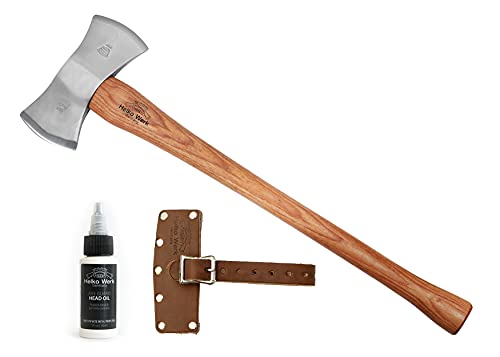
The Odyssey is another hand-forged German double bit axe with a 3.5 lb head and 30″ Grade A American hickory handle. This model is described with a polished classic finish intended to reduce cutting friction and help prevent rust. Its C50 high carbon steel head and hand finishing allow users to maintain distinct edge geometries on each bit for dedicated tasks such as rough undercutting vs. fine felling cuts.
COUNCIL TOOL Double Bit Axe Michigan Pattern

The Council Tool 3.5 lb Michigan pattern double bit axe uses a forged high carbon steel head and a 36″ straight wooden handle. Highlights include the traditional Michigan bit shape for general utility and woodcutting and hand-sharpened edges. Specifications emphasize a versatile edge geometry, historically with one finer edge for clean cuts and one blunter edge for tougher work near dirt or knots. The tool is manufactured in the USA and suited to heavy-duty cutting tasks.
Truper 3.5-Pound Double Bit Michigan Axe

Truper’s 3.5 lb double bit follows the Michigan pattern with a durable hickory handle and heat-treated blades. The assembly uses a wood and steel wedge to secure the head. The manufacturer positions this axe as a practical choice for farm, home, garden, and recreational use. The combination of heat-treated steel and a traditional handle design targets users needing a reliable general-purpose double bit tool.
Estwing Drake Off Road Double Bit Axe

Estwing’s double bit axe uses forged steel construction with a patented shock reduction grip designed to reduce impact vibration. The head weight is listed at roughly 38 ounces and the tool is promoted for chopping logs, small trees, and splitting firewood. The molded grip aims to improve comfort and slip resistance while maintaining a unitary forged head and bit, which differs from traditional wooden-handled drop-forged designs.
Other Accessories And Replacement Options

Vaughan 36″ Straight Replacement Handle — 36″ American hickory handles with a weather-resistant lacquer finish designed for replacement or customization of double bit axes. Useful when maintaining or restoring traditional axes.

USA Top Grain Leather Double Bit Axe Sheath — Full-grain leather sheath options provide blade protection and safe transport; dimensions and regional manufacture are listed by the maker.
Buying Guide: Choosing The Right Double Bit Axe
Intended Use: Determine primary tasks—felling large timber, limbing, splitting, or mixed camp use. Felling generally benefits from longer handles (30–36″) and heavier heads (3.5 lb), while lighter work can use smaller heads.
Head Steel And Forging: High carbon steels (e.g., C50, 1055) and drop-forged heads offer durability and edge retention. Hand-forged or properly heat-treated heads are easier to reprofile and maintain over time.
Edge Geometry: Many double bit users keep one edge fine for clean cuts and the other more robust for rough work. Consider whether you want pre-profiled bits or a uniform edge to begin with.
Handle Material And Length: Grade A American hickory is traditional for shock absorption and durability. Handle length affects swing power and control: 30″ is common for felling, 35–36″ gives extra reach and momentum. Ensure grain orientation and finish for longevity.
Head-To-Handle Fit And Attachment: Check for secure wedge assembly and correct fit. Replacement handles are available if the head is compatible with standard straight hickory handles.
Grip And Vibration: Molded or shock-reduction grips reduce vibration and hand fatigue but may alter the classic handling feel. Consider grip type based on personal comfort and expected session length.
Maintenance And Sharpening: High carbon heads can be sharpened and reprofiled readily. Leather sheaths protect edges in transport and storage. Always follow safe sharpening and maintenance practices.
Manufacturing Origin And Quality Control: Regions and brand reputations can affect manufacturing methods—hand-forged German axes often emphasize individual craftsmanship, while US-made heads emphasize traditional shaping and domestic forging standards.
Balance And Weight Distribution: A well-balanced double bit reduces fatigue and improves accuracy. Balance matters more than head weight alone—test or inspect swing dynamics when possible.
Use Case Comparisons: For heavy felling of large timber, favor 3.5 lb heads with 30–36″ hickory handles and forged high carbon steel. For more portable or mixed use, consider slightly lighter heads or models with vibration-mitigating grips. If you need a tool for axe throwing or precise splitting, look for narrower bit profiles and excellent balance.