Finding the right commercial-grade electric weed eater can transform landscaping tasks from tedious to efficient. The following five models offer strong motors, durable design, and versatile features to handle thick weeds, edging, and long runs. Each entry is selected for performance, battery life or corded reliability, and value in professional settings. Explore pros, notable features, and how they compare on common job sites.
| Product | Brand | Key Strength | Link |
|---|---|---|---|
| BLACK+DECKER Weed Wacker with Auto Feed | BLACK+DECKER | 2-in-1 operation with auto feed | Product Link |
| KIMO Weed Wacker and Blower Combo | K I M O. | 4-in-1 yard solution with dual batteries | Product Link |
| BLACK+DECKER String Trimmer BESTE620 | BLACK+DECKER | Easy edge conversion and auto feed | Product Link |
| Husqvarna WeedEater 320iL | Husqvarna | Lightweight 16-inch cutting width | Product Link |
| FULLYEA Electric Weed Wacker Cordless | FULLYEA | Brushless motor and 9-inch wide cut | Product Link |
The selections emphasize models with robust motors, long-lasting batteries or dependable cords, and accessories that expand functionality for commercial use. Consider the balance between weight and power, the availability of replacement spools or blades, and compatibility with common job-site attachments when choosing a weed eater for professional work.
BLACK+DECKER Besta510: 2-In-1 Power And Edge

The Besta510 offers a 6.5-amp motor and POWERDRIVE transmission designed to tackle thick grass and heavy growth efficiently. A key feature is the 2-in-1 design that quickly converts from trimmer to wheeled edger, aided by a wheeled edge guide for clean, professional lines along borders and driveways. The automatic feed spool eliminates bumping, reducing interruptions during long trimming sessions on commercial properties.
KIMO 4-In-1 Wacker: Trimmer, Blower, Vacuum, Edger

This KIMO kit stands out for versatility and power efficiency. It combines trimming, edging, blowing, and vacuuming in one system, ideal for maintaining large properties across seasons. A brushless motor on both the weed eater and blower delivers high performance with cooler operation and longer life. Two 2.0Ah batteries enable extended work sessions with smart indicators to manage power. It’s a practical all-in-one solution for crews that require multi-tool capability without swapping devices.
Oregon Magnum Gatorline 095 Line

Although a line option rather than a standalone trimmer, the Oregon Magnum Gatorline 095 is a professional-grade string for heavy-duty trimmers. It fits most standard heads and offers a high-qua-lity nylon core designed to resist breakage in demanding environments. For crews that service large, overgrown properties, durable line reduces downtime and line replacement frequency, supporting longer working cycles between refills.
FULLYEA 9-Inch Cordless Weed Wacker
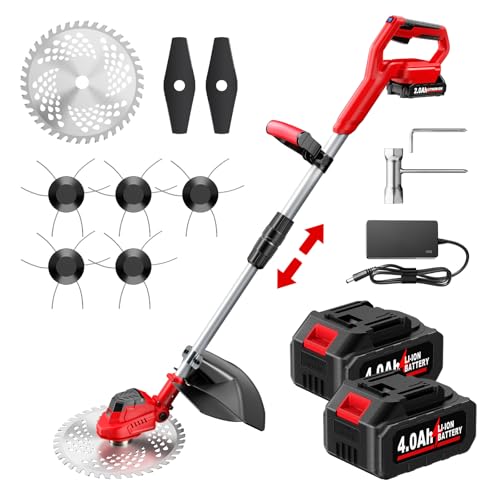
FULLYEA pairs a robust 800W brushless motor with a 9-inch cutting width to maximize mowing efficiency in larger plots. The kit includes three blade types to tackle weedier areas, combined with two 4.0Ah batteries for extended runtimes. The cordless design enhances maneuverability around vehicles or landscaped features, making it a reliable option for crews focused on speed and precision.
Buying Guide: Key Considerations For Commercial Buyers
- Power and performance: For tough weeds and overgrowth, prioritize higher amperage on corded models or brushless motors on battery-powered units. A larger cutting width (9-16 inches) reduces pass counts and speeds up maintenance cycles.
- Versatility: 2-in-1 trimmers with edging capability save time on job sites. Multi-function tools (trim, blow, vacuum) can reduce equipment totals and simplify logistics for crews, especially on seasonal contracts.
- Edge and line management: Auto-feed spools prevent interruptions, while wheeled edgers provide consistent, professional borders along sidewalks and driveways. Consider models with adjustable heads and wheels for varied terrain.
- Battery life and charging: For cordless units, assess run-time per battery, charge time, and the availability of extra batteries. Smart indicators help plan shifts and minimize downtime between charges on long days.
- Durability and ergonomics: Look for lightweight designs with balanced weight distribution to reduce operator fatigue. Durable housings, weather resistance, and comfortable grips are important for daily commercial use.
- Maintenance and replacement parts: Availability of spools, blades, and replacement batteries affects uptime. Brands with broad compatibility across accessories offer better long-term value.
- Safety features: Low-vibration operation, protective guards, and automatic line feeds can improve user safety and job consistency on crowded sites.
- Cost of ownership: Compare initial price, expected lifespan, and ongoing consumables. A slightly higher upfront cost can be justified by longer service intervals and better performance.
In commercial environments, the choice between corded, cordless, or multi-tool systems often hinges on site layout and service frequency. Corded models provide reliable, constant power, while cordless units offer superior reach and flexibility for large, fenced, or obstacle-packed properties. Selecting a model with easy maintenance, compatible accessories, and strong customer support helps ensure steady performance across demanding workloads.