Choosing a CARB-compliant generator means prioritizing low emissions, efficient fuel use, and dependable performance for homes, campsites, and job sites. This guide highlights five top options that meet CARB standards, balancing fuel flexibility, noise levels, and portability. Each model is evaluated on running watts, peak watts, runtime, and common use cases to help you pick the right unit for your needs.
| Product | Peak / Running Watts | Fuel Type | Approx. Runtime | Notable Feature |
|---|---|---|---|---|
| Pulsar GD400BN | 4000/3200 gas; 3600/2800 propane | Gas / Propane | Up to 4.5 hours at half load | Dual fuel; RV-ready; parallel capable |
| WEN 56200i | 2000 surge / 1600 rated | Gas | Not specified in listing | Inverter; quiet operation; CARB compliant |
| Pulsar G2319N | 2300 peak / 1800 running | Gas | Up to 4.8 hours at half load | Lightweight; compact suitcase design; parallel capable |
| Westinghouse 12500 EFI | 12500 peak / 9500 running (gas); 11200/8500 (propane) | Gas / Propane | Up to 15 hours on 6.6 gal gas; variable with fuel | Remote start; transfer switch ready; CO sensor |
| Westinghouse 5000 EFI | 5000 peak / 3900 running (gas); 4500/3500 (propane) | Gas / Propane | Up to 12 hours at 25% load | Dual fuel; RV and home backup; versatile outlets |
Note: All models listed are CARB compliant and suitable for American homeowners seeking greener generator options. The right choice depends on whether you prioritize portability, noise, fuel flexibility, or overall watt capacity for home backup or outdoor use.
Pulsar GD400BN Dual Fuel: Quiet, RV-Ready Power

The Pulsar GD400BN delivers 4000 peak watts and 3200 running watts on gas, with 3600 peak and 2800 running on propane. It operates continuously up to 4.5 hours at half load and features a 1.1-gallon tank. Dual-fuel operation provides flexibility for fuel availability, while RV-ready and parallel capability extend its usefulness for outdoor events or backup power.
WEN 56200i: Quiet Inverter Power
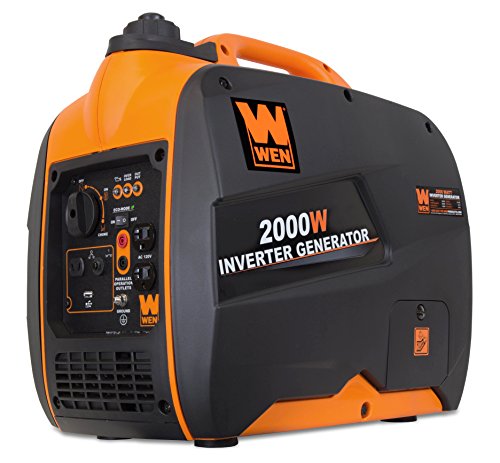
The WEN 56200i is a 2000-watt inverter generator, CARB compliant, designed for quiet operation. It weighs about 48 pounds and measures 18″ x 11″ x 18″. Its 79.7cc OHV engine produces up to 2000 surge watts and 1600 rated watts, with EPA III and CARB compliance ensuring lower emissions for home use, camping, and small job sites.
Pulsar G2319N: Compact, Quiet Power

The Pulsar G2319N provides 2300 peak watts and 1800 running watts, with up to 4.8 hours of operation at half load on a 1.18-gallon fuel tank. Its compact suitcase design and sub-47-pound weight make it highly portable, and it supports parallel operation for added capacity when needed.
Westinghouse 12500 EFI: High-Capacity Backup
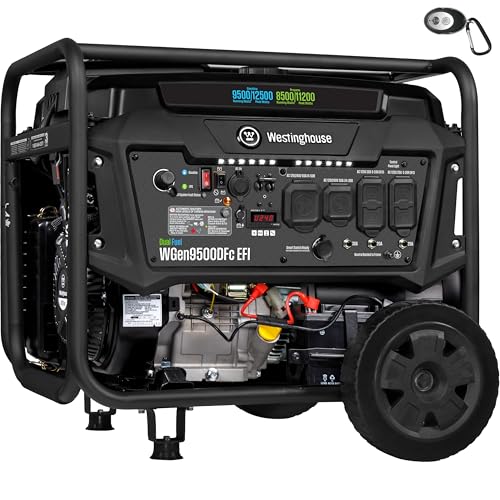
With 12,500 peak watts and 9,500 running watts on gas, this dual-fuel unit switches to propane for flexibility. It lasts up to 15 hours on a 6.6-gallon tank and includes remote start, electric and recoil start, and transfer-switch-ready outlets. A CO sensor adds safety, and the design suits home backup or large RV setups.
Westinghouse 7500 EFI: Dual Fuel Power

The Westinghouse 7500 EFI dual-fuel generator offers 7500 peak watts and 6000 running watts on gas, with 6750 peak and 5400 running watts on propane. It runs up to 14 hours on a 4.75-gallon tank and up to 9.5 hours on a 20-lb propane tank. Features include a transfer switch-ready L14-30R outlet and RV-specific TT-30R outlet, plus remote or electric start and safety features such as a CO sensor.
Buying Guide: Key Purchase Considerations
- Power needs: Match peak watts to momentary loads (appliances with compressors, sump pumps) and running watts to continuous devices. For whole-home backup, prioritize higher running watts with dual-fuel flexibility.
- Fuel flexibility: Dual-fuel units offer propane as a backup, which can be advantageous during supply shortages. Consider your typical fuel availability and storage capacity.
- Emissions and compliance: CARB-compliant models reduce emissions and are often better suited for use in areas with stricter air quality regulations.
- Portability vs. capacity: Lighter, inverter-based units are ideal for camping and small appliances, while larger, fuel-tueled models serve as robust home backups or job-site power.
- Noise and operation: Inverter generators typically run quieter and produce cleaner power, beneficial for sensitive electronics and noise-sensitive environments.
- Safety features: Look for CO sensors, automatic low-oil shutdown, and remote or electric start for easy operation and protection.
- Outlets and compatibility: Ensure the unit has the appropriate outlets (TT-30R, 14-50R, 5-20R) for your setup, and consider parallel-capable models if you may expand power later.
- Runtime and fuel tank: Longer runtime reduces refueling frequency; larger tanks are preferable for continuous power during outages, though they add weight and size.