When tackling masonry and brickwork, choosing the right reciprocating saw blade is essential for clean, fast, and durable cuts. The blades below are designed to cut aerated concrete, hollow brick, and similar masonry materials with carbide or diamond-infused teeth for extended life. This guide highlights five top options, including carbide-tipped blades and diamond grit blades, to help American builders, contractors, and DIY enthusiasts select the best fit for their projects.
| Product | Brand |
|---|---|
| TOLESA Demolition Masonry Reciprocating Saw Blades 12-Inch | TOLESA |
| Lenox 8-in Grit-Tpi Diamond Grit Reciprocating Saw Blade | Lenox |
| PAYA TOOLS 9-Inch Masonry Reciprocating Saw Blade, 3-Pack | PAYA TOOLS |
| SOEWWEKLAX Titanium Carbide Reciprocating Saw Blade, 10 inch | SOEWWEKLAX |
| EZARC Demolition Masonry Reciprocating Saw Blade 12-Inch | EZARC |
All selections emphasize carbide or diamond technology for longer life and stable, straight cuts. Consider blade width, tooth geometry, and shank compatibility to match your tool and job size. The following sections profile each blade with its key features and typical applications.
TOLESA 12-Inch Carbide Masonry Blade

TOLESA’s 12-inch blade uses a carbide teeth strip to deliver high durability and robust cutting power in masonry applications. It’s designed for porous aerated concrete, hollow brick, and brick, with brazed carbide teeth for long-lasting performance. The wide-body design enhances stability for straight cuts, reducing wandering in masonry walls. Not recommended for stones, hard rocks, cement blocks, or fine branches. This blade suits demolition and remediation projects where consistent masonry cuts are required.
Lenox 8-Inch Grit-Tpi Diamond Blade

Lenox’s 8-inch diamond grit blade is built for cases where carbide edges alone may wear quickly. The nickel alloy brazed diamond particles maintain sharpness for continued cutting after carbide blades wear. A narrow kerf supports thinner, faster cuts while a durable chrome alloy backing steel adds stability. Ideal for concrete, bricks, and other dense masonry where precise, rapid cuts are needed without frequent blade changes.
PAYA TOOLS 9-Inch 3-Pack Masonry Blades

This 3-pack from PAYA TOOLS features carbide blades optimized for straight cuts in brick, aerated concrete, and cementitious boards. The blades are engineered for reduced vibration and lower dust generation, contributing to a steadier cut and a more comfortable experience on longer jobs. The set is suitable for lighter demolition tasks where precision is paramount, and it avoids cutting wood or plastic as specified by the manufacturer.
SOEWWEKLAX Titanium Carbide 10-Inch Blade

SOEWWEKLAX combines carbide steel with tungsten carbide teeth to deliver high hardness and wear resistance for demanding demolition work. The blade’s wide thickness and large tooth pitch support quick, straight cuts while keeping roughness moderate. A weight-optimized design reduces vibration, improving cutting accuracy and operator comfort for extended use. This blade performs well on concrete, brick, and other masonry materials where stability matters.
Xthrotsenk 10-Inch Masonry Blade
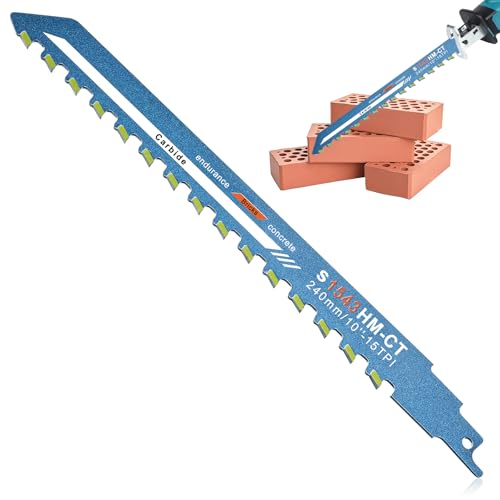
Note: This option highlights a heavy-duty carbide-based construction with a broad blade body designed for aerated concrete and hollow brick. It emphasizes durable materials and a design that minimizes dust while maintaining a straight cut. If long reach is needed, this blade pairs well with demolition tasks where consistent geometry is important throughout the cut.
Bigvendedor 3-Piece Tungsten Carbide Set

Bigvendedor’s kit includes 9″, 12″, and 18″ blades with tungsten carbide tipped teeth designed for extreme durability in concrete, brick, and cement blocks. The set targets professional demolition, allowing users to choose the blade length needed for different job depths. The 50x durability claim reflects enhanced life in abrasive masonry tasks, with optimized tooth geometry to balance cut rate and wear.
Buying Guide: Key Purchase Considerations
Choosing the right brick-cutting blade involves material, blade design, and work scope. Carbide blades excel in durability when cutting aerated concrete, hollow brick, and brick, while diamond grit blades may offer better edge retention on very hard masonry. Consider blade length and shank compatibility with your reciprocating saw. A wider body can improve stability and straightness, but longer blades may increase vibration. Lower tooth-per-inch counts (TPI) typically cut faster through masonry but may produce rougher surfaces; higher TPI reduces chipping but can slow progress. For dusty sites, look for teeth designed to minimize dust generation and a design that reduces vibration. Always verify the blade is rated for the specific material and avoid using masonry blades on wood or plastic.
Durability vs. flexibility is another important balance. Carbide teeth provide long life but at a higher upfront cost, making them ideal for frequent demolition or concrete-heavy projects. Diamond grit blades may offer superior edge retention on dense or abrasive materials, with excellent heat resistance. If your work involves occasional masonry cuts, a cost-effective set with multiple lengths may be more practical. Finally, compatibility matters: ensure the blade’s universal shank fits your saw model and that the blade length does not exceed tool capacity or clearance in tight spaces.
In terms of workflow, plan for clean cuts with a straight edge and consider dust mitigation measures. Using a vacuum or dust extraction system helps keep the work area clear and reduces health risks associated with masonry dust. For large projects, maintain blade integrity by inspecting teeth for chips or glazing before each session, and replace blades showing significant wear to maintain cut quality and safety.