Box joints, also known as finger joints, deliver strong, match-fit corners for drawers, boxes, and cabinetry. A quality box joint jig helps woodworkers of all levels achieve repeatable, clean cuts on a router table or table saw. Below is a curated list of five top-performing jigs that cover a range of setups—from compact artisan work to heavy-duty production. The accompanying buying guide highlights key features to consider when choosing your best box joint jig for your shop.
| Product | Brand | Key Features |
|---|---|---|
| JessEm 06300 Precision Box Joint Jig | JessEm | 1/4″, 3/8″, 1/2″ indexing keys; smooth bearing glide; precise travel |
| Box Joint Jig – Router Table (Rockler) | ROCKLER | Interchangeable indexing keys; three finger widths; smooth sled |
| INCRA I-BOX Jig for Box Joints | INCRA | Fast setup; versatile; safety features; instructional DVD |
| POWERTEC Adjustable Box Joints Jig | POWERTEC | Versatile for table saws and router tables; adjustable pin spacing |
| Woodhaven 4556 Portable Box Joint Jig | Woodhaven | Portability; large workpieces; adjustable aluminum stops |
The following sections review these five jigs in depth, helping you compare design, adjustability, and compatibility with common workpieces. Each entry highlights what to expect in typical use and what makes it stand out for different shop needs.
JessEm 06300 Precision Box Joint Jig

The JessEm 06300 is designed for precise, repeatable finger joints across drawers, boxes, and cabinetry. It includes 1/4″, 3/8″, and 1/2″ aluminum indexing keys that work with Baltic birch fences to support accurate cut spacing. Four R4 bearings provide smooth, low-friction travel with about 4-1/4″ of travel, enabling clean, consistent joints. This jig emphasizes precision and ease of use for pro-grade box joints in a compact, router-table friendly package.
Router Table Box Joint Jig – Rockler

This Rockler jig focuses on three interchangeable indexing keys for ¼”, ⅜”, and ½” finger widths, using precision-machined brass keys for uniform spacing. The durable MDF sub-fence and low-friction melamine-coated sled help maintain square cuts, while easy-grip knobs lock the platform in place for repeatable results. The design emphasizes stability and smooth operation to produce tight-fitting box joints on small to medium-sized boxes.
INCRA I-BOX Jig for Box Joints
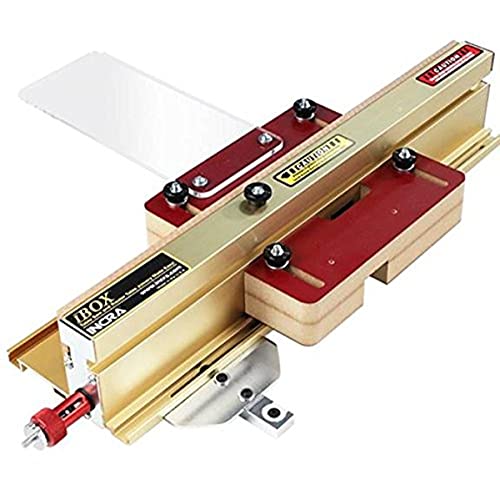
The INCRA I-BOX is positioned as a high-end option with a focus on speed, versatility, and safety. It supports quick setup and offers features that improve user safety compared to traditional jigs. An included instructional DVD covers everything from basic setup to advanced decorative joinery, making it suitable for both beginners and seasoned woodworkers seeking efficiency and versatility in box joints.
POWERTEC Adjustable Box Joints Jig

The POWERTEC jig is designed for both table saws and router tables, offering a broad setup for box joints and other jointed patterns. It includes a complete hardware set, safety guards, and adjustable pins to control spacing and cut depth. The wide fence and flexible pin plates help clamp workpieces securely, enabling symmetrical joints across a wide range of stock widths.
Woodhaven 4556 Portable Box Joint Jig

The Woodhaven 4556 stands out for portability and suitability for larger workpieces. It hops the jig over the work, enabling safe, accurate cuts on bigger panels that can be unwieldy on a stationary jig. The kit includes replaceable MDF sub-fences, a long aluminum fence, and built-in clamps, plus multiple setup jigs for common joint widths. It is well-suited for users who regularly work on larger boxes or torsion boxes.
Buying Guide: Key Purchase Considerations
Choosing the right box joint jig involves balancing precision, versatility, and workflow integration. The following factors help buyers compare options across the listed jigs:
- Joint width compatibility: Look for jigs offering multiple finger widths (¼”, ⅜”, ½”). Interchangeable indexing keys simplify transitions between stock sizes.
- Compatibility with equipment: Confirm whether the jig is designed for router tables, table saws, or both. Some models excel on routers, others on table saws, and some support both.
- Cut quality and repeatability: Bearings, slides, and fence stability influence cut accuracy. A smooth, low-friction glide reduces chatter and misalignment.
- Setup speed and safety: Jigs with quick setup and clear instructional materials save time. Safety features, such as guards and locking mechanisms, are important for longer sessions.
- Versatility and capacity: Consider maximum workpiece size, extension options, and whether the jig can handle large panels or specialty projects like lattice or torsion boxes.
- Storage and portability: If space is limited or you frequently work on-site, portable or compact jigs with modular components offer practical advantages.
- Support and documentation: Access to manuals, example plans, and instructional content adds long-term value, especially for beginners.
Overall, the best box joint jig for a given shop depends on the size of typical workpieces, desired joint precision, and whether the user prioritizes speed or maximum versatility. For beginners, a model with clear instructions and straightforward setup is advantageous. For seasoned woodworkers, a high-precision option with adjustable indexing and strong fences may be preferable.