Choosing a Bowie-style hunting knife involves balancing blade length, tang construction, grip comfort, and overall durability. The following five options span fixed blades, full tang builds, and rugged handles to suit camping, bushcraft, hunting, or survival scenarios. Each product below includes key features to help you compare performance and handling in the field.
| Product | Brand | Overall Length | Notable Feature |
|---|---|---|---|
| Mossy Oak 2-piece Bowie Knife | Mossy Oak | 10.5” / 8” (two knives) | Full Tang, Stacked Leather Handle |
| RISING CRAFTS 14″ Crocodile Dundee Bowie Knife | RISING CRAFTS | 14” | D2 Steel, Razor-Sharp Clip-Point |
| Mossy Oak 14-inch Bowie Knife | Mossy Oak | 14” | Full-Tang Wood Handle |
| WARIVO 18-Inch Bowie Knife | WARIVO KNIFE | 18” | Leather & Buffalo Horn Handle |
| FLISSA 15-inch Survival Hunting Knife | FLISSA | 15” | Clip Point Blade, Sharpener & Fire Starter |
Mossy Oak 2-Piece Bowie Knife

The Mossy Oak 2-piece Bowie Knife set features two fixed blades designed for field versatility. The large knife measures about 10.5 inches overall with a 6-inch blade, while the smaller companion is 8 inches overall with a 4-inch blade. Both blades are stainless steel with sharpened edges intended for piercing, detail work, and cutting in tight spaces. The full tang construction paired with stacked leather handles provides strength and a comfortable, non-slip grip, reinforced by brass accents for balance.
RISING CRAFTS 14″ Crocodile Dundee Bowie Knife
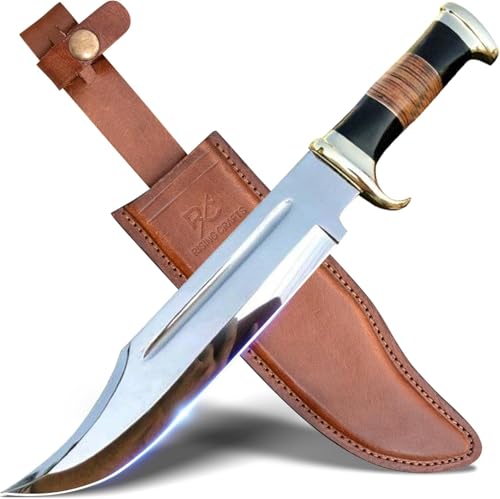
The 14-inch fixed-blade Bowie by RISING CRAFTS emphasizes rugged performance with a 9-inch blade crafted from D2 steel for hardness and edge retention. The full length is designed for heavy-duty use in camping, survival training, or outdoor expeditions. The resin and leather handle, coupled with brass fittings, offers a high-friction grip and a sturdy balance suitable for challenging tasks in the field.
Mossy Oak 14-Inch Bowie Knife

This Mossy Oak 14-inch Bowie features a full-tang rosewood handle with a 3CR13 stainless blade. The blade length reaches about 8.5 inches, and the overall length is 14 inches. The blade is known for edge retention and corrosion resistance, making it suitable for detailed work, piercing, and general field tasks. The leather sheath and brass pommel round out a traditional fixed-blade setup for outdoor use.
WARIVO 18-Inch Bowie Knife

The WARIVO knife sets a benchmark with a large 18-inch overall length and a 12-inch blade. The buffalo horn and leather handle provide a rugged, comfortable grip, complemented by a brass safety guard. This configuration is aimed at outdoor camping, hunting, bushcraft, and survival scenarios where a long blade and solid grip are advantageous in processing tasks and shelter-building.
FLISSA 15-Inch Survival Hunting Knife

The FLISSA 15-inch fixed-blade Bowie knife is engineered for rugged outdoor use. It features a 10-inch blade with a 5/32-inch thickness and a heavyOverall length of 15 inches. The clip-point blade, made of stainless steel, emphasizes hardness and rust resistance, with a saw back and black anodizing. The rubber handle provides a high-friction, non-slip grip, and the included sheath has a belt-friendly design for easy carry, making it suitable for camping, bushcraft, and survival training.
Buying Guide: Bowie-Style Knives — Key Purchase Considerations
- Blade material and edge retention: D2 steel and stainless options offer different hardness and corrosion resistance. Consider how you plan to use the knife and how often you’ll maintain the edge.
- Full tang vs. partial tang: Full tang knives generally provide greater strength and balance, especially for heavy-duty tasks in the field.
- Blade length and geometry: Longer blades suit boundary work and durable chopping, while shorter blades excel in piercing and detail tasks. Clip-point designs offer a versatile tip for fine work.
- Handle materials and grip: Leather, rosewood, buffalo horn, and rubber handles each provide different grip textures and durability. Non-slip grips improve safety during wet or strenuous use.
- Sheath and portability: A reliable sheath protects the blade and facilitates safe transport. Look for belt-friendly designs and compatibility with your gear setup.
- Maintenance needs: Stainless blades resist rust but may require more frequent sharpening; carbon steels can hold an edge longer but need rust prevention care.
- Intended use context: Survival, camping, bushcraft, or hunting may favor different blade shapes, weights, and balance points. Consider your typical environments and tasks.
- Budget and ergonomics: Weight, balance, and the feel in your hand influence performance more than price alone. Whenever possible, handle options to assess fit.
- Durability and warranty: Check for information on blade hardness, tang construction, and any manufacturer guarantees if you expect rugged field use.