When ripping hardwood, choosing the right blade is critical for efficiency, accuracy, and edge quality. This guide focuses on high-performance blades designed to handle dense woods with clean, true cuts. We evaluated common ripping blades known for durability, carbide quality, kerf design, and compatibility with 10-inch table saws and miter saws. The selections below balance speed, stability, and long-term wear resistance to help you finish projects faster with less effort and fewer passes.
| Product | Brand | Key Benefit | Amazon Link |
|---|---|---|---|
| Diablo Ripping Saw Blade for Wood D1024X | Diablo | Hi-Density TiCo carbide, thin kerf for fast, clean cuts | https://www.amazon.com/dp/B00008WQ2V?tag=pocketknife09f-20 |
| Freud LM75R010 | Freud | Industrial thin kerf, heavy-duty stability | https://www.amazon.com/dp/B001V5J4QY?tag=pocketknife09f-20 |
| Freud LM74R010 | Freud | Premium TiCo Hi-Density carbide, glue-line capable | https://www.amazon.com/dp/B00006XMTV?tag=pocketknife09f-20 |
| HARDWIN 10″ Table Saw Blade 24T | HARDWIN | Universal compatibility, durable carbide tips | https://www.amazon.com/dp/B0G2Y29CYC?tag=pocketknife09f-20 |
| BOSCH DCB1024 10″ 24T Daredevil | Bosch | Brute carbide with ATB geometry, anti-friction coat | https://www.amazon.com/dp/B008FYUU80?tag=pocketknife09f-20 |
Diablo Ripping Blade D1024X

The Diablo D1024X is designed for fast, durable ripping in hardwoods, plywood, and OSB. Its TiCo Hi-Density carbide is tailored to achieve efficient removal rates while maintaining edge integrity. The Perma-Shield non-stick coating limits heat buildup, gum, and corrosion, helping sustain blade life during tough ripping tasks. With a thin kerf and a 5/8″ arbor, this blade supports clean, true cuts and minimizes waste in long ripping runs.
Freud LM75R010 Industrial Ripping Blade
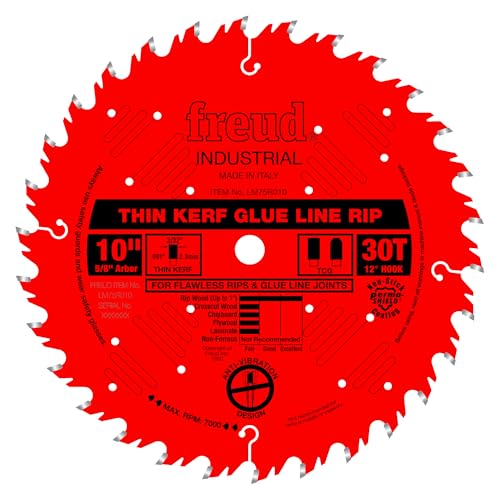
The Freud LM75R010 emphasizes heavy-duty ripping performance with a 10″ diameter, 30-tooth configuration, and a 5/8″ arbor. Its TCG grind and 12° hook angle pair with a .091″ kerf for stable, fast cuts through hardwoods. The TiCo Hi-Density carbide blend delivers strong edge retention under demanding use. A reinforced plate helps maintain flatness over extended ripping sessions, reducing deflection and chatter.
Freud LM74R010 Glue Line Ripping Blade
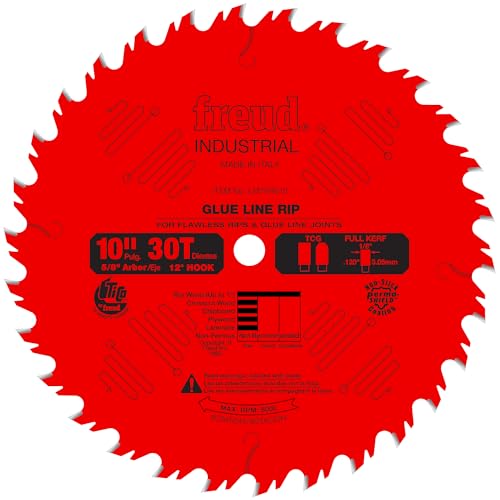
The LM74R010 features a heavy-duty construction with thick kerf and reinforced plate, designed for maximum stability in tough ripping tasks. Its premium TiCo carbide blend provides high cutting performance and durability, while the triple chip tooth design yields smooth surfaces ready for glue-ready edges, minimizing sanding needs. This blade aims to sustain long life in high-volume ripping projects with consistent results.
HARDWIN 10 Inch Ripping Blade

The HARDWIN 10″ 24T blade emphasizes universal compatibility and durable carbide tips. It is designed for consistent cuts through hardwood, softwood, plywood, and composites. The 5/8″ arbor supports common table saws, while the 24-tooth configuration balances speed and finish quality. It provides burr-free edges and is positioned as a reliable alternative for ripping and light finishing without frequent tool changes.
BOSCH DCB1024 Daredevil Ripping Blade

The Bosch DCB1024 Daredevil blade uses Brute carbide with micro-grain formulation for improved impact resistance. Its ATB geometry accommodates fast cross-cutting and ripping through wood and plywood, and the speed coat minimizes friction for smoother cuts. This blade is aimed at users needing a versatile option that handles various cutting tasks without excessive blade changes in the shop.
Buying Guide: Key Purchase Considerations
Blade selection for hardwood ripping should balance cut speed, edge quality, and blade life. Consider these factors:
- Tooth geometry: Ripping blades typically use flat or ATB geometry optimized for long, straight cuts. A higher tooth count favors finish quality but may slow down aggressive ripping on dense hardwoods.
- Kerf width: Thin kerf blades remove less material and require less power, enabling faster cuts with reduced heat, but may be prone to deflection if not adequately supported.
- Carbide quality: TiCo or similar high-density carbide blends offer longer edge retention and better wear resistance in hardwoods. Durable carbide reduces the need for frequent blade changes on tough species.
- Arbor compatibility: Most 10″ blades use a 5/8″ arbor. Verify your saw’s arbor size and stability, especially on cheaper or older equipment, to prevent wobble and poor cuts.
- Coatings and coatings durability: Non-stick coatings like Perma-Shield reduce gum buildup and heat-induced dulling, extending blade life in resinous hardwoods.
- Durability vs. value: Heavy-duty blades with reinforced plates resist bending and chatter, improving flatness over long runs but may come at a higher upfront cost.
- Intended use: Some blades are optimized for glue-line rip cuts or finish work. If you frequently glue joints, choosing a blade with triple-chip or glue-line suitability can save sanding time.
Performance Perspectives
- Fast ripping: Thinner kerf and high-density carbide enable faster material removal with less power requirement, beneficial for large hardwood sheets.
- Finish quality: A blade with advanced tooth design can produce smoother edges suitable for glue joints and less sanding after ripping.
- Durability: Blades with reinforced plates and heavy-duty construction maintain flatness and accuracy over longer cutting sessions in dense woods.
- Versatility: Some blades handle multiple materials (softwood, plywood, OSB) but may trade some optimality for specialty hardwood ripping; assess your typical workload to pick a balanced option.