Quick Overview: Choosing the right band saw blade for stainless steel depends on blade material, width, thickness, and teeth per inch (TPI). Below is a summary table of the five selected blades that balance toughness, tooth profile, and sizes commonly used for stainless cutting.
| Product | Blade Size | TPI | Material/Grade |
|---|---|---|---|
| Imachinist S64121214SS | 64-1/2″ x 1/2″ x 0.025″ | 14 TPI | Bi-Metal M42 |
| Imachinist S801214SS | 80″ x 1/2″ x 0.025″ | 14 TPI | Bi-Metal M42 |
| Imachinist S933414SS | 93″ x 3/4″ x 0.035″ | 14 TPI | Bi-Metal M42 |
| Imachinist S931224SS | 93″ x 1/2″ x 0.025″ | 24 TPI | Bi-Metal M42 |
| Supercut 93″ x 3/4″ x .035″ | 93″ x 3/4″ x .035″ | 6-10 Vari TPI | Bimetal (Premium) |
Imachinist S64121214SS 64-1/2″ Bi-Metal 14TPI
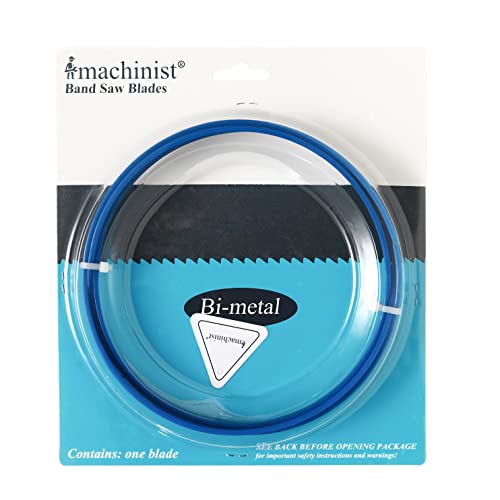
This Imachinist blade is a bi-metal M42 construction sized at 64-1/2″ long, 1/2″ wide, and 0.025″ thick. The fixed 14 TPI tooth profile targets thin-walled stainless pipe, tubing, and small cross-section work. The M42 high-speed edge is intended for hard ferrous metals up to about 30 HRC, and the blade is not recommended for non-ferrous metals. Use with proper coolant and slower feed when cutting stainless to reduce galling and heat buildup.
Imachinist S801214SS 80″ Bi-Metal 14TPI

The S801214SS shares the M42 bi-metal chemistry and 14 TPI tooth count but in an 80″ length, allowing compatibility with larger band saw frames. It is 1/2″ wide and 0.025″ thick, matching common saw guides for small-to-medium stainless parts. The fixed 14 TPI is appropriate for thinner stainless sections; combined with recommended cutting speeds and lubrication, it reduces heat and maintains tooth life on ferrous materials under 30 HRC.
Imachinist S933414SS 93″ M42 3/4″ 14TPI

This Imachinist blade is a heavier option at 93″ long, 3/4″ wide, and 0.035″ thick, built with M42 bi-metal edge and a 14 TPI constant profile. The wider, thicker body suits larger stainless stock and extended cutting life for repeated cuts. The product listing indicates suitability for various stainless grades including 304, 316L, 410, and 420. The thicker blade gives improved stability for larger cross-sections while maintaining an aggressive M42 cutting edge for hard ferrous metals.
Imachinist S931224SS 93″ M42 1/2″ 24TPI

The S931224SS is a 93″ long, 1/2″ wide, 0.025″ M42 bi-metal blade with a fine 24 TPI constant tooth pattern. Higher TPI blades like this are intended for thin stainless sheet, thin-walled tubing, and applications requiring a finer finish and smaller chip load. The listing notes use for stainless and other ferrous metals up to about 30 HRC; it is not recommended for non-ferrous metals. Expect slower feed rates and more attention to chip evacuation with fine-tooth blades.
Supercut 93″ x 3/4″ .035″ 6-10 Vari TPI Bimetal

Supercut’s premium bimetal blade is sized at 93″ x 3/4″ x .035″ with a 6-10 variable TPI range. The listing emphasizes a high-speed steel edge, flexible body, and a lifetime weld warranty. Variable pitch is designed to reduce vibration and produce smoother cuts across a range of material thicknesses, especially useful when cutting mixed cross-sections or preventing harmonic chatter when cutting stainless and mild steel.
Buying Guide: Choosing The Right Blade For Stainless Steel
Selecting a blade for stainless steel requires evaluating blade construction, tooth geometry, and saw compatibility. Below are key considerations to compare options effectively.
Blade Material And Edge Grade
- M42 Bi-Metal is common for stainless: a high-speed steel edge welded to a flexible backing provides hardness for edge retention and flexibility to resist breakage.
- Look for blades specifying suitability for stainless grades (304, 316, etc.) and rated hardness (often up to ~30 HRC).
Blade Width And Thickness
- Wider blades (3/4″) provide greater tracking stability and are better for straight cuts and larger cross-sections.
- Narrower blades (1/2″) are useful for tighter curves and smaller saws but can wander on heavy stock.
- Thicker body (.035″) resists deflection on larger cuts; thinner (.025″) suits smaller work and quicker tensioning.
Teeth Per Inch (TPI) And Pitch
- Low TPI (6/10, variable) is more aggressive—better for thicker material and faster feed, but produces rougher finish.
- Mid TPI (10–14) is a common compromise for tubing and general stainless cutting.
- High TPI (24) is for thin gauges and finer finishes—requires slower feed and good chip evacuation.
- Variable Pitch (e.g., 6-10) reduces vibration and delivers smoother cuts across mixed thicknesses.
Cutting Application And Material Thickness
- Match TPI to material thickness: fewer teeth per inch for thicker sections, more teeth for thin material to avoid snagging.
- Consider the stainless alloy: austenitic grades (304/316) tend to gall and work-harden; use proper coolant and slower speeds.
Saw Compatibility And Tensioning
- Confirm blade length, width, and thickness match your band saw guide and tire width.
- Proper blade tension and guide alignment reduce wear and improve cut quality on stainless steel.
Cutting Speed, Feed Rate, And Coolant
- Stainless prefers lower cutting speeds and steady feed to avoid work hardening.
- Use cutting fluid or coolant to reduce heat and prevent built-up edge, which extends blade life.
Durability And Warranty
- Bi-metal blades with M42 or premium HSS edges offer extended life versus carbon blades when cutting stainless.
- Consider brands that provide weld or manufacture warranties for blade integrity.
Comparison Perspectives
- For Heavy-Duty, Long Straight Cuts: Choose wider, thicker blades (3/4″ x .035″) with mid TPI (14) for stability.
- For Thin Tubing Or Sheet Stainless: Use higher TPI (14–24) on 1/2″ or narrower blades to avoid snagging and to produce a finer finish.
- For Mixed Thickness Or Reduced Vibration: Variable pitch (6–10) blades can improve cut consistency and reduce chatter.
- For Cost-Per-Cut Focus: Premium bimetal blades often last longer; evaluate expected life relative to blade cost and replacement frequency.
Use these selection criteria to match blade geometry and metallurgy to the stainless grade and workpiece dimensions you regularly cut. Proper coolant, feed control, and saw setup are equally important to realize the blade’s rated performance.