The right 9-inch blade can dramatically improve crosscuts, rip cuts, and overall finish on radial arm saw work. This guide compares top 9″ blades chosen for versatility, finish quality, and durability, helping you select the best option for your woodworking needs. Below, you’ll find a quick product overview, followed by in-depth sections for each blade and a comprehensive buying guide.
| Product | Brand | Type | Arbor | Kerf |
|---|---|---|---|---|
| LU88R009 | Freud | Thin Kerf Crosscut | 5/8″ | .090″ |
| LU87R009 | Freud | Thin Kerf Rip | 5/8″ | .094″ |
| KUANGBBBTools 40T | KuangBBBTools | General Purpose / ATB | 5/8″ | 0.1″ |
| Wadoy 2 Pack 40T | Wadoy | General Purpose / ATB | 5/8″ | 0.1″ |
| LU85R009 | Freud | Ultimate Cut-Off | 5/8″ | — |
Note: The selections cover crosscutting and ripping versatility, carbide quality, and compatibility with standard 5/8″ arbors common on many 9″ saws. Each blade is designed to optimize finish quality and feed rate for 9″ radial arm saws.
Freud LU88R009: 9″ Thin Kerf Fine Finish Crosscut Blade

The LU88R009 is built for precise crosscutting with a thin kerf to reduce waste and enable smoother progress through material. Specifications include a 5/8″ arbor, 9″ diameter, ATB grind, 15° hook, .090″ kerf, and a 54-tooth arrangement using TiCo HI-Density carbide. This blade emphasizes a positive hook angle for cleaner finishes and faster feed rates, making it well-suited for fine finish work on hardwoods and plywood when paired with a radial arm saw.
Freud LU87R009: 9″ Thin Kerf Rip Blade

The LU87R009 focuses on ripping performance with a 20° hook angle and a 9″ diameter. Its ATB grind and .094″ kerf work to maximize feed rate while maintaining stability in long rips. The blade uses TiCo HI-Density carbide designed for heavy-duty wood cutting, with a 5/8″ arbor and a 22-tooth count that supports efficient material removal and reduced tear-out on soft and hardwoods alike.
KuangBBBTools 9″ 40 Teeth General Purpose Blade

This 9″ blade by KuangBBBTools is a versatile ATB (Alternate Top Bevel) design with 40 teeth and a 5/8″ arbor. Its 0.1″ kerf and 10–15° hook angles deliver a balance of fast initial cutting and clean finishes for soft and hardwoods, plywood, and laminates. It is marketed as suitable for both ripping and crosscutting and is a practical all-purpose blade for general woodworking tasks on table, miter, or chop saws that accept 9″ blades.
Wadoy 9″ 40 Tooth Carbide Blade (2 Pack)
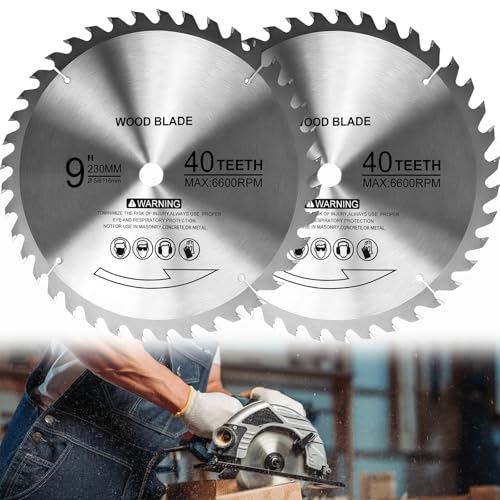
The Wadoy 9″ blade set features 40 carbide-tipped teeth with ATB geometry for fast, clean cuts across plywood and hardwoods. The 5/8″ arbor ensures compatibility with most 9″ table and miter saws, and the kerf is 0.1″. Designed for universal fit, these blades aim to provide reliable performance in rip and crosscut tasks while delivering smoother finishes and reduced tear-out compared to steel blades.
Freud LU85R009: Ultimate Cut-Off Blade

The LU85R009 is designed for high-performance crosscutting with a premium TiCo Hi-Density carbide blend. This blade emphasizes an aggressive cut with a finish-polishing approach from its unique side grind, enabling superior finishes on crosscuts without stabilizers. The blade is tuned for fast, clean cuts and consistent performance in high-demand finishing work on a variety of hardwoods and plywoods.
Freud LU84R009: 9″ x 40T Combination Blade

The LU84R009 is a 9″ combination blade with a 5/8″ arbor, 40 teeth, and a COMB grind. Its kerf is 0.126″ and it uses a TiCo HI-Density carbide blend. Large gullets in front of flat-top rakers promote fast ripping and efficient chip removal, making it suitable for mixed plywood and hardwood cutting tasks where both rip and crosscut capabilities are needed on a radial arm saw.
ATIE 9″ 40T General Purpose Blade (2 Pack)

The ATIE 2-pack provides a general-purpose 9″ blade with 40 carbide-tipped teeth. Its ATB design, 5/8″ arbor, and 0.1″ kerf balance fast cutting with accuracy across soft and hard woods, plywood, and laminates. Max RPM is 8000, making it suitable for many hobbyist and light professional radial arm saw tasks where clean finishes are important.
Buying Guide: Key Considerations For 9-Inch Radial Arm Saw Blades
Choosing the right 9″ blade depends on cut type, material, and tool compatibility. Consider these perspectives to select blades that meet your needs on a radial arm saw:
- Cut type: Crosscut vs. rip vs. general purpose. Crosscut blades deliver cleaner edges on finished boards, while rip blades maximize material removal in long cuts. Combination blades aim to cover both tasks with moderate performance in each.
- Tooth geometry and count: ATB (Alternate Top Bevel) teeth are common for fine finishes; higher tooth counts generally yield smoother cuts but slower feed rates. Fewer teeth cut faster but may tear out more on hardwoods.
- Kerf width: Thinner kerfs waste less material and require less power, but can be more prone to flex and chatter. Thicker kerfs are sturdier for aggressive cuts but remove more material.
- Arbor compatibility: Most 9″ blades use a 5/8″ arbor. Confirm your saw’s arbor size and nut compatibility to ensure secure mounting and safe operation.
- Carbide quality: TiCo and similar carbide blends offer long life and better wear resistance. Higher-quality carbides tend to stay sharp longer, reducing replacement frequency.
- Ripping and finishing balance: If your primary work involves finishing cuts, prioritize blades designed for smooth finishes. For heavy ripping, focus on blades optimized for aggressive material removal while keeping cut quality acceptable.
- Material compatibility: Some blades are best suited for softwood, hardwood, plywood, laminates, or composites. Read the blade’s intended use to prevent chipping or bogging down on certain materials.
- Maintenance and safety: Regularly inspect for dull teeth, chipped carbide, and proper blade tension. Use proper guards, clamps, and feed rate to maintain safe operation on radial arm saws.
When selecting blades for a 9-inch radial arm saw, align blade type with your most frequent tasks, review user feedback for real-world performance, and verify that the blade’s specifications match your saw’s arbor and max RPM ratings. The goal is to balance cut quality, feed rate, and blade longevity to match your workflow.