Finding the right 20-inch wide cutting boards depends on materials, features, and how you plan to use them—whether slicing meats, prepping vegetables, or serving as a stylish charcuterie tray. This guide highlights five solid options that balance durability, knife-friendliness, and practicality. Each board offers generous surface area, built-in juice grooves, and handy handles or non-slip elements to keep your prep space neat and efficient. Use the buying guide below to compare dimensions, materials, and care requirements before you purchase.
| Product | Brand | Material | Key Feature |
|---|---|---|---|
| 2XLarge Cutting Board | Empune | Bamboo | Juice groove, built-in side handles |
| 20 Inch Large Acacia Wood Cutting Board | GAOMON | Acacia Wood | Reversible surface, 20 inches long |
| FARBERWARE Extra-Large Plastic Cutting Board | Farberware | Polypropylene (Plastic) | Dishwasher-safe, juice groove |
| Extra Large Teak Wood Cutting Board | Socisen | Teak Wood | Non-slip base, 20 inches |
| Bamboo Cutting Board, Empune 20″ | Empune | Bamboo | Non-slip feet, juice groove |
Note: All five selections emphasize a 20-inch footprint, offering ample space for big tasks while accommodating everyday kitchen workflows. Each option brings a distinct material choice and design focus, from bamboo’s knife-friendly surface to teak’s moisture resistance and non-slip stability.
2XLarge Cutting Board, Bamboo With Juice Groove

The Empune 2XL bamboo cutting board stands out for its durability and knife-friendly surface. Built from bamboo, it resists warping and maintains a smooth cutting plane that protects blades. A built-in juice groove catches liquids, reducing countertop mess, while integrated side handles provide easy transport from prep to table. This board doubles as a serving tray for cheese, bread, or fruit, making it versatile for entertaining.
20 Inch Large Acacia Wood Cutting Board

This 20-inch acacia wooden board by GAOMON combines sturdy construction with natural beauty. Acacia wood offers a durable, visually appealing surface that’s well-suited for daily chopping, meat, vegetables, or serving boards. The reversible design expands its utility, and the dense hardwood helps resist knife marks, maintaining a premium appearance over time.
FARBERWARE Extra-Large Plastic Cutting Board
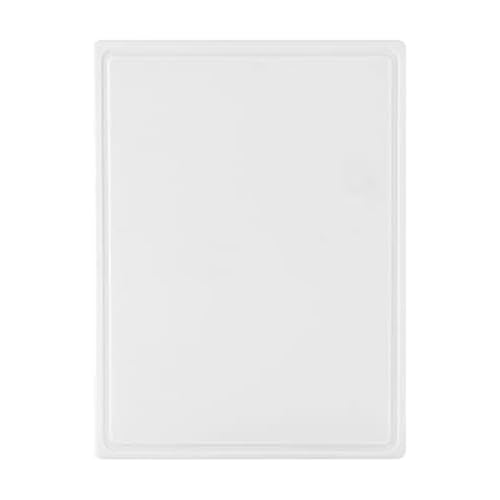
Farberware’s 15×20 inch plastic cutting board offers an economical, dishwasher-safe option with a built-in juice groove. The non-porous polypropylene surface is gentle on knives and resists staining, making it a practical choice for high-volume slicing and dicing. Its lightweight design favors easy handling and quick cleanup, though it may not have the same aesthetic as wood options.
Extra Large Teak Wood Cutting Board
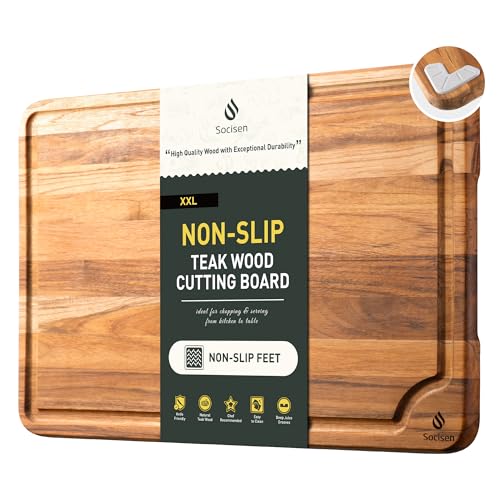
Socisen’s 20-inch teak board combines elegance with structural integrity. Teak wood’s natural moisture resistance helps prevent warping and preserves a smooth cutting surface. A non-slip base keeps the board stable during use, and rounded edges improve grip and safety. This board suits large meal preparations or stylish charcuterie layouts.
Bamboo Cutting Board, Empune 20″

Empune’s 20-inch bamboo board emphasizes non-slip convenience with built-in juice groove and sturdy, removable rubber feet for stability. The bamboo construction maintains a knife-friendly surface that’s less prone to dulling blades, while the juice groove helps keep counters cleaner during juicy prep tasks. The back-side handles enable simple transport and serving options.
20″ XL Extra Large Wooden Cutting Board
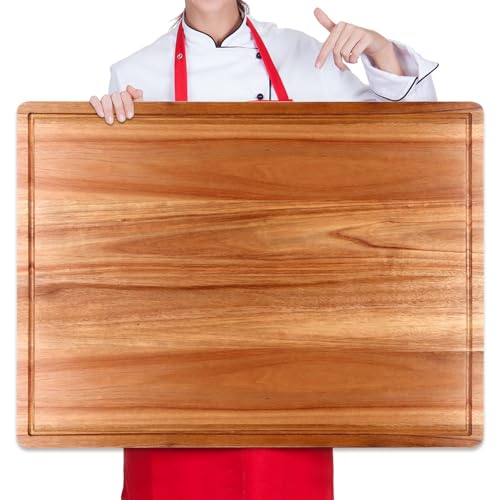
Ayiaren’s 20 by 15-inch acacia wood board delivers a strong, natural surface with a rich grain texture. While slightly smaller than a full 20×20, its large surface accommodates substantial prep work, carving, and serving, and it is designed to resist warping. The board’s thick, sturdy construction supports heavy tasks and long-term use in busy kitchens.
Buying Guide
Material considerations
Wood boards (bamboo, acacia, teak, or other hardwoods) offer knife-friendliness and aesthetic appeal but require regular maintenance (oil treatments) to prevent cracking. Plastic boards are often dishwasher-safe and easy to sanitize but can show knife marks and may dull blades over time. Consider your cleaning routine and storage space when choosing material.
Size and versatility
A 20-inch board provides ample space for large roasts, impressive charcuterie spreads, and multiple ingredients at once. Reversible designs or boards with juice grooves help maximize functionality by separating prep zones and minimizing counter mess.
Stability and safety features
Non-slip bases or feet and built-in handles improve usability and safety, especially when transferring boards from counter to table. A stable board reduces accidents and protects countertops and knives alike.
Care and maintenance
Wood boards generally require hand washing and occasional oiling with food-grade mineral oil. Avoid soaking and let boards dry completely to prevent warping. Plastic boards can tolerate dishwasher cycles, but high heat may cause warping in some plastics.
Durability and value
Hardwoods like teak and acacia often offer superior durability and resistance to warping, while bamboo strikes a balance between cost, strength, and knife-friendliness. Weigh your budget against long-term maintenance needs to determine the best value.
Use-case scenarios
Choose boards based on tasks: heavyweight meat carving or charcuterie serving may benefit from teak or acacia with non-slip features, while daily vegetable prep may suit bamboo or plastic boards for easy cleanup.
These options provide strong coverage for 20-inch-wide prep boards in diverse materials and designs. Evaluate surface area, maintenance, stability, and intended use to select the best fit for your kitchen workflow and entertaining needs.