Electrical rough-in work requires the right drill bits to route cables, create clean holes in studs and masonry, and pull wires through walls. This guide compares top Amazon options for rough-in tasks, including flexible fish bits, masonry bits, wood boring bits, and multi-purpose sets suitable for electricians.
| Product | Best For | Key Feature |
|---|---|---|
| Rack-A-Tiers Rough-In Bit Kit | Driver/Impact Rough-In | Double-ended Robertson/Phillips impact bits |
| Flexible Installer Drill Bit (54″) | Fishing & Long Runs | Flexible 54″ length with fish-eye |
| IRWIN SPEEDBOR 4″ Set | Clean Holes In Wood | Three cutting spurs for cleaner holes |
| TITGGI Masonry Drill Bit Set | Concrete, Brick, Tile | Carbide tip, double U-groove for dust removal |
| NEIKO Titanium Step Drill Bit | Metal Boxes, Knockouts | 10-step hole expander, titanium coated |
Rack-A-Tiers Rough-In Bit Kit – 7 pcs Driver Bit Set

This kit focuses on driver and impact bits commonly needed during electrical rough-in. It includes double-ended impact bits with Robertson square and Phillips ends in various lengths (4″ and 6″). The double-ended design reduces trips to the bit bag, and the Robertson / Phillips combinations suit common device and box fasteners.
- Features: 4” and 6” double-ended Robertson/Phillips impact bits.
- Why It Helps: Long driver bits reach recessed boxes and screws behind drywall without bending or stripping heads.
- Limitations: Not a hole-boring solution—intended for driving screws with impact drivers, not masonry or wood boring.
Flexible Installer Drill Bit For Pulling Wires, 54-Inch

Designed for fishing wire through walls, ceilings, and sidewalks, this flexible auger-style bit reaches long cavities where rigid bits won’t. A fish-eye hole near the tip allows wires to be threaded and pulled while the 3-flat shank keeps the bit secure in the chuck.
- Features: 54″ length, 9/16″ head diameter, fish-eye hole, 3-flat anti-slip shank.
- Why It Helps: Ideal for running long cable runs between studs or through attic spaces without cutting large access holes.
- Limitations: Not suitable for drilling through concrete or thick masonry; intended for cavity fishing and light penetrations into drywall/wood framing.
Irwin SPEEDBOR Drill Bit Set For Wood, 4-Inch, 6-Piece
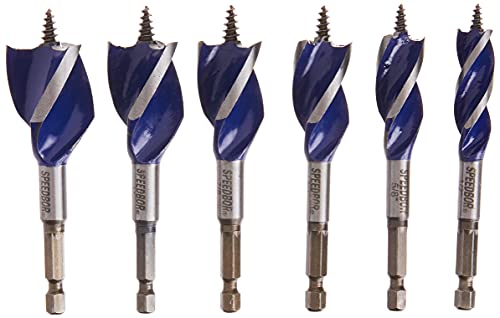
When running conduit and installing electrical boxes in wood framing, clean holes reduce splintering and allow snug fits for bushings and conduit. These 4″ SPEEDBOR bits have three cutting spurs and a full screw-point tip to self-feed and create cleaner holes with less breakout.
- Features: Three cutting spurs, self-feed screw point, shorter overall length for tight spaces.
- Why It Helps: Produces cleaner holes in 2x material for cable and conduit entries, with faster drilling and reduced tear-out.
- Limitations: Designed for wood—masonry or metal requires different bit types.
Professional Masonry Drill Bit Set (10PCS) By TITGGI
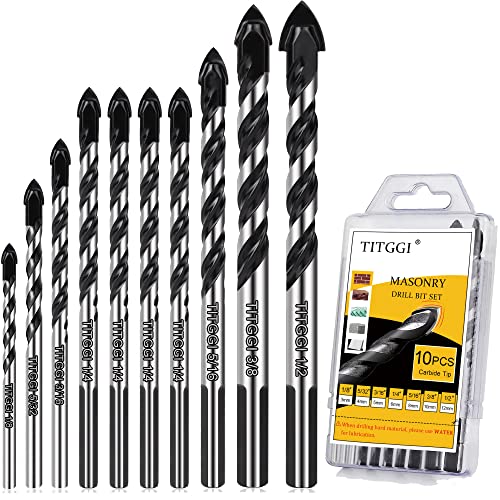
Electrical rough-in in basements, concrete walls, or brick requires carbide-tipped masonry bits. This TITGGI set includes multiple sizes from 1/8″ to 1/2″ and features industrial-strength tungsten carbide tips with a double U-groove for fast dust removal and longer life.
- Features: Carbide tip, double U-groove dust removal, 3-flat shank for secure chuck hold.
- Why It Helps: Effective on concrete, brick, and tile when drilling holes for conduit, anchors, or cable paths.
- Limitations: Use with hammer drill for best results; not intended for finishing or countersinking delicate tile without proper technique.
NEIKO 10194A Titanium Step Drill Bit
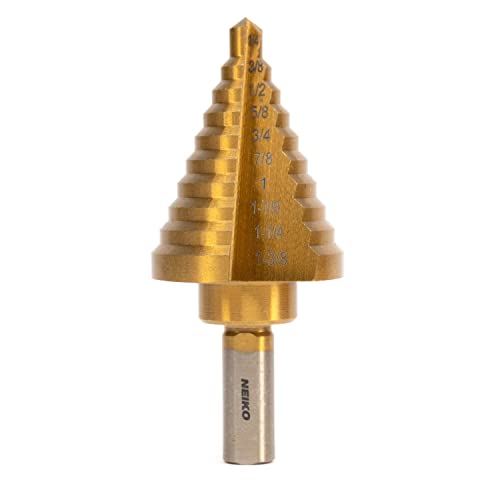
Step bits are useful when enlarging holes in thin metal electrical boxes, panels, and sheet metal. This NEIKO titanium-coated step bit offers 10 sizes from 1/4″ to 1-3/8″, with a 2-flute design and high-speed alloy steel for durability and cleaner metal holes without switching bits.
- Features: Titanium nitride coating, 10 step sizes, 135° split-point tip, 2-flute spiral to deburr as it expands.
- Why It Helps: Quickly sizes knockout holes in metal boxes and panels while minimizing sharp edges and burrs.
- Limitations: Best for thin metals; not for thick steel or masonry applications.
Buying Guide: Choosing Drill Bits For Electrical Rough-In
Electrical rough-in covers several distinct tasks: driving fasteners, boring holes in wood studs, drilling through masonry, fishing cable, and enlarging knockouts. Selecting the right type of bit for each task avoids rework and improves safety.
Material And Tip Type
- Wood Bits: Spade, auger, or brad-point bits and specialized SPEEDBOR bits produce clean holes in framing with less tear-out.
- Masonry Bits: Tungsten carbide-tipped bits are required for concrete, brick, and block; use a hammer drill for best performance.
- Metal/Box Work: Step bits or high-speed steel (HSS) bits with titanium coatings cut thin metal boxes and panels cleanly.
- Driver Bits: Impact-rated, double-ended driver bits with Robertson/Phillips ends reduce stripping and fit common electrical screws.
Length, Flexibility, And Shank
- Length: Choose longer bits (4″–6″) for recessed boxes or drilling through multiple studs; shorter bits are better in tight spots.
- Flexible Fish Bits: For pulling cable through cavities, flexible auger/fish bits with a fish-eye hole are essential to thread and pull wire.
- Shank Compatibility: Ensure bits fit your drill’s chuck or quick-change system—3-flat shanks or 1/4″ hex are common for secure grip.
Durability And Coatings
- Coatings: Titanium nitride and black oxide improve wear resistance on metal bits.
- Carbide Tips: Required for masonry; they last longer and resist abrasion when drilling concrete and brick.
- Impact-Rated Bits: Use bits rated for impact drivers when working with impact drivers to avoid breakage.
Hole Size Range And Versatility
- Multi-piece Sets: Offer a range of sizes so you can start small and step up as needed for conduit or cable bushings.
- Step Bits: Good for a range of metal hole sizes without swapping bits frequently.
Comparison Perspectives
- Speed Vs. Finish: SPEEDBOR and brad-point bits prioritize clean finishes in wood; carbide masonry bits prioritize speed and life in concrete.
- Reach Vs. Rigidity: Flexible fish bits reach long cavities but are not suitable for hard materials; rigid bits are needed for masonry and thick studs.
- Specialization Vs. Convenience: Specialist bits perform their task better (e.g., masonry vs. wood) while multi-purpose sets offer convenience but may sacrifice longevity on hard materials.
Safety And Best Practices
- Wear eye and ear protection when drilling, especially masonry and metal.
- Use pilot holes where appropriate to reduce tear-out and bind-up.
- Match drill speed and feed pressure to the material—slower speeds and steady pressure for masonry, higher speeds for wood and metal where appropriate.
- Secure workpieces and use a proper clamp or guide when drilling through thin material to prevent blowout or grab.