Looking For a reliable pneumatic sander for woodworking? This guide reviews five top-rated air-powered sanders suitable for wood, auto body, and composite work. Below is a concise comparison table to help you scan features at a glance.
| Product | Type / Pad Size | Key Feature | Brand |
|---|---|---|---|
| ZFE Random Orbital Sander 5″ & 6″ | 5″ & 6″ Random Orbital | Extra 5″ backing plate, dust bag included | ZFE |
| Autolock 5 Inch Air Random Orbital Sander | 5″ Random Orbital (DA) | Low vibration, dual-action operation | Autolock |
| Pneumatic Air Sander 6 Inch DA Palm Sander | 6″ Random Orbital (DA) | High-speed 12,000 RPM, accessories included | RYCUBRE |
| KUIMIT 5″ Air Sander Kit | 5″ Dual Action | Built-in regulator 2,500–12,000 RPM, cushioned grip | KUIMIT |
| 3M Random Orbital Sander 20317 | 5″ Random Orbital (Stikit) | Professional 0.28 HP motor, balanced operation | 3M |
ZFE Random Orbital Sander 5″ & 6″

This ZFE pneumatic sander offers both 5″ and 6″ backing plate options and includes a dust bag with a 1 meter vacuum tube for basic dust control. The tool emphasizes an all-steel movement with hardened rotor and cylinder components for durability. An integrated regulator allows variable speed up to 10,000 RPM, intended to reduce operator fatigue with a light ergonomic palm grip. Feature set highlights use for deburring, polishing, and derusting across wood, metal and painted surfaces.
Autolock 5 Inch Air Random Orbital Sander

The Autolock 5″ air random orbital sander is positioned as a dual-action (DA) palm sander with a precision balanced motor for smooth operation and low vibration. Its compact profile and lightweight design aim to improve control for fine woodworking and auto body finishing. The product notes focus on comfortable handling and smooth performance for extended use, which can be beneficial for finishing stages on wood projects.
Pneumatic Air Sander 6 Inch DA Palm Sander

This 6″ DA palm sander emphasizes high-speed performance with a maximum rated speed of 12,000 RPM and a hardened steel internal core for longevity. The kit includes multiple sandpapers and polishing pads, making it ready for a range of sanding steps from stock removal to polishing. The soft-grip cushioned cover reduces vibration for better comfort during longer sessions and the variable speed control supports material-specific adjustments.
KUIMIT 5″ Air Sander Kit

The KUIMIT 5″ dual-action sander features a built-in regulator enabling on-the-fly RPM adjustment between 2,500 and 12,000 without stopping work. It advertises a precision-balanced 12,000 RPM motor with minimal vibration and a cushioned grip to reduce fatigue. Designed as a garage-ready kit, it targets car detailing and woodworking with the convenience of single-handed speed control while wearing gloves.
3M Random Orbital Sander – 20317
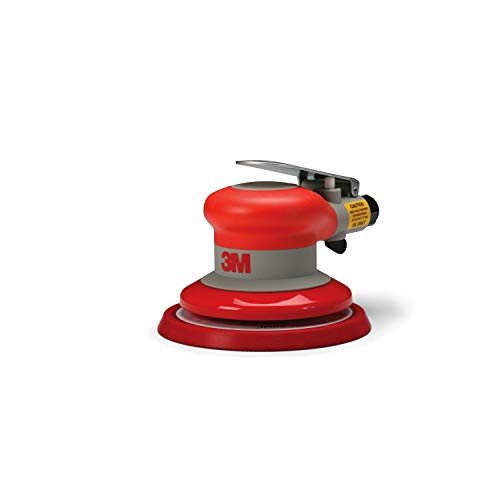
The 3M Original Series 20317 pneumatic palm sander is built around a 0.28 HP motor and a precision balanced design for consistent finishing. Its Stikit disc pad suits 5″ discs and aims to provide hours of continual use beyond typical electric units. The focus is on professional performance and smooth operation, which supports consistent wood finishing and composite sanding tasks.
Buying Guide: How To Choose A Pneumatic Sander For Wood
Selecting the right air sander for woodworking means matching tool characteristics to the task. Key considerations below will help refine your choice.
Type And Action
- Random Orbital (DA) Sanders combine rotation and orbit for reduced swirl marks—best for finish sanding on wood.
- Orbital/Disc Sanders may remove material faster but can leave visible scratches; suitable for initial stock removal with coarse grits.
Pad Size And Compatibility
- Common sizes: 5″ and 6″. Larger pads cover more area faster; smaller pads are better for tight spots and detail work.
- Check backing plate type (Stikit, hook-and-loop) for disc compatibility and availability.
Motor Power, RPM Range, And Control
- Higher RPMs enable faster sanding but may require lighter pressure and finer technique. Look for variable speed to adapt to rough shaping vs. finishing.
- Built-in regulators or adjustable valves let you change speed without tools—useful when switching between aggressive sanding and final finishing.
Orbit Size And Finish Quality
- Smaller orbital diameters reduce swirl risk and improve finish quality; larger orbits remove material faster.
- For wood finishing, a smaller randomized orbit generally yields finer results.
Ergonomics And Vibration Control
- Look for cushioned grips, low height for palm control, and precision-balanced motors to limit vibration and hand fatigue.
- Lower vibration improves comfort and helps maintain consistent pressure for even sanding results.
Durability And Internal Construction
- All-steel rotors, cylinders, and hardened components extend service life for shop or heavy-duty use.
- Consider tools with sealed or leak-proof switches for reliability and reduced air loss.
Dust Management
- Integrated dust bags or ability to connect to a shop vacuum helps reduce airborne dust and keeps workpieces cleaner—important when finishing wood.
- Check how easy it is to attach and empty dust collection accessories.
Accessory Kits And Value
- Kits that include multiple sandpapers, polishing pads, and backing plates offer immediate versatility for sanding stages.
- Assess replacement pad and disc availability for the pad system the sander uses.
Use Case Perspectives
- Fine Wood Finishing: Prefer a well-balanced DA sander with small orbit and variable speed.
- Stock Removal: Larger pad and higher RPM with coarse grits work faster but require care to avoid gouging.
- Auto/Composite Work: Look for high RPM, cushioned grips, and accessories for polishing and buffing.