Finding the right Japanese dovetail saw can elevate fine joinery by delivering clean, precise cuts with minimal effort. This guide curates five top-rated options suited for dovetails, tenons, and fine joinery, emphasizing pull-stroke mechanics, high-quality Japanese steel, and craft-made construction. Each pick blends traditional technique with modern usability, helping enthusiasts and professionals achieve repeatable results.
| Product | Brand | Key Benefit |
|---|---|---|
| SUIZAN Dozuki 6″ Crosscut | SUIZAN | Lightweight pull saw with razor-cut steel |
| Temple Tool Japanese Pull Saw – 9.5 | Temple Tool | Rip-cut oriented, precise dovetail cuts |
| SUIZAN Dozuki 7″ Rip Cross Angle | SUIZAN | Cross-angle pull cut, versatile for joinery |
| Temple Tool Dozuki 6″ Dozuki 6 | Temple Tool | Dozuki 6″ with universal teeth for fine joinery |
| SUIZAN Dozuki 9.5″ Crosscut | SUIZAN | Long blade, ideal for deeper dovetails |
Note: The links above route to Amazon listings. Each product emphasizes traditional Japanese pull-stroke cutting, renowned for crisp, narrow kerf edges and reduced effort compared with push saws.
SUIZAN Dozuki 6″ Crosscut

The SUIZAN Dozuki 6″ Crosscut is a compact pull saw designed for dovetails and fine joinery. Its Japanese steel delivers razor-sharp cuts with minimal deflection. Made in Japan by master craftsmen, it reflects a long tradition of precise toolmaking. The pull-cut action reduces tear-out and produces a cleaner edge in tight joints, making it a solid choice for small dovetails and delicate work.
Temple Tool Japanese Pull Saw – Rip-Cut 9.5

This rip-cut oriented pull saw from Temple Tool Co. features an elevated handle and brass components, combining aesthetics with performance. The 18 TPI teeth are optimized for dovetails, small tenons, and fine joinery. Cutting on the pull stroke yields a thin kerf and light effort, enabling accurate, repeatable cuts with a smooth finish suitable for professional work.
SUIZAN Dozuki 7″ Rip Cross Angle

This 7″ rip-cross-angle Dozuki from SUIZAN adds versatility to joinery tasks. The blade combines crosscut and rip-teeth for efficient cuts across but also with-the-grain work. Made in Japan, it carries the brand’s hallmark quality of Japanese steel for sharp, long-lasting performance, making it suitable for dovetails and Kumiko-like applications that demand precision.
Temple Tool Dozuki 6″ Dozuki 6

The 6″ Dozuki from Temple Tool Co. emphasizes universal teeth with a lightweight profile for controlled dovetail and tenon work. Its Wingnut wooden handle and brass accents provide a classic look while supporting precise cuts. The saw’s design allows for accurate, effortless pull cuts that help maintain tight joints and clean arrays of dovetails.
SUIZAN Dozuki 9.5″ Crosscut
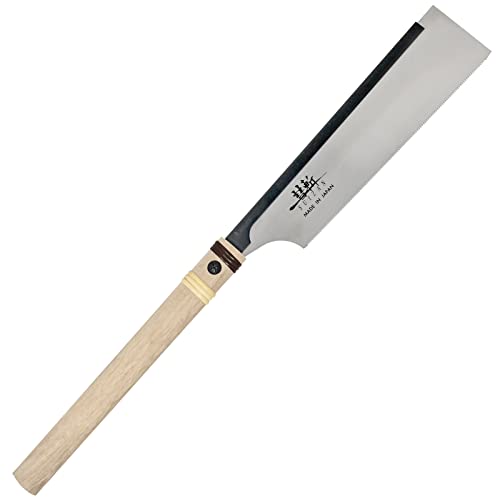
This longer 9.5″ Dozuki from SUIZAN is ideal for deeper dovetails and longer crosscuts. The product emphasizes Japanese steel and all-Japan craftsmanship, ensuring a consistent edge and smooth cut flow. It is suitable for more ambitious joinery tasks where blade length can reduce re-crossing or re-cutting as joints progress.
Buying Guide: Key Considerations For Japanese Dovetail Saws
- Blade type and tooth pattern: Dozuki blades are single-edged and typically sharp for precise joinery. Rip-cut, cross-cut, or universal teeth affect the cut direction and finishing behavior. Choose based on the primary joints you make (dovetails vs. general joinery).
- Blade length and kerf: Short blades offer control in tight spaces; longer blades cover more material with fewer strokes. Narrow kerf reduces material waste and makes delicate cuts easier.
- Handle design and balance: A comfortable wooden handle with brass or metal hardware provides stability during pull cuts. Ergonomics matter for sessions requiring many joints or deeper dovetails.
- Material quality: High-quality Japanese steel resists wear and maintains a sharp edge longer. Look for blades marked as made in Japan with traditional craftsmanship.
- Maintenance: Keep blades clean and dry, occasionally oil the blade to prevent corrosion, and store in a protective sheath or rack to maintain alignment.
- Intended use: Some blades are optimized for dovetails, others for general joinery. Evaluate whether you need crosscut or rip-cut capabilities in a single tool or prefer dedicated tools for each operation.
- Cost vs. value: While premium blades cost more upfront, their edge retention and precision can reduce waste and filing time in complex joinery projects.
- Skill level: Some models are more forgiving due to thinner kerf and lighter weight, making them suitable for beginners; others demand more control and experience for tight-fitting joints.
Across these options, Japanese pull saws consistently offer clean cutting action and efficient edge control. For dovetails and fine joinery, choosing between a shorter, controllable blade or a longer blade for deeper joints depends on your project scale and comfort with edge alignment. The listed models provide a spectrum of blade styles, lengths, and handle designs to suit different workshops and skill levels.