Summary: This guide reviews top epoxy, coatings, and finishing tools useful for smoothing, sealing, repairing, and preparing 3D printed parts. Below is a quick reference table for the five selected products covered in detail.
| Product | Primary Use | Key Feature |
|---|---|---|
| Smooth-On XTC-3D™ 20 | Clear top coat for smoothing 3D prints | 2A:1B mix, impact-resistant, cures to 80D |
| MAX CLR A/B Crystal Clear Epoxy | Food-safe high-gloss coating for PLA/PET surfaces | FDA-compliant formulation, waterproof |
| FUNCRECOL UV Light Curing Putty | Fast spot repairs and gap filling | UV cure in under 1 minute, sandable |
| XIFOWE Resin Drill Rotary Sander Kit | Sanding, polishing, and detailing cured prints | Cordless rotary with 57 accessories, 3 speeds |
| AFA Tooling Deburring Tool (11 Blades) | Edge deburring and trimming of printed parts | Swivel head, high-speed steel blades |
Smooth-On XTC-3D™ 20 Mold Making & Special Effects Silicone Rubber
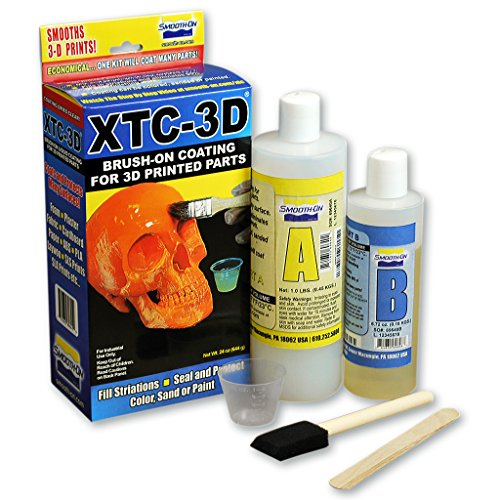
Smooth-On XTC-3D™ 20 is formulated as a clear top coat designed to smooth & finish 3D printed parts. It works with SLA, SLS, PLA, ABS, laywood and powder prints. The product mixes at a 2A:1B by volume ratio and provides a working time of about 10 minutes. Expect a tack-free cure to a hard, impact-resistant coating in roughly 3.5 hours, reaching about 80D Shore hardness.
Features referenced include: clear top-coating for smoothing, compatibility with common print materials, and the specified mix/working/curing profile. Typical use cases are sealing layer lines, adding surface durability, and providing a base for paints or finishes. Note that good mixing and working quickly are important due to the short pot life.
MAX CLR A/B Crystal Clear Epoxy Resin Coating
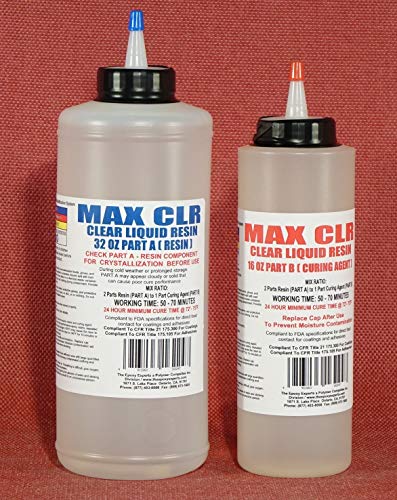
MAX CLR is an A/B crystal-clear epoxy intended for coating PLA, PVC, PET and similar rigid surfaces. It advertises an FDA-compliant formulation for brief food contact, a high-gloss clear finish, and waterproof properties once fully cured. This makes it suitable for items like tabletop displays or trays made from 3D printed parts where a clear, durable surface is required.
Referenced features: FDA compliance for brief-use direct food contact, crystal-clear high gloss finish, and full cure waterproofing. Use requires careful mixing per manufacturer instructions and adequate cure time before food contact or heavy use.
FUNCRECOL UV Light Curing Putty For 3D Prints And Models
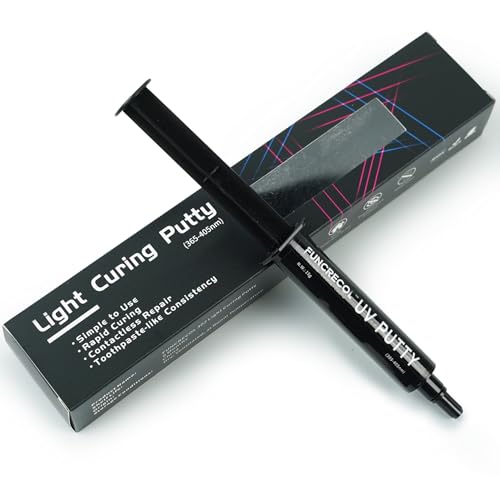
FUNCRECOL’s UV curing putty is a fast repair filler formulated to fill nicks, scratches, and small cracks on resin and plastic parts. It cures under 365–405nm UV light in under a minute, minimizing downtime. The paste-like consistency is designed for easy application, sanding, and painting after cure.
Referenced features include ultra-fast UV cure time, multi-surface compatibility, and sandability/paintability post-cure. This product suits quick repairs on 3D prints or for filling small imperfections prior to final finishing.
XIFOWE Resin Drill 3D Printed Resin Cured Sanding And Polishing Tool Kit
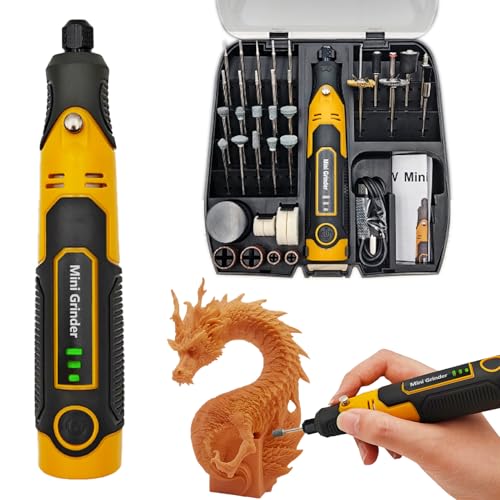
The XIFOWE rotary kit provides a cordless, three-speed rotary tool and 57 accessory bits for drilling, sanding, and polishing cured resin prints. Speed settings (12k/14k/17k RPM) let you adapt removal rate and surface finish during stages from heavy material removal to fine polishing. The kit comes organized in a hard plastic case for storage.
Referenced features: multi-speed control for different finishing stages, broad accessory set for sanding/polishing/engraving, and compact storage. Use this for smoothing cured resin, refining details, and preparing surfaces for coatings or paints. Proper PPE and controlled speeds are advised for consistent results.
AFA Tooling Deburring Tool With 11 High Speed Steel Swivel Blades

AFA Tooling’s deburring tool features a swivel head and comes with a total of 11 high-speed S-blades for trimming and smoothing edges on plastic, metal and 3D printed parts. The swivel head helps conform to curved or uneven edges. The blades are tempered HSS for durability and wear resistance.
Referenced features include the swivel head design, multi-material application, and HSS blade longevity. This tool is useful for removing support marks, trimming nozzle artifacts, and achieving clean edges before sanding or coating.
Buying Guide: Choosing The Right Epoxy And Finishing Tools For 3D Prints
This buying guide highlights factors to evaluate when selecting coatings, epoxies, and finishing tools for 3D prints.
Coating And Epoxy Type
- Clear Top Coats (e.g., XTC-3D): Designed to fill layer lines and provide a hard, paintable surface. Ideal for models that require structural surface protection.
- Crystal-Clear Epoxy (e.g., MAX CLR): Best when a high-gloss, transparent, waterproof finish is needed—suitable for display pieces and tabletops.
- UV Putty: Excellent for small, rapid repairs and gap filling; cures almost instantly under the right UV wavelength.
Compatibility With Print Material
- Verify manufacturer notes for PLA, ABS, resin (SLA/DLP), SLS, and powdered materials. Some epoxies bond better to certain plastics.
- Resin prints often require isopropyl wash and post-cure before coating for reliable adhesion.
Work Time And Cure Profile
- Pot Life/Working Time: Short pot life means faster application but less time to correct mistakes. Factor in size of the part and room temperature.
- Cure Time: Full mechanical properties and waterproofing are reached after manufacturer-specified cure times—plan project timelines accordingly.
Surface Preparation Tools
- Deburring Tools: Swivel-head deburring tools and multiple HSS blades help remove supports and smooth edges before coating.
- Rotary Sanders: Variable-speed rotary tools with sanding/polishing bits are useful for progressive smoothing from coarse to fine grit.
- Fillers: UV putties and epoxies for filling pinholes and seams—choose products that sand and paint well post-cure.
Finish Requirements
- Decide between matte, satin, or high-gloss outcomes. Epoxies typically produce gloss; sand and paint to achieve matte appearances.
- For food-contact items, confirm the epoxy’s compliance and understand limitations (e.g., brief food contact vs. prolonged contact).
Durability And Mechanical Properties
- Shore hardness ratings indicate surface stiffness—higher values are more impact resistant but less flexible.
- Consider UV stability if parts will be outdoors; some clear epoxies yellow over time unless UV inhibitors are included.
Health, Safety, And Handling
- Work in a well-ventilated area and use nitrile gloves and eye protection when mixing or applying epoxies and resins.
- Follow manufacturer guidance for waste disposal, and avoid direct skin contact with uncured materials.
Comparison Perspectives
- Speed vs. Control: UV putty maximizes speed for small repairs; multi-part epoxies offer more working time for larger surface coatings.
- Finish vs. Function: Clear epoxies give aesthetic gloss and waterproofing, while harder topcoats emphasize impact resistance and paint adhesion.
- Preparation Workflow: Deburring and rotary sanding streamline coating adhesion; investing in good prep tools reduces coating failures and improves final appearance.
Use this guide to match the coating or tool to your intended surface finish, material compatibility, and workflow. Refer to each product’s detailed instructions for best results and safety precautions.