Searching for the best compound miter saws? This guide highlights five top options designed for accuracy, durability, and ease of use. Each model supports angled cuts, bevel adjustments, and reliable dust management, helping you tackle crown molding, baseboards, decking, and specialty projects with confidence. Whether you’re a DIYer or a pro, these selections balance power, portability, and value across a variety of materials.
Overview of chosen models: Metabo HPT C10FCG2, SKIL MS6305-00, DEWALT DWS780, DEWALT DWS779, and Marvtool 10-Inch Sliding Compound Miter Saw. The following table summarizes key specs and highlights to help you compare options at a glance.
| Product | Brand | Cutting Capacity (Approx.) | Bevel / Miter Capabilities | Notable Features |
|---|---|---|---|---|
| Metabo HPT C10FCG2 | Metabo HPT | Standard 10″ crosscuts | Single Bevel 0-45° | Xact Cut Shadow Line, lightweight 24 lb, precise miter scale |
| SKIL MS6305-00 | Skil | 10″ capacity | Dual Bevel, left/right 0-48°/45° | LED shadow line for accuracy, compact design |
| DEWALT DWS780 | DEWALT | 12″ capacity | Double Bevel 0-48° | XPS LED shadow line, robust dust management |
| DEWALT DWS779 | DEWALT | 12″ capacity | Double Bevel 0-48° | Tall sliding fences, strong performance, dust control |
| Marvtool 10-Inch Sliding | MarvTool | 10″ capacity | Single Bevel 0-45° | Extension table, 5,000 RPM, solid value |
Metabo HPT 10-Inch Single Bevel Compound Miter Saw
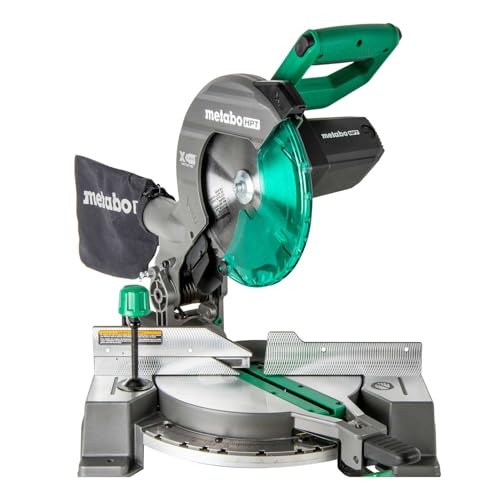
Powered by a 15-amp motor, this Metabo HPT model delivers up to 5,000 RPM for fast, precise cutting. It features a single bevel range of 0 to 45 degrees, an improved miter scale, and a large 10-inch table that supports workpieces securely. A lightweight design at about 24 pounds aids transport between job sites, while a robust vise clamp ensures accurate, repeatable cuts. Ideal for baseboards, trim, and cabinetry tasks where portability matters.
SKIL 10″ Dual Bevel Sliding Compound Miter Saw
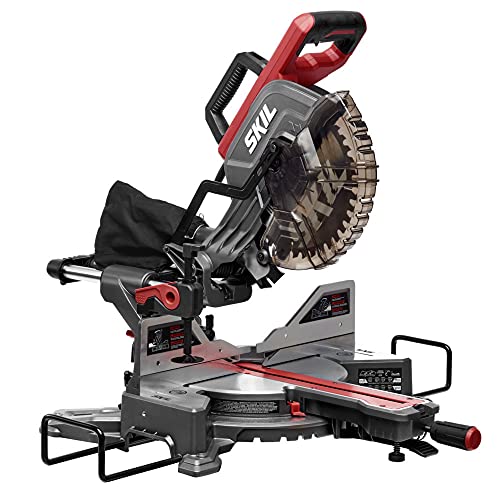
This 10-inch SKIL model offers dual bevel capability with four positive stop positions at 48°, 45°, 0°, and 45° to the opposite side. A bright LED shadow line provides precise cut alignment, which helps when working with Crown molding and trim. The saw balances power (around 4,800 RPM) with a space-saving profile, enabling quick setups and accurate crosscuts on demanding projects.
DEWALT Miter Saw DWS780 (12-Inch) with XPS Shadow Light

DEWALT’s 12-inch double bevel sliding miter saw stands out with the XPS LED shadow line for accurate cutline indicators and an extensive dust management system. The 1100-watt motor delivers sustained power for heavy-duty tasks, while a dual-bevel mechanism supports left and right bevels up to 48 degrees. An integrated blade positioning system plus a spacious table make it a strong option for moldings and larger trim projects.
DEWALT Miter Saw DWS779

DEWALT’s DWS779 is a 12-inch double bevel model renowned for its tall sliding fences, enabling the handling of baseboards and crown molding up to 7-1/2 inches nested. With a 3,800 RPM motor and an efficient dust collection system, it balances power with cleanup. It’s designed for accurate bevel and miter cuts, making it well-suited for professional woodworking and finish carpentry.
Marvtool 10-Inch Compound Miter Saw

This model offers a robust 15-amp motor with up to 5,000 RPM, supporting left-side miter angles from 0° to 45° and bevels from 0° to 45°. A transparent blade guard enhances visibility, while a vise clamp and dust bag contribute to accuracy and workspace cleanliness. An included extension table expands the supported material length for broader projects, delivering solid performance at a favorable price point.
Buying Guide
Key purchase considerations help you choose the best compound miter saw for your needs:
- Cutting capacity: 10″ vs 12″ blades affect the max width of material you can crosscut and the size of crown molding you can handle. For large baseboards and casing, a 12″ model often offers more versatility.
- Bevel and miter range: Dual bevel models let you tilt left and right, reducing setup time and increasing flexibility for complex angles. Check the degree stops and the smoothness of the bevel mechanism.
- Power and RPM: A higher RPM and ample motor torque ensure clean, fast cuts through hardwoods and dense composites. Look for a motor around 12–15 amps for general carpentry tasks.
- Accuracy features: Shadow lines, XPS lighting, laser guides, and precision miter scales improve alignment and repeatability. A clear, robust fence system also contributes to straight cuts.
- Dust management: Efficient dust collection minimizes cleanup and helps preserve visibility during cutting. Consider models with integrated bags or shrouds that channel sawdust away from the workpiece.
- Portability vs. stability: Lightweight models are easier to transport to job sites, but ensure the base provides stability for precise cuts. Some include extension tables for longer stock.
- Accessories: Look for included blades, clamps, wrenches, and dust bags. Higher-end models may feature additional clamps and clamping systems for repeatable results.
Overview of buying considerations from multiple perspectives:
- For DIY projects: Prioritize lightweight designs, reliable accuracy features, and budget-friendly options with essential accessories included.
- For professional use: Prioritize larger cutting capacity, durable construction, strong dust collection, and dual-bevel capability for efficient workflow on a variety of materials.
- For space-constrained shops: A compact model with a strong extension system and wall-friendly footprint can maximize available room while still delivering precise cuts.
All five selected models balance performance and value across different woodworking needs. When choosing, align the saw’s capabilities with the scale of your projects, material types, and workspace constraints to ensure consistent results.