Box joints (finger joints) require precision, sharp cutters, and the right profile for strong glue surfaces. This guide summarizes top Amazon options for box joint and related joinery bits, plus a quick comparison table to help you choose the right router bit for your project.
| Product | Type / Shank | Key Feature |
|---|---|---|
| Pissente Finger Joint Router Bit | 1/2″ Shank | Designed for MDF, solid wood, plywood; sharp chisel cutting |
| Newdeli Finger Joint Router Bit | 1/4″ Shank | Reversible design; C3 carbide blades; 1-3/8″ diameter |
| XDENGP Finger Joint Router Bit | 1/4″ Shank | 1-1/2″ cutting height; anti-kickback; C3 carbide |
| Jooyle Tongue & Groove + Reversible Set | 1/4″ Shank | Includes reversible finger joint plus tongue & groove bits |
| Whiteside Locking Drawer Glue Joint Bit | 1/2″ Shank | Premium carbide; precision ground for high RPM |
Pissente Finger Joint Router Bit

Brand: Pissente. This bit is built for tenoning and finger/joint work across multiple materials including MDF, solid wood, particleboard and plywood. The listing emphasizes sharp cutting edges, high hardness, and accurate positioning for cleaner cuts and reduced rework. With a 1/2″ shank diameter, it suits table-mounted routers and larger handheld routers. Recommended when strong, continuous finger profiles are needed for boxes, frames, and door components.
Newdeli Finger Joint Router Bit

Brand: Newdeli. This reversible finger joint router bit has a 1/4″ shank and a 1-3/8″ cutting diameter, creating finger joints from 7/16″ up to 1-1/4″ high. It uses YG6 carbide and C3 micro-grain tungsten blades with a heat-resistant Teflon coating to reduce resin build-up. Designed for handheld and table routers, it targets smaller boxes, cabinets, and DIY joinery where reversible cutting and multi-height capability matter.
XDENGP Professional Finger Joint Router Bit

Brand: XDENGP. This single-piece finger joint bit offers a 1-1/2″ cutting height and 1/4″ shank, with C3 tungsten carbide cutters and a carbon steel body. The listing highlights an anti-kickback design and guidance on clamp depth and RPM (≤18000) to maintain safety and cut quality. The larger cutting height is useful for thicker workpieces and deeper finger profiles when making durable box and drawer joints.
Jooyle Tongue & Groove And Reversible Finger Joint Bit Set
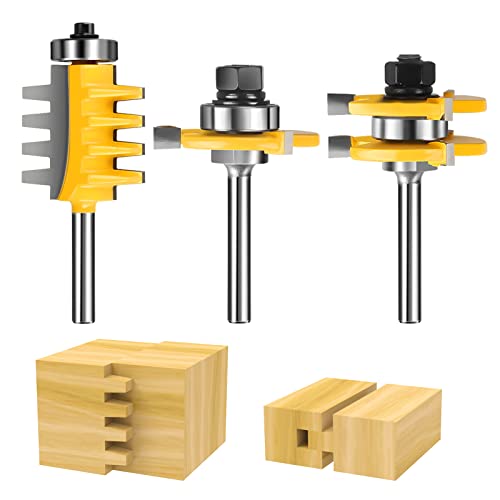
Brand: Jooyle. The 3-piece set includes a reversible finger joint bit along with tongue and groove bits, all with 1/4″ shanks. Constructed from tungsten steel alloy with a special grinding process, the set covers finger joints and complementary joinery profiles. It’s suitable for solid wood, MDF, plywood and chipboard, making it a practical multi-function kit for small shops needing both box joints and mating tongue-and-groove connections.
Whiteside Locking Drawer Glue Joint Bit

Brand: Whiteside. This large-diameter locking drawer glue joint bit is made from premium carbide and precision ground for balance at high RPM. Whiteside emphasizes industrial quality suitable for production environments. While primarily marketed as a locking drawer joint, its precision and carbide construction make it relevant where consistent, tight-fitting glue joints are required in box or drawer fabrication.
Buying Guide: Choosing The Right Bit For Box Joints
Selecting a router bit for box joints depends on several factors. Use this guide to compare options by profile, material, shank size, and setup needs.
Profile And Joint Type
- Finger (Box) Joint Bits: Create interlocking square fingers—best for boxes, crates, and drawer sides.
- Reversible Bits: Allow flipping for longer life and balanced wear; useful for table routers with consistent depth stops.
- Locking/Drawer Bits: Provide interlocking profiles with more glue surface—consider if you need integrated locking features.
Shank Size And Router Compatibility
- 1/2″ Shank: Offers greater stability and less vibration at high RPM; preferred for heavy-duty and table-mounted work.
- 1/4″ Shank: Common on compact routers; acceptable for lighter-duty shop or handheld use. Match shank to collet size or use a reducer sleeve where safe.
Cutting Material And Coating
- Carbide Tips (C3, YG6): Provide long life, better heat resistance, and cleaner cuts. Ideal for high-speed routing and abrasive materials like MDF and particleboard.
- Solid Carbide Vs Carbide-Tipped: Carbide-tipped can be more economical; solid carbide may offer extra rigidity for certain profiles.
- Coatings: Teflon or other coatings reduce resin build-up and corrosion, improving performance when cutting resinous or composite materials.
Cutting Diameter And Height
- Match cutting height to stock thickness. Bits with larger cutting heights (1″+) suit thicker stock and deeper fingers.
- Cutting diameter impacts the finger width and overall joint profile—ensure the bit creates the finger size you need for strength and aesthetics.
Durability And Balance
- Precision Grinding: Minimizes vibration at high RPM; important for smooth, repeatable cuts.
- Wear Resistance: Look for tungsten carbide and wear-resistant coatings when frequent production use is expected.
Safety And Setup
- Use proper clamping and router fences for consistent finger spacing and depth.
- Follow manufacturer RPM recommendations and insert depth (min insert line) to avoid imbalance or kickback.
- Consider anti-kickback designs and always use push blocks or featherboards when appropriate.
Versatility And Value
- Multi-bit sets (tongue & groove plus finger bits) expand joinery options for small shops.
- Reversible bits and matched sets simplify setup for 90-degree joinery and reduce the need for complex jig adjustments.
Comparison Perspectives
- Small Shop / DIY: 1/4″ shank reversible bits (Newdeli, Jooyle, XDENGP) provide flexibility and lower tool cost; good for handheld routers and occasional use.
- Production / Heavy Use: 1/2″ shank, precision-ground carbide bits (Pissente, Whiteside) increase stability, balance, and long-term accuracy.
- Material-Specific: For MDF and particleboard choose carbide-tipped bits with coatings to resist melting and resin build-up; for solid hardwoods prioritize toughness and carbide grade.