Selecting the right trimmer line helps prevent damage to chain link fences by reducing snapback, improving cut efficiency, and lasting longer near metal. Below is a quick summary table of the top picks included in this guide.
| Product | Brand | Key Feature |
|---|---|---|
| Oregon Magnum Gatorline .095 | Oregon | Twisted heavy-duty nylon with inner core |
| Husqvarna Titanium Force .095 | Husqvarna | Co-extruded, dimpled commercial polymer |
| Efrozen Square Twist .105 | efrozen | Square twist shape for faster, quieter cutting |
| A ANLEOLIFE Commercial Square .095 | A ANLEOLIFE | Multi-sided cord, large spool weight |
| COSY GARDEN TOOLS Pentagon .105 | COSY GARDEN TOOLS | Pentagon cut for sharper edges and visibility |
Oregon Magnum Gatorline .095 Trimmer Line

Brand: Oregon. This .095-inch twisted line is described as a heavy-duty, professional option with a high-strength inner core that resists breakage. The twisted profile provides cleaner, straighter cuts and more mass behind each strike, which helps when working near chain link fences where repeated metal contact can otherwise shred round lines.
- Durability: Inner core nylon increases break resistance when hitting fence links.
- Compatibility: Fits most standard heads (gas and electric).
- Use Case: Recommended where thicker vegetation and occasional wire contact occur.
Husqvarna Titanium Force .095 Spooled String

Brand: Husqvarna. A round, dimpled, co-extruded commercial-grade polymer line designed for durability and energy-efficient cutting. The undulated surface reduces noise and helps maintain cutting performance against tough weeds and in situations where metal contact is possible.
- Material: Co-extruded polymer for improved wear resistance.
- Performance: Dimpled surface helps smooth operation and steady cutting.
- Suitability: Good for users wanting a balance of toughness and quieter operation near fences.
Efrozen Square Twist .105″ Commercial String

Brand: efrozen. The .105-inch square twist profile creates sharp edges and claims faster cutting speed and reduced operating noise. Square and multi-sided profiles resist rolling and can produce cleaner cuts when they brush against metal links, reducing the tendency to fray quickly.
- Cut Profile: Square twist gives razor-like edges for aggressive cutting.
- Noise Reduction: Designed to be quieter than round lines.
- Compatibility: Advertised as compatible with most gas and electric trimmers.
A ANLEOLIFE Commercial Square .095″ String Trimmer Line
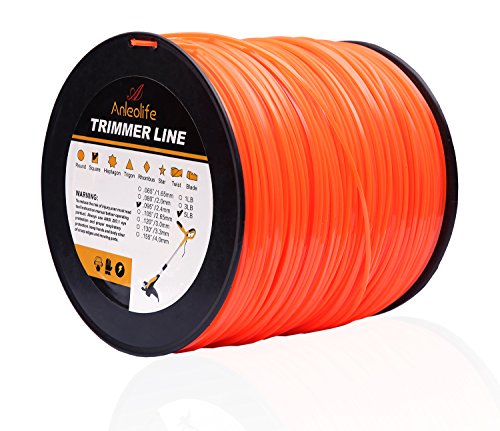
Brand: A ANLEOLIFE. This commercial square multi-sided cord emphasizes impact strength and fast slicing through heavier weeds. Sold as a large spool (5-pound example) with a bonus line cutter, it’s aimed at heavy-use environments where repeated contact with chain link fences can occur.
- Construction: Nylon 66 copolymer for improved toughness.
- Profile: Multi-sided square design for aggressive cutting and reduced fray.
- Ideal For: Commercial or large-lot maintenance where frequent fence contact is expected.
COSY GARDEN TOOLS Pentagon .105″ Trimmer Line

Brand: COSY GARDEN TOOLS. The pentagon-cut line uses sharper flat edges to slice vegetation and resist breakage on impact. The bright orange color improves visibility so you can spot the line and avoid unusual wear from hidden fence segments.
- Cut Shape: Pentagon profile for sharper edges and faster cutting.
- Visibility: High-visibility orange helps identify line when trimming near fences.
- Material: Heavy-duty nylon with plasticizing additives for impact resistance.
Buying Guide: Choosing Trimmer Line For Chain Link Fence Areas
When selecting a weed eater string for work near chain link fences, focus on line profile, diameter, material, and compatibility. These factors influence durability, cut quality, and the likelihood of premature wear when contacting metal.
Line Profile
- Round: Smooth and generally quieter, but often wears faster when striking metal.
- Multi-sided / Square / Pentagon: Produce sharper edges and better cutting performance. Flat-sided lines tend to hold up better against fence contact because they slice rather than tear.
- Twisted / Braided: Offer added mass and durability, resisting breakage on impact.
Diameter
- Thinner Lines (.065–.080): Lightweight, good for light weeds and battery trimmers, but less resistant to fence abrasion.
- Medium (.095–.105): Balanced choice for most homeowners — durable enough for occasional fence contact without overloading the trimmer.
- Thicker (.125–.155): Best for heavy weeds and commercial use; more resistant to snapping but may increase load on small electric trimmers.
Material And Construction
- Nylon / Copolymer: Standard and versatile; copolymers often resist wear and heat better than plain nylon.
- Co-extruded / Reinforced Core: Improves break resistance and longevity when hitting metal.
- Plasticized Additives: Reduce brittleness and help absorb impact from fence contact.
Compatibility And Capacity
- Head Fit: Ensure spool or loose line diameter matches your trimmer head specifications.
- Motor Load: Match line thickness to the power of your trimmer to avoid excess strain on electric or battery models.
- Spool Length: Larger spools suit frequent fence trimming and commercial use, reducing reloading frequency.
Visibility And Safety
- Bright Colors: Orange or bright lines make it easier to spot the string next to fence mesh and reduce accidental grinding against bolts or posts.
- Reduced Snapback: Multi-sided or heavier lines reduce uncontrolled fraying and snapback; always wear eye protection when trimming near metal.
Performance Perspectives
- Durability-Focused: Choose thicker, reinforced, or twisted lines (e.g., Oregon Magnum, A ANLEOLIFE) for repeated fence contact.
- Cut Quality & Noise: If smoother operation and less noise are priorities near homes, consider dimpled or co-extruded lines (e.g., Husqvarna Titanium Force).
- Aggressive Cutting: Square or pentagon profiles (efrozen, COSY) outperform round line when slicing through dense weeds bordering fences.
- Trimmer Compatibility: Heavy-duty commercial lines can overload lightweight trimmers — balance thickness with your tool’s power.
Maintenance Tips For Fence Areas
- Inspect the fence for rusted or sharp links that accelerate wear and trim slowly around those points.
- Use a line of appropriate diameter to avoid repeated breaks and to maintain consistent cutting speed.
- Consider switching to trimmer blades or brush cutter attachments if you frequently hit metal — they can be more durable but require correct compatibility and safety precautions.