Choosing the right walk behind brush cutter can dramatically speed up heavy clearing tasks and keep yards tidy. This guide highlights five strong options, focusing on cutting width, engine power, maneuverability, and durability. Each product profile includes key features to help compare performance, fuel efficiency, and ease of use for American lawns, farms, and large properties.
Buying quick reference: the following table lists the five selected products with core attributes to help you skim for essentials before diving into full specifications.
| Product | Brand | Engine | Cutting Width | Weight |
|---|---|---|---|---|
| BILT HARD Walk Behind String Trimmer | BILT HARD | 170cc 4-Cycle OHV | 22 inches | Not specified |
| SENIX High Wheel Gas Walk Behind | SENIX | 160 cc 4-Cycle | 22 inches | Not specified |
| EISHCGSY Gas Walk Behind | EISHCGSY | 49cc 2-Stroke | Varies by model | Not specified |
| 36 Inch Walk Behind Brush Mower | Generic | 20HP | 36 inches | Not specified |
| AYAWNGJ Walk Behind Lawn Trimmer | AYAWNGJ | 49cc 2-Stroke | Varies by model | Not specified |
BILT HARD Walk Behind Brush Cutter

The BILT HARD model pairs a robust 170cc 4-cycle OHV engine with a one-piece steel deck for strength and longevity. Its manual recoil start improves reliability in variable conditions and heavy mowing tasks. The 22-inch cutting path through dense grass and weeds provides substantial productivity gains on large properties, while durable nylon line handles heavier vegetation. Light handling is aided by 14-inch never-flat wheels and a foldable ergonomic handle, which supports convenient storage and transport between sites.
Engineered for demanding outdoor work, this unit emphasizes power, stability, and user-friendly operation. The combination of wide swath and a sturdy deck makes it a practical option for farms, large yards, and property maintenance where frequent trimming of thick growth is required. Potential buyers should consider fuel availability and routine maintenance, as with all gas-powered walk-behind units.
SENIX High Wheel Gas Walk Behind Brush Cutter

The SENIX unit delivers a 22-inch cutting swath with a sturdy 160 cc 4-cycle engine designed for large areas. It emphasizes low vibration and low emissions, contributing to a more comfortable user experience and reduced fuel consumption. The 14-inch rubber wheels improve terrain handling, while a steel deck with five-position height adjustment lets you tailor cut height from about 1.57 to 3 inches, accommodating uneven ground and varying vegetation.
Users seeking versatility in rough terrain will appreciate the adjustable height and durable construction. This model is positioned for property owners who tackle overgrown lawns, field edges, and brush in rural settings, providing a balance of power, maneuverability, and control over cutting depth.
Gas Walk Behind Brush Cutter by EISHCGSY

The EISHCGSY model uses a 2-stroke engine and dual-function design to cover mowing and loosening tasks. The unit highlights efficient weed removal with a powerful blade capable of dealing with varying weed densities. Its lightweight, two-stroke setup typically translates to lower upfront weight and quicker startup in comparison with heavier gas units. The dual-function approach makes it flexible for garden beds, paths, and moderate land clearing.
Key considerations include fuel efficiency and maintenance for two-stroke engines, which generally require proper oil-muel mixing and routine carburetor care. This option suits homeowners who require straightforward operation with the added benefit of soil loosening to improve aeration and permeability over time.
36 Inch Walk Behind Brush Mower (20HP)
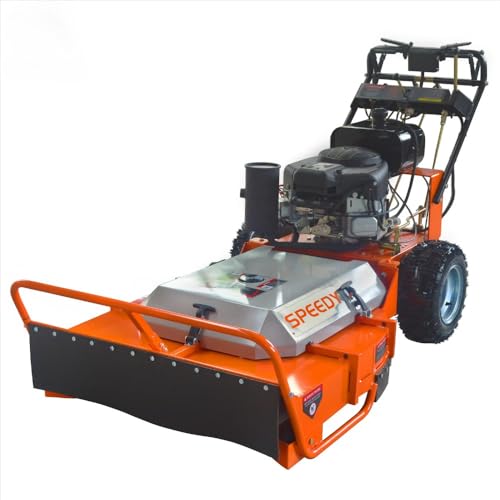
This 36-inch walk-behind brush mower is designed for heavy-duty use with a 20HP commercial-grade engine. The broad cutting deck enables efficient clearing of large areas and dense vegetation, significantly reducing mowing time on expansive properties. The rugged steel construction emphasizes durability in demanding agricultural and farming environments, making it a solid choice for landowners who regularly clear brush and tall grass over wide swaths.
Practical considerations include maintenance access and availability of service for a larger, higher-powered engine. This option is best for property managers, small farms, or landscapes where time-to-clear matters most and where a wider swath translates into meaningful productivity gains, despite the unit’s larger footprint and weight.
AYAWNGJ Walk Behind Lawn Trimmer
The AYAWNGJ model features a 49cc two-stroke engine that emphasizes efficient weed removal with a powerful blade for various weed densities. It employs a walk-behind design suitable for home yards and small farms, offering a balance of portability and performance. The dual function of mowing and loosening helps improve soil permeability while addressing weed growth along borders, paths, and cleared areas.
Key trade-offs include engine size versus cutting width and overall weight. This option is suitable for homeowners seeking a compact, agile tool for mid-sized tasks, garden borders, and lighter brush clearance where a larger machine may be unnecessary or harder to maneuver.
Buying Guide: Key Purchase Considerations
- Engine size and type: Gas engines vary from 49cc two-stroke to 160–170cc four-stroke. Four-stroke engines generally offer cleaner operation and longer life, while two-stroke engines tend to be lighter and more compact but require mixed fuel and more frequent maintenance.
- Cutting width and deck durability: Larger swaths speed up clearing of big areas but add weight and bulk. A steel deck provides better durability in tough terrain, while plastic decks may save weight but offer less longevity.
- Terrain and wheel design: Rubber or pneumatic wheels with adequate tread improve traction on uneven ground. 14-inch wheels balance stability and maneuverability for many yards; larger wheels can handle ruts and slopes more effectively.
- Height adjustment and cutting depth: A multi-position height lever helps tailor the cut to grass height and soil conditions, improving accuracy on slopes or rough ground.
- Maintenance and fuel considerations: Two-stroke engines require precise fuel-oil mixtures and more frequent maintenance. Four-stroke units typically run cleaner and quieter but may be heavier. Availability of parts and service is a practical factor for rural or remote buyers.
- Two-in-one functionality: Some models combine mowing and soil loosening. This can improve soil aeration but may come at the cost of speed if you primarily clear dense brush.
- Weight and ergonomics: Heavier units offer brute force for dense vegetation but require better handling skills and stronger support equipment. Foldable handles and ergonomic grips help reduce user fatigue for longer sessions.
- Fuel efficiency and emissions: Look for engines designed to minimize fuel consumption and reduce emissions, especially for frequent use or areas with air-quality considerations.
- Price-to-performance balance: For occasional clearing, smaller, lighter units may suffice. For regular, heavy-duty clearing, investing in a higher-powered model with a durable deck pays off in productivity and reliability.
These considerations guide a balanced choice, depending on yard size, terrain, and the typical density of vegetation. Prospective buyers should weigh the need for speed against maintenance workload and overall operating costs when selecting a walk-behind brush cutter.