Choosing the right spoilboard resurfacing bit can dramatically improve flatness, finish quality, and tool life on CNC routers and handheld routers. The following five products represent a range of popular carbide insert and solid carbide designs, including multi-wing configurations for heavy-duty stock removal and replaceable inserts that extend bit life. Each option is suitable for flattening spoilboards, planing top surfaces, and ensuring precise leveling across slabs or flycutting applications.
Summary of Selected Products
- BINSTAK CNC Spoilboard Surfacing Router Bit, 2″ Cutting Diameter, 1/2″ Shank (Carbide, 3 Wings)
- SICWOOD Slab Flattening Router Bit, 2″ Cutting Diameter, 6 Wings (1/2″ Shank, Insert Carbide)
- BINSTAK CNC Spoilboard Surfacing Router Bit, 1-1/2″ Cutting Diameter, 1/4″ Shank (Carbide, 4 Wings)
- BINSTAK CNC Spoilboard Surfacing Router Bit, 1″ Cutting Diameter, 1/4″ Shank (Carbide, 2 Wings)
- SpeTool Slab Flattening Router Bit, 1-1/4″ Cutting Diameter, 1/4″ Shank (Carbide Inserts, ATS Coating)
BINSTAK 2″ Cutting Diameter, 1/2″ Shank (3 Wings)

The BINSTAK spoilboard surfacing bit features a 2″ cutting diameter with a 1/2″ shank and a robust 3-wing design. The carbide-tipped bit sits on a solid hardened steel body with an anti-kickback profile, engineered to withstand heavy-duty use. A heat-resistant Teflon coating minimizes resin buildup, making cleaning faster and easier. This bit is well-suited for flattening wood slabs, resurfacing the spoilboard, and planing the top surface, while also performing trimming and slotting tasks. It is designed for woodworking professionals requiring durable performance and consistent results.
SICWOOD 6-Wing Insert Carbide CNC Bit, 2″ Diameter
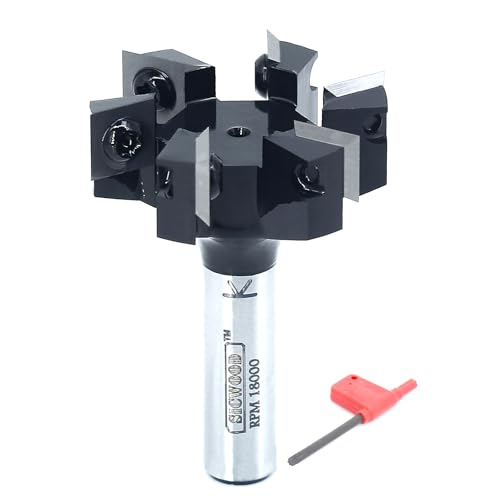
SICWOOD’s slab flattening router bit uses a 2″ cutting diameter with a 1/2″ shank and 6-wing geometry. Carbide inserts measure 12x12x1.5 mm, designed for high hardness and sharp edge quality to deliver smooth cuts and reduced chatter. The bit supports a maximum RPM around 18,000 and uses four-sided carbide inserts that can be rotated to extend life. It offers a cost-effective solution by enabling insert replacement instead of replacing the entire bit, which is advantageous for shops performing frequent spoilboard refreshes or plane operations.
BINSTAK 1-1/2″ Cutting Diameter, 1/4″ Shank (4 Wings)

This extra-large 1-1/2″ cutting diameter bit from BINSTAK uses a 1/4″ shank and a 4-wing carbide design. The bit’s sturdy, anti-kickback construction is paired with replaceable carbide inserts for longer service life. The four-edge carbide inserts maximize usable life by rotating to fresh edges, which makes it a practical option for frequent spoilboard resurfacing and plane work on challenging hardwoods and softwoods. The tool is positioned for efficient material removal with consistent surface flatness.
BINSTAK 2″ Insert Carbide, 1/2″ Shank (3-Wing Insert)
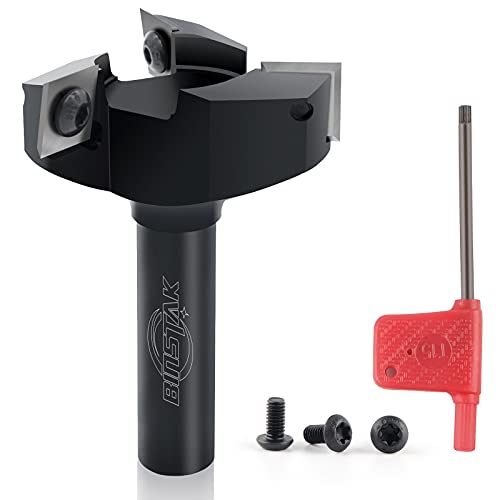
The 2″ insert carbide spoilboard bit from BINSTAK combines a 1/2″ shank with a 3-wing configuration and insert carbide system. The bit uses 12x12mm carbide inserts and an anti-kickback design to deliver stable, controlled stock removal during surface flattening and planing tasks. Its replaceable insert approach reduces overall tool cost per project, allowing users to rotate or replace inserts rather than the whole bit when dull. It is designed for consistent results across varied stock densities and grain directions.
Whiteside 6220 CNC Spoilboard Surface Bit, 1/2″ Shank

The Whiteside 6220 spoilboard surfacing bit is offered with a 1/2″ shank designed for CNC spoilboard flattening. This option is recognized for its reliability in professional applications, delivering consistent roundover-free cuts and stable performance. The listing provides limited feature details, but the brand is known for quality carbide tooling, and the 6220 remains a common choice for shop setups that prioritize precision and durability in continuous use scenarios.
SpeTool presents a notable alternative with a two-insert, two-flute approach designed for extended life and smooth operation in slab flattening tasks.
SpeTool 2+2 Flute Slab Flattening Bit, 1/4″ Shank, 1-1/4″ Diameter

The SpeTool surfacing bit features a 1-1/4″ cutting diameter with a 1/4″ shank and a 2+2 insert design. It uses 10x10x2.2 carbide inserts and benefits from ATS coating to extend life in both softwood and hardwood applications. The replaceable carbide inserts enable edge rotation when dull, providing cost efficiency and reduced downtime. The tool is intended for heavy-duty slab flattening and spoilboard resurfacing tasks, offering extended tool life and dependable performance under demanding CNC workflows.
Buying Guide: Key Purchase Considerations
When selecting a spoilboard surfacing bit, consider the following factors to optimize performance, longevity, and return on investment:
- Cut diameter vs. spoilboard size: Larger diameters (1-1/2″ to 2″) remove material quickly but require more robust machines and stable feed rates. Smaller bits (1″ to 1-1/4″) offer greater control for fine leveling and detail work.
- Shank size and machine compatibility: Ensure the shank matches your router or CNC collet. Common options are 1/4″, 1/2″, and 1/2″ for various machines and stability requirements.
- Carbide insert vs. solid carbide: Insert bits provide longer tool life at a lower initial cost since worn inserts can be replaced. Solid carbide bits are generally tougher but more expensive to replace entirely.
- Number of wings: More wings (e.g., 6, 3) usually deliver smoother finishes and balanced operation, especially on heavy stock removal tasks. Fewer wings can be effective for lighter passes and quicker cycling.
- Coatings and heat resistance: Teflon or ATS coatings reduce resin buildup and extend life in demanding environments. Consider these features if you frequently work with resinous woods or humid shop conditions.
- RPM compatibility: Check the maximum RPM recommended by the manufacturer to avoid overheating and maintain bit integrity during long flattening sessions.
- Insert availability and replacement cost: If choosing insert designs, confirm the availability of replacement carbide inserts and the edge count to maximize usage before replacements are needed.
- Service life and economics: Compare upfront costs against replacement insert prices, considering your typical project load, board thickness, and required surface flatness.
- Usage scope: Many bits are marketed for both spoilboard resurfacing and slab flattening. Consider whether you need a bit that excels in both roles or if you require specialized performance for one task.
Across these selections, the common strengths include robust anti-kickback designs, carbide construction, and insert-based options that deliver extended life in repetitive spoilboard tasks. For shops prioritizing longevity and lower ongoing costs, insert carbide designs offer practical advantages. For users needing quick material removal and aggressive stock removal, larger-diameter bits with multiple wings are advantageous. Always verify compatibility with your equipment, workpiece material, and feed rates to achieve the best outcomes.