Introduction: Choosing the right soldering iron helps beginners build skills safely and reliably. Below is a quick comparison of selected starter-friendly soldering kits chosen for temperature control, safety features, tip variety, and included accessories.
| Product | Power / Type | Key Features |
|---|---|---|
| Plusivo 60W Soldering Iron Kit | 60W Pencil Iron | Adjustable 200–450℃, 5 tips, desoldering pump, stand |
| Q-MING 60W Soldering Iron Kit | 60W Pencil Iron | Adjustable 200–450℃, ceramic heater, fast heat |
| Liouhoum 80W Digital Soldering Gun | 80W Digital Iron | LCD, 180–480℃, auto sleep, fast heat |
| YIHUA 926 III 60W Soldering Station | 60W Station | LED display, PID control, sleep mode, UL compliant |
| MEAKEST 60W Premium Kit | 60W Pencil Iron | On/off switch, adjustable 200–450℃, ceramic heater |
Plusivo 60W Soldering Iron Kit

This Plusivo kit targets hobbyists and electronics beginners with a full accessory set. The iron provides adjustable temperature (200℃–450℃) and five replaceable tips for different soldering tasks. Included extras such as a desoldering pump, solder wire, tweezers, wire stripper, and stand help establish basic soldering workflows.
Safety features include a heat-resistant grip and cap. The kit lists uses for circuit board welding, appliance repair, crafts, and jewelry. For learners, the downloadable ebook and spare tips make practice easier without adding upgrades immediately.
Q-MING 60W Soldering Iron Kit

The Q-MING pencil-style iron emphasizes quick heat and usability. It uses a ceramic heating core and reports heating to set temperature in about 15 seconds. Temperature range is 200–450℃ with a thermostatic setting and an ON/OFF switch for energy saving and added safety.
The kit includes a simple stand, sponge, five interchangeable tips, solder wire, and no-clean rosin flux paste. Ventilation holes reduce heat transfer toward the handle. This setup is concise and suitable for beginners focused on small electronics repairs and learning proper soldering technique.
Liouhoum 80W LCD Digital Adjustable Soldering Gun

This Liouhoum iron is a higher-power digital option with an 80W ceramic core and an LCD temperature display. Temperature can be adjusted between 180℃–480℃ and the unit includes auto-sleep and memory functions for safer idle behavior and faster startups.
Fast heat-up (claimed ~10 seconds) and a clear digital readout help beginners learn how different temperatures affect joints. The anti-scalding handle and temperature memory reduce accidental overheating and simplify repeated tasks at the same temperature.
YIHUA 926 III 60W LED Display Soldering Station
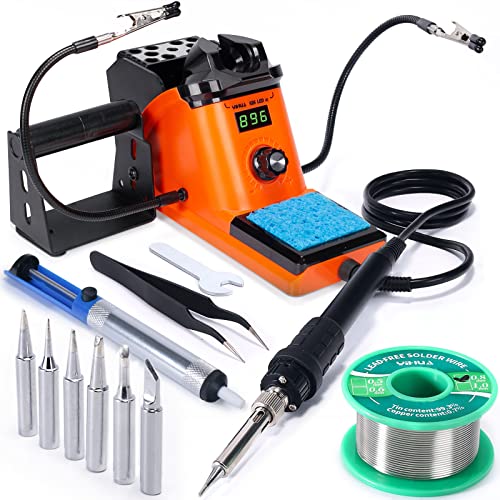
The YIHUA 926 III is a compact soldering station offering wider feature depth useful for learners progressing beyond basic kits. It offers LED display, PID temperature control, temperature calibration, and sleep mode. The heat range extends from 90℃–480℃ to cover delicate electronics work and heavier tasks.
Design touches target safety and bench organization: the station integrates a mesh protector, tip storage, and configurable sleep timer. UL compliance is noted, an important factor for users prioritizing certified electrical safety in a bench station.
MEAKEST 60W Premium Soldering Kit

MEAKEST provides a straightforward beginner kit with a 60W ceramic heater, adjustable temperature 200–450℃, and an on/off switch for energy savings. The kit lists multiple tip shapes and accessories such as solder wire, pump, and paste for common repair tasks.
Air vents and faster heat-up times are intended to lengthen tip life and reduce handle heating. The kit targets general electronics, musical instrument repair, and small appliance soldering—making it a versatile starter tool for learners building practical experience.
Buying Guide
When selecting a first soldering iron for electronics, consider the following points to match equipment to expected projects and learning goals.
Power And Heating
Wattage: 40–60W pencil irons suit most electronics work. Higher wattage (80–100W) heats faster and recovers heat quicker for larger joints, but may risk overheating small components if unmanaged.
Heat-Up Time: Faster heat-up means less waiting during practice. Ceramic heating cores typically heat up quicker than basic resistive cores.
Temperature Control And Display
Adjustable Temperature: Precise control (or digital readout) is valuable. Beginners benefit from a unit that can hold lower temperatures for delicate SMD work and higher temps for thicker wires.
Digital vs. Analog: Digital/LED displays and temperature memory simplify repeatable settings. Analog knobs are simpler but less precise.
Tip Variety And Replaceability
A kit with multiple tip shapes (conical, chisel, bevel) helps learning different soldering techniques. Ensure tips are replaceable and compatible with third-party tips for future upgrades.
Safety Features
Look for heat-resistant handles, stands with sponge or brass wool for tip cleaning, auto-sleep or standby features, and certifications (UL or equivalent). An ON/OFF switch on the iron adds an extra safety layer.
Station vs. Pencil Iron
Pencil Irons: Portable, inexpensive, and suitable for bench-level hobby use. Stations: Offer better temperature stability, storage, and advanced features for users who will solder more frequently or work on delicate electronics.
Included Accessories
Starter kits should include a stand, sponge or brass cleaner, solder wire, flux, extra tips, and preferably a desoldering pump or wick for corrections. A kit that bundles these reduces the need for immediate purchases.
Heat Dissipation And Ergonomics
Ventilation near the heating element and a comfortable grip reduce user fatigue and accidental burns. Lightweight pens help with fine work; stations with tip holders and storage help keep the bench organized.
Repair Scope And Future Needs
Consider typical projects: circuit boards and small electronics need fine tips and temperature control; heavier wiring or mechanical repairs might call for higher wattage or broader tips. Choose a model that covers the current learning curve plus foreseeable projects.
Budget And Upgrade Path
Entry kits cover basics; choose one with replaceable parts and tips so you can upgrade the iron or add a proper station later without replacing accessories you already own.
Comparison Perspectives
- Beginner Convenience: Kits with extra accessories and instructional material reduce setup friction.
- Precision Work: Digital stations with PID control and calibration better maintain low-temperature stability for SMD parts.
- Durability: Ceramic heating elements and vented designs extend tip and heater life under repeated use.
- Safety: Sleep modes, on/off switches, and certified stations lower risk during learning sessions.