Quick Overview: This guide reviews five well-suited soldering guns and pen-style irons for electronics repair, hobbyist projects, and precision work. Below is a summary table of the selected products to help you compare features at a glance.
| Product | Brand | Key Features |
|---|---|---|
| Soldering Iron Kit, 100W LED Digital Solder Gun kits | Q-MING | 100W ceramic heater, LED temp display, 180℃–500℃, fast 15s heat |
| Electronics Soldering Iron Kit, 80W LCD Digital Soldering Gun | KYZHXVO | 80W ceramic core, LCD display, 200℃–450℃, 30s heat |
| Weller 260W & 200W Professional Soldering Gun Kit | Weller | Dual-heat heavy-duty gun, pistol grip, ready in ~6s, three tips |
| Soldering Iron Kit, 80W Fast Heat LCD Adjustable | Liouhoum | 80W ceramic core, 10s heat-up, auto-sleep, temp memory 180℃–480℃ |
| Soldering Iron Kit, 60W With 5 Interchangeable Tips | Q-MING (60W) | 60W ceramic core, 5 tips, adjustable 200℃–450℃, starter kit items |
Soldering Iron Kit, 100W LED Digital Solder Gun kits with Ceramic Heater

This Q-MING 100W soldering iron kit uses a high-power ceramic heating core that reaches working temperature in about 15 seconds. The kit includes an LED temperature display with calibration and toggles between °C and °F for precise control (180℃–500℃ / 356℉–932℉). Ventilation holes and upgraded steel tube design improve heat dissipation and reduce handle heat. The pen-style form factor makes it portable for field repairs, and included accessories typically cover basic soldering needs.
Electronics Soldering Iron Kit, 80W LCD Digital Soldering Gun

The KYZHXVO 80W model features an inner-heated ceramic core for stable temperatures and quick warm-up (about 30 seconds). A clear LCD display shows current temperature and a knob allows adjustment from 200℃–450℃ (392℉–842℉). The design includes multiple ventilation holes for improved cooling and claims lower power consumption compared to conventional irons. This portable pen-style tool suits electronics repair where a balance of power and precision is needed.
Weller 260 Watt & 200W Professional Soldering Gun Kit D550PK
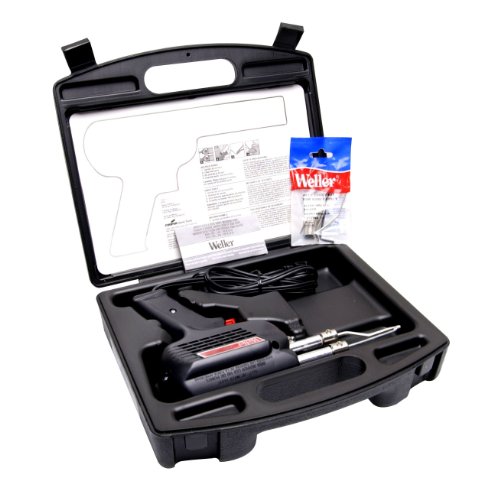
The Weller D550PK is a professional heavy-duty soldering gun that offers dual-heat wattage and a pistol-grip design. It heats rapidly (ready within seconds) and comes with three tips and a carrying case. This style is optimized for larger tasks, thicker wires, and situations where high heat and rapid thermal transfer are required. It is less suited for delicate surface-mount work but valuable for chassis, connectors, and heavy-gauge soldering.
Soldering Iron Kit, 80W 110V Fast Heat up LCD Adjustable

The Liouhoum 80W soldering iron uses a premium ceramic core and claims a rapid 10-second heat-up. It provides automatic sleep and temperature memory features to extend element life and improve safety; the LCD displays temp and the unit restores the last set temp on restart. Temperature range is adjustable between 180℃–480℃ (356°F–896°F). Anti-scalding handle and stable heating make this option applicable to frequent small repairs and iterative work.
Soldering Iron Kit, 60W With 5pc Interchangeable Tips

This Q-MING 60W pencil-style soldering iron includes five interchangeable tips and an adjustable temperature control (200℃–450℃ / 392℉–842℉). The ceramic heating core claims fast warm-up (~15 seconds) and ventilation holes for heat management. The kit bundles a basic stand, sponge, solder wire, and flux paste, making it a practical starter solution for electronics hobbyists and repairs requiring varied tip profiles.
Buying Guide: How To Choose The Right Solder Gun For Electronics
Power And Heat-Up Time
Wattage influences how quickly the iron reaches temperature and how well it maintains heat when soldering larger joints. For electronics and PCB work, 40W–80W pen-style irons or adjustable kits are common. Higher power (100W+) or dual-heat guns like Weller are useful for heavier work but may be overkill for sensitive components.
Temperature Control And Range
Precise temperature control is essential for electronics. Look for digital displays, adjustable ranges, and temperature memory. Typical useful ranges for electronics are 180℃–450℃ (356℉–842℉). Lower temps reduce pad and component stress; higher temps help with large solder joints.
Heating Element Type
Ceramic heating cores are common in these kits — they heat quickly and provide stable temps. For the most delicate SMD work, a temperature-controlled station with a replaceable tip and fine control may be preferred.
Tip Variety And Compatibility
Interchangeable tips (conical, chisel, bevel) increase versatility. For electronics, a fine conical or small chisel tip often provides the best balance between precision and thermal transfer. Confirm the kit’s tip standard for replacements.
Ergonomics And Safety Features
Anti-scald handles, stands, and ventilation designs reduce user fatigue and risk. Auto-sleep and temperature memory features extend element life and enhance safety when stepping away from work.
Form Factor: Pen-Style vs Pistol Gun
Pen-style irons (60W–100W with digital control) are best for fine-electronics work and portability. Pistol-style guns deliver fast thermal transfer and are suited to heavier tasks like wiring and chassis repairs, but are less precise for SMD components.
Accessories And Kit Contents
Starter kits that include solder wire, flux, stands, and multiple tips can be helpful for beginners. Ensure the kit includes a stable stand, cleaning sponge or brass wool, and suitable tip types for your projects.
Durability And Brand Considerations
Reputable brands and replaceable tips/elements make maintenance easier. Professional heavy-duty guns (e.g., Weller) are built for repeated high-power use, while many digital pen irons offer economical and feature-rich choices for electronics repair.
Comparison Perspectives
- Precision Work: Lower-watt pen-style irons with fine tips and exact temp control (60W–80W) minimize board stress.
- Frequent Repair/Production: Faster heat-up, stable temps, and tip longevity matter—look for good heat dissipation and memory features.
- Heavy-Duty Soldering: Dual-heat or high-watt pistol guns provide fast heat transfer when working on thick wires or connectors.
- Portability: Pen-style kits are typically lightweight and plug-and-play for field fixes.