Camping trips, weekend getaways, and RV adventures increasingly rely on compact generators that blend lightweight portability with clean, reliable power. The following selections focus on small, inverter-style generators that are quiet enough for campgrounds, safe for electronics, and easy to transport. Each model below supports essentials like phones, CPAP machines, laptops, and small appliances without drowning out the forest with noise. This guide highlights five strong options across dual-fuel, lithium battery, and gas-powered generators to fit different camping styles and power needs.
Buying summary table
| Product | Type | Approximate Power | Weight | |
|---|---|---|---|---|
| WEN DF360iX | Dual-Fuel Inverter | 3600W surge / 2900W rated (gas); 3500W surge / 2600W rated (propane) | Not specified | CO Watchdog, ultra-quiet |
| Jackery Explorer 300 | Portable Power Station (Lithium) | 300W continuous | 7.1 lbs | Fast recharging, multiple outputs |
| ERAYAK 2400W | Gas-P powered Inverter | 2400W peak / 1800W running | 42 lbs | Ultra-quiet, ECO mode |
| PowerSmart 4400W | Gas Inverter | 4400W starting / 3600W running | Not specified | CO sensor, quiet operation |
| Amerisun 2500W | Gas-Powered Inverter | 2500W peak / 1900W running | ~39.7 lbs | Ultralight, portable |
WEN Quiet and Lightweight 3600-Watt Dual Fuel Inverter Generator

The WEN DF360iX blends dual-fuel versatility with a compact, low-noise design. It delivers 3600 surge watts and 2900 rated watts on gasoline, with a propane option that yields 3500 surge and 2600 running watts. Its inverter technology provides clean power suitable for sensitive devices like smartphones and laptops, reducing the risk of power surges or damage during camping trips. A notable feature is its CO Watchdog system, helping monitor air quality for added safety in enclosed spaces or tents. Even at higher loads, its operation remains quiet enough to enjoy conversations around the campfire without shouting.
Key considerations: Dual-fuel capability means you can leverage readily available propane or gasoline, giving you flexibility on longer trips. The generator is designed to minimize noise—a critical factor for campground etiquette. The DF360iX also emphasizes clean power output, making it suitable for charging small electronics, cameras, and CPAP machines. For campers who prioritize runtime and fuel availability, this model offers dependable performance with portability in mind.
Jackery Explorer 300 Portable Power Station
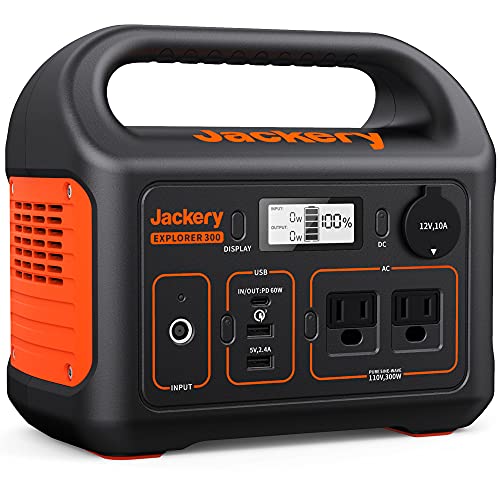
The Jackery Explorer 300 is a compact lithium-powered solar generator designed for precise off-grid support. It houses a 293Wh battery and weighs only about 7.1 pounds, making it highly portable for backpacking, car camping, or a cabin escape. It offers two Pure Sine Wave AC outlets that safely power laptops, phones, and small electronics, along with multiple USB-C and USB-A ports for charging a range of devices. Recharging is quick, taking roughly 2 hours to reach 80% from wall power, with additional options including car adapters and solar panels (solar panel sold separately). The unit supports simultaneous charging and device output, ensuring campers can keep essential devices ready for action on extended trips.
Key considerations: For campers prioritizing a silent, low-maintenance power source, the Explorer 300 excels in portability and safety. Its LiFePO4 battery chemistry enhances longevity, with the flexibility to recharge via wall outlets, car adapters, or solar panels. However, its peak power is modest, so it’s best for charging smaller devices and running essential electronics rather than heavy appliances.
ERAYAK 2400W Portable Inverter Generator

ERAYAK’s 2400W portable inverter is a lightweight, compact option designed for camping and outdoor use. It delivers 2400W peak and 1800W running watts, making it suitable for RVs, camping setups, and essential outage power. The inverter technology ensures clean power suitable for laptops, CPAP machines, and phones. Notably quiet at about 52.5 dB at a 7-meter distance with 25% load, it minimizes campground disruption. Its compact form factor and a weight around 42 pounds enable straightforward transport, especially when paired with a wheel kit and a telescoping handle for mobility during trips or storage in a vehicle trunk.
Key considerations: This unit balances power and portability with strong noise suppression. Eco Mode further optimizes fuel use and reduces noise, which is advantageous for extended camping sessions. The ERAYAK 2400W is a solid choice for campers who need enough wattage for daily essentials while keeping noise levels well within campground norms.
PowerSmart 4400W Dual Fuel Portable Inverter

The PowerSmart 4400W dual-fuel inverter combines substantial starting power with a quieter operation profile, designed for home use, camping, or emergency backup. Its starting wattage of 4400W and running wattage of 3600W provide plenty of headroom for larger camping setups or mid-range RV use. With a 1.6-gallon fuel tank, it claims runtime up to around 11 hours at 25% load, reducing refueling needs on multi-day trips. A CO sensor adds a layer of safety, particularly important in enclosed camping spaces where proper ventilation is essential. While louder than the smallest models, it remains within acceptable limits for many campgrounds, especially where higher power is needed.
Key considerations: This model is best for campers who may need more robust power without stepping up to a heavier, professional-grade generator. The dual-fuel capability adds flexibility for longer trips, and the CO sensor helps guard against dangerous emissions. Noise levels will be higher than ultra-quiet units, so placement away from tents can improve comfort.
Amerisun 2500-Watt Portable Inverter Generator

The Amerisun 2500W generator targets portability and practical power for camping and RV use. It delivers up to 2500 peak watts and 1900 running watts, suitable for powering essential appliances and electronics while avoiding heavy fuel consumption. Weighing roughly 39.7 pounds, it features an ergonomic carrying handle, making it a strong partner for campers who value easy transport between campsites or into the back of a vehicle. Its gas-powered engine provides reliable performance for outdoor activities, with quiet operation that remains campground-friendly and manageable for most outdoor stays.
Key considerations: This unit hits a sweet spot between weight and power, offering enough wattage for common camping needs without heavy bulk. For campers prioritizing rapid setup and ease of movement, the ergonomic design helps, though the unit may not provide enough power for larger appliances for longer periods. Fuel availability and runtime will vary with load, but Eco modes and efficient operation help optimize performance on extended trips.
Buying Guide: Power, Portability, And Practical Camping Scenarios
Choosing a small camping generator involves balancing power needs, noise tolerance, fuel availability, and portability. Consider these key purchase considerations and how they fit your typical camping scenario:
- Power requirements: List your essential devices and their wattage. For simple camping, a 1000–2000W inverter may suffice; for RVs or multiple devices, look for 2500–3600W running options with clean output for electronics.
- Fuel type: Dual-fuel units provide flexibility when gas stations are far away, while lithium power stations offer quiet operation and easy recharging with solar panels. Propane can be more convenient in certain locales, but availability and efficiency vary.
- Noise level: Campground etiquette favors low-noise units. If you intend to run the generator near tents or sleep areas, prioritize models with Eco or Quiet modes and decibel ratings around 50–65 dB at a reasonable distance.
- Portability: Weight, handles, wheels, and compact dimensions influence how easily you can transport and store the generator in a vehicle or campsite storage area. RV users may value models with integrated wheel kits and telescoping handles.
- Safety features: CO shutoff, CO sensors, low-oil shutdown, and inverter technology reduce risks and protect sensitive electronics. Consider a model with a clear display and easy maintenance.
- Runtime and refueling: Look at fuel tank size and efficiency. Longer trips may require larger tanks or higher efficiency; solar power stations excel for extended off-grid stays with sunny conditions.
- Durability and warranty: Camping gear should withstand outdoor conditions. A solid warranty and reputable brand support can be decisive for long-term satisfaction.
In sum, the best small generator for camping depends on your gear list, preferred power source, and how often you camp. If you prioritize ultra-quiet operation for tent-centered sites, a compact inverter with a lithium battery or a small gas-powered unit with ECO mode can deliver efficient, safe power. For longer trips or RV setups, dual-fuel options or generators with higher running wattage help cover more devices without frequent refueling.