When choosing a sliding miter saw, accuracy, durability, and user comfort top the list. This guide highlights five standout models that blend powerful motors, smooth sliding action, and precise cutlines to help American woodworkers and hobbyists achieve clean, repeatable results. Each pick offers distinctive advantages, from shadow line technology to ambidextrous design, ensuring you find a model that fits your shop and projects.
| Product | Brand | Key Feature |
|---|---|---|
| DEWALT DWS780 12″ Miter Saw | DEWALT | XPS LED shadow line for cut-line visibility |
| SKIL MS6305-00 10″ Miter Saw | Skil | Dual bevel with LED shadow line |
| Metabo HPT C12RSH3 | Metabo HPT | Xact Cut shadow line and 9 detent stops |
| Makita LS1219L 12″ | Makita | Dual-bevel with compact slide and laser |
| Yumark 12″ Sliding Miter Saw | Yumark | Laser guide and high RPM for heavy cutting |
Note: Each product below is presented with a brief, independent overview, followed by its core features and how they translate into practical use in a typical American workshop.
DEWALT DWS780: High-Visibility Cut Line

The DEWALT DWS780 is a 12-inch sliding miter saw designed for heavy-duty woodworking with a powerful 1100-watt motor and 3,800 RPM. This model stands out for its integrated XPS LED shadow light system, which projects the cutline onto the workpiece, improving accuracy even in less-than-ideal lighting. The bevel and miter adjustments are precise, and the cut line is easy to see without leaning over the blade. A material clamp helps stabilize stock during long or repeated cuts, while a dust bag assists with debris collection. Its robust construction makes it a favored choice for cabinetmaking, trim, and bulk framing projects where repeatable accuracy matters.
Key considerations:
– Pros: Clear cut line visibility, sturdy build, reliable power for demanding cuts.
– Cons: Heavier weight; footprint may require more shop space.
– Best for: Cabinetry, trim work, and large boards where accuracy is critical.
SKIL MS6305-00: Dual Bevel With Clarity
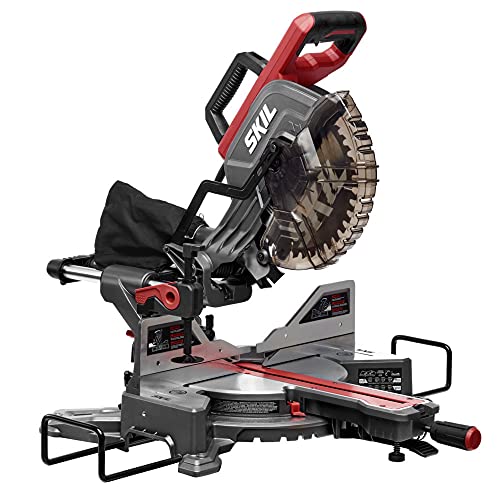
The SKIL MS6305-00 offers a 10-inch blade with a strong 15-amp motor delivering up to 4,800 RPM. It features a dual bevel design with four positive stop positions at 48 degrees and 45 degrees to the left, 0 degrees, and 45 degrees to the right. An integrated LED shadow line provides precise visual feedback for accurate cuts, and the compact size makes it a good option for smaller shops or occasional use. While slightly smaller than full 12-inch models, it remains a capable choice for trim work, shelving, and cabinet components where space is at a premium.
Key considerations:
– Pros: Compact footprint, clear LED line, solid RPM.
– Cons: Smaller blade diameter limits maximum cut height.
– Best for: Smaller projects, cabinetry, and hobbyist setups with limited space.
DOVAMAN Updated 10-Inch Sliding Miter Saw

The DOVAMAN model adds versatility with a 10-inch sliding capacity and a dual-bevel design that accommodates up to 0-45 degrees on both sides. The saw ships with three different TCT blades and a laser guide to improve alignment and accuracy across a wide range of materials. An ambidextrous approach to operation makes it accessible for both right- and left-handed users, enhancing ergonomic comfort during long sessions. A robust 5000/3200 RPM speed range supports quick, clean cross-cuts for wood, plastics, and soft metals.
Key considerations:
– Pros: Ambidextrous use, multiple blades, laser guidance.
– Cons: Slightly heavier than some compact models.
– Best for: Projects requiring multiple blade types and flexible bevel angles.
Makita LS1219L: Wall-Friendly, High Capacity

The Makita LS1219L combines a 12-inch blade with a compact dual-bevel sliding design that minimizes the overall footprint, allowing operation flush against a wall. It features a laser guide for precise alignment and offers substantial cutting capacity, enabling crown molding and baseboard work without frequent repositioning. The laser and shadow line help visualize cuts in varying lighting, and the single slide-glide system reduces friction, contributing to smoother operations and consistency across repeated cuts.
Key considerations:
– Pros: Space-saving design, strong cutting capacity, integrated laser.
– Cons: More complex setup than entry-level saws.
– Best for: Small shops needing wall clearance and high versatility for moldings and trims.
Yumark 12-Inch Sliding Miter Saw: Laser-Assist Power

The Yumark model uses a 12-inch blade coupled with a 2200W motor and a laser guide to assist precise alignment. Its extended extension table improves material support for longer pieces, and the 4500 RPM no-load speed supports aggressive cuts in wood and certain non-ferrous materials. The laser guide helps users place repair joints and miters with higher consistency, and the design emphasizes stability during operation, aided by a broader base and robust chassis.
Key considerations:
– Pros: High RPM, laser guidance, extended table for large workpieces.
– Cons: Heavier than compact 10-inch models.
– Best for: Projects requiring extended supports and precise alignment in larger boards.
Buying Guide: Key Purchase Considerations And Comparisons
When evaluating sliding miter saws, consider these factors to ensure you choose a model that fits your workshop, budget, and project mix:
- Cutting capacity: Larger blades (12 inches) typically offer deeper cuts and crown molding capacity, but 10-inch models can be more compact and lighter. Assess the maximum material thickness and width you commonly encounter.
- Bevel and miter range: Look for dual-bevel capabilities (left and right) with positive stops at common angles. A wider bevel range gives you more flexibility for complex joints and intricate molding profiles.
- Cut-line visibility: Shadow lines or laser guides help with accuracy. Shadow lines project the cut line directly on the workpiece, while lasers provide an illuminated path; some users prefer one over the other or enjoy both.
- Instrumentation and repeatability: Features such as integrated clamps, detent stops, and adjustable fences improve repeatability on repeated cuts, especially for cabinetry or trim work.
- Motor power and RPM: A higher RPM and robust motor support fast, clean cuts through wood, plywood, and certain plastics. Heavier materials may demand more torque and stabilization.
- Ergonomics and ambidexterity: For long sessions, ambidextrous handles and easy access to controls reduce fatigue. Consider blade guard visibility, dust collection, and overall balance of the saw.
- Footprint and portability: Some models favor compact layouts with wall clearance, while others are built to stay sequenced in a fixed shop corner. Weigh weight against stability and workspace availability.
- Accessories and compatibility: Look for compatible blades, clamps, extension tables, and dust collection options. Some models include these items in the box, while others require separate purchases.
In sum, the best sliding miter saw for you depends on how you balance power, accuracy, space, and budget. If you prioritize visibility of the cut line, tools with XPS or shadow line features can reduce miscuts. If you work with large boards or moldings, a 12-inch sliding saw with a strong bevel range and extended table can save time and enhance accuracy. For tight spaces, compact 10-inch models or wall-friendly designs may be the optimal choice. Consider testing a few models in a local store or reading user reviews to gauge real-world performance in American workshops.