Choosing the right reciprocating saw blade for thick metal cuts can dramatically affect speed, accuracy, and tool longevity. This guide highlights five top-rated options that excel in heavy metal work—from steel pipes and rebar to thick sheets. Each blade type balances durability, cutting speed, and heat resistance to help you finish tough projects more efficiently.
| Product | Brand | Highlights |
|---|---|---|
| HORUSDY 6PCS 9-Inch 14TPI Bi-Metal Reciprocating Saw Blades | HORUSDY | Bi-metal, 9″, 14 TPI, universal shank |
| EZARC Carbide Reciprocating Saw Blade R678HM | EZARC | Carbide blades, 6″, 8 TPI, long life |
| TOLESA Heavy Metal Cutting Blades | TOLESA | Bi-metal with cobalt edge, 9″, 14 TPI |
| DEWALT Reciprocating Saw Blades, Bi-Metal, 6-Inch | DEWALT | Bi-metal, 6″, 24 TPI |
| Caliastro 6-Inch Thick Metal Blades | Caliastro | 8-pack, 6″, 18 TPI, HSS/HCS bi-metal |
Note: The table above summarizes key features to help compare blades at a glance. Each product section below expands on performance and suitable use cases.
HORUSDY 9-Inch Bi-Metal Blades Review

The HORUSDY set includes six 9-inch blades with a 14TPI tooth pattern, designed for thick metal work such as steel pipes, rebar, and heavy gauge sheet metal. Made from high-strength bi-metal material, these blades resist heat, wear, and bending during extended cuts. The optimized 14TPI geometry aims to deliver smooth, fast, and precise cuts with reduced vibration for a more comfortable operation. The universal shank fits most reciprocating saws, making this a versatile choice for pro projects and home renovations alike.
Key considerations:
– Best for medium-to-thick metal runs where you need durability and consistent performance.
– Bi-metal construction offers a balance between toughness and flexibility.
– 14TPI is tuned for metal cutting, reducing clogging and heat buildup.
EZARC R678HM Endurance For Thick Metal
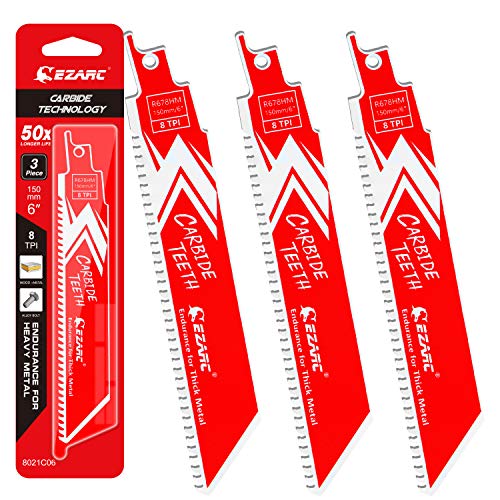
The EZARC R678HM features carbide technology that promises up to 50x longer life than standard bi-metal blades. Its 6-inch length with 8 TPI is designed for tough metal applications, including high-alloy steels, stainless steels, rebar, and car beams. The carbide tips deliver superior wear resistance, enabling easier cutting through hardened materials that typically wear down conventional blades. This blade is suited to demanding demolition and fabrication tasks where blade life is a critical factor.
Key considerations:
– Best for extended cutting sessions in hard metals.
– Carbide teeth provide exceptional longevity but can be sharper to handle; follow manufacturer guidance for use.
TOLESA 9-Inch 14TPI Heavy Metal Blades

TOLESA offers bi-metal blades with a cobalt edge designed for sheet metal, pipes, and profiles. The 9-inch blades have a 0.9-thin wall and set teeth to help reduce heat buildup while maximizing efficiency for heavy metal cuts. A dense 14TPI tooth pattern provides faster cutting compared to standard bi-metal blades, with enhanced life for demolition tasks. These blades are well-suited for cutting metal with moderate thickness where heat management is important.
Key considerations:
– Best for faster cuts in metal sheets, pipes, and profiles up to several inches thick.
– The cobalt edge aids durability in tough alloys and structural metal.
DEWALT 6-Inch Bi-Metal Blades, 24 TPI

DEWALT’s 6-inch, 24 TPI bi-metal blades are designed for durable metal cutting with a focus on precision. The blades utilize a bi-metal construction that balances flexibility and a long cutting edge. Made in the U.S. with global materials, these blades are built to withstand repeated passes through metal while maintaining teeth integrity. While they feature a finer tooth count (24 TPI), they are capable of clean, straight cuts in metal, making them a strong option for thinner thick metal tasks and detailed work.
Key considerations:
– Best for cleaner finishes on metal with thickness in the lower range of heavy-duty cuts.
– Higher tooth count improves finish but reduces aggressive stock removal compared to lower TPI blades.
Caliastro 6-Inch Thick Metal Blades

The Caliastro set includes eight blades for cutting metals up to about a quarter-inch thick. Made from high-quality bi-metal, these blades balance speed and durability for a range of thick metal tasks, including black pipe, conduit, cold-rolled steel, rebar, and angle iron. The 18 TPI design with a 0.05″ thickness reduces bending and breakage while delivering precision-cut finishes. This option emphasizes robust performance for consistently reliable cuts across multiple metal types.
Key considerations:
– Best for mixed metal cutting tasks with moderate thickness.
– The 8-pack provides value for users who frequently switch blades for different metals.
Buying Guide: Key Purchase Considerations
When selecting Sawzall blades for thick metal, consider blade material, tooth pattern, length, and shank compatibility. Here are essential factors to weigh:
- Material and durability: Bi-metal blades (high-speed steel backing with high-carbon steel teeth) offer a balance of flexibility and wear resistance. Carbide-tipped blades excel in extreme hardness and longevity but can be pricier and require control to avoid chipping on certain materials.
- Tooth pattern and size: Lower TPI blades (e.g., 8-14 TPI) cut faster through thick metal but wear faster; higher TPI (20-24 TPI) provide cleaner finishes on thinner sections. For very thick or dense metal, a 14 TPI range often provides the best trade-off.
- Blade length: 6″ to 9″ blades cover most thick-metal tasks. Longer blades may improve reach, while shorter blades can offer better control in tight spaces.
- Shank compatibility: Ensure the blade’s shank matches your saw model. Universal shanks fit most cordless and corded reciprocating saws, but it’s worth verifying the compatibility listed by the manufacturer.
- Heat and wear resistance: For repeated cuts through steel or stainless steel, carbide-tipped blades provide superior longevity. For general heavy metal work, bi-metal blades with reinforced backs are typically sufficient.
- Finish vs. speed: If prioritizing speed over a pristine finish, opt for blades with lower TPI and robust backing. For cleaner finishes in metal, choose higher TPI blades with precise tooth geometry.
- Application scope: Consider the metals you frequently encounter—rebar, pipes, stainless steel, or alloy steels—and pick blades with proven performance in those materials.
In practice, a small, varied blade kit (like a mix of 6″ to 9″ blades in both bi-metal and carbide options) typically covers most thick-metal tasks. Always follow manufacturer safety guidelines, including securing workpieces and using proper cutting fluids or cooling strategies for prolonged blade life.