Finding The Right Sawzall Blade For Aluminum requires choosing blades that resist heat, prevent binding, and deliver clean cuts in non-ferrous metals. Below is a quick comparison of high-performance reciprocating saw blades suited for aluminum work, followed by detailed product summaries and a buying guide.
| Product | Blade Type / TPI | Best For |
|---|---|---|
| EZARC Bi-Metal Cobalt Sabre Saw Blades (5-Pack) | Bi-Metal Cobalt / 14 TPI | General metal sheet, moderate thickness aluminum |
| Diablo Steel Demon Carbide Teeth (3 TPI) 3-Pack | Carbide / 3 TPI | Thick aluminum, structural sections |
| Diablo Steel Demon Carbide Teeth With Perma-Shield (10-Pack) | Carbide / 8 TPI | Medium-thickness aluminum, cleaner finishes |
| DEWALT Bi-Metal Straight Back (5-Pack) | Bi-Metal / 24 TPI | Thin sheet aluminum, precise finishing |
| EZARC Carbide Endurance (3-Pack) | Carbide / 8 TPI | Harder alloys, frequent cutting, prolonged life |
EZARC Reciprocating Saw Blade Bi-Metal Cobalt Sabre Saw Blades

Key Features: Cobalt Teeth (M42), Metal Master hard cobalt edge, optimized wear-resistant design. These 6-inch, 14 TPI bi-metal blades combine cobalt-enhanced teeth with a flexible body to resist heat during extended metal cuts. The 14 TPI provides a balance between speed and finish, making these blades appropriate for sheet aluminum and thin profiles where reduced burrs and controlled cutting are desired. Their design emphasizes durability and elevated temperature tolerance compared with standard bi-metal blades.
Diablo Steel Demon Carbide Teeth Reciprocating Saw Blades

Key Features: Hi-performance carbide teeth, optimized for metals 3/16″–9/16″, oversized blade body for straighter cuts. Diablo’s 6-inch, 3 TPI carbide blades are intended for aggressive, fast cutting of thick metal sections. For aluminum, these blades excel when cutting structural pieces, tubing, or thick plates where chip evacuation and rapid feed are priorities. Carbide resists tooth wear when cutting abrasive alloys and reduces the frequency of blade changes.
Diablo Steel Demon Carbide Teeth With Perma-Shield Coating

Key Features: Impact-resistant carbide-tooth connection, 8 TPI tooth geometry, 1-inch oversized blade body. This 6-inch, 8 TPI pack is designed for controlled, smoother cuts in medium-thickness metals. The 8 TPI strikes a compromise between surface finish and cutting speed, suitable for aluminum where a cleaner edge and reduced vibration matter. The Perma-Shield coating and reinforced teeth help with longevity when cutting abrasive or alloyed aluminum.
DEWALT Reciprocating Saw Blades Bi-Metal 24 TPI

Key Features: Bi-metal construction, hardened teeth, flexible blade design, made in the U.S. with global materials. The 6-inch, 24 TPI configuration is optimized for very thin sheet metal and situations that demand fine cuts with minimal tearing, such as thin aluminum siding, gutters, or flashing. High TPI delivers smoother edges but cuts more slowly and is prone to faster dulling on thicker or harder alloys.
EZARC Carbide Reciprocating Saw Blade R678HM Endurance
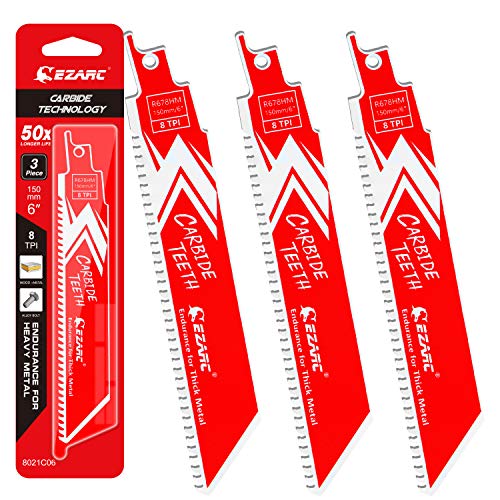
Key Features: Carbide technology (up to 50x life), 8 TPI ideal for tough metals, designed for stainless and high-alloy steels. Although engineered for very hard metals, these carbide 8 TPI blades are suitable for aluminum alloys that are tougher or work-hardened. They offer extended life and maintain cutting performance under repetitive use. Expect durable, consistent cuts in medium-thickness aluminum applications.
Buying Guide: Choosing The Best Sawzall Blade For Aluminum
Use this guide to match blade selection to your aluminum cutting needs, focusing on tooth type, TPI, coating, and blade geometry.
Blade Material: Bi-Metal vs Carbide
- Bi-Metal: Flexible, cost-effective, good for sheet and thinner aluminum. Cobalt-enhanced bi-metal improves heat resistance when cutting at higher speeds.
- Carbide-Tipped: Superior wear resistance for abrasive or harder alloys and repetitive cutting. Better for thick aluminum, structural work, and abrasive alloy compositions.
Teeth Per Inch (TPI)
- High TPI (18–24): Best for thin sheets and clean finishes, reduces tearing and burrs. Slower cutting, more prone to clogging if chips accumulate.
- Medium TPI (8–14): Good balance of speed and finish for general aluminum work and moderate thickness.
- Low TPI (3–6): Fast, aggressive cuts for thick sections and profiles. Produces rougher edges and larger chips.
Coatings And Heat Resistance
- Coatings (Perma-Shield, TiN, etc.) reduce friction and rust, helping cut cooler and prolong blade life.
- Cobalt or High-Speed Teeth help resist heat buildup when cutting aluminum at high feed rates.
Blade Geometry And Body
- Oversized Blade Body reduces vibration and straightens cuts, helping with accuracy on longer cuts.
- Thin-Kerf Bodies make easier cuts through sheet but can flex on thicker sections; choose thicker bodies for rigidity when cutting profiles.
Chip Evacuation And Cut Strategy
- Aluminum produces long, sticky chips. Use blades with appropriate TPI and maintain moderate feed pressure to avoid binding.
- Periodic pauses and blowing chips clear the path and prevent heat buildup.
Matching Blade To Task
- For thin sheet aluminum and trim: prioritize high TPI bi-metal (e.g., 18–24 TPI).
- For medium-thickness work and cleaner edges: choose 8–14 TPI carbide or reinforced bi-metal.
- For thick structural aluminum or frequent production cuts: use 3–8 TPI carbide for speed and durability.
Durability, Cost, And Frequency
- If you cut aluminum occasionally, high-quality bi-metal blades offer cost-effective performance.
- For heavy or professional use, carbide-tipped blades often provide lower long-term cost per cut due to longer life.
Safety And Tool Setup
- Secure the workpiece to prevent movement and minimize blade binding.
- Use appropriate speed settings and a steady, controlled feed rate.
- Wear eye and hand protection; aluminum chips can be hot and sharp.