Choosing the right saw for log cutting can improve safety, speed, and precision. This guide highlights top saws and saw stands that strike a balance between portability and power for American woodcutting tasks — from solo log bucking to two-person crosscutting. Each option is evaluated on grip, blade design, durability, and overall value for seasoned hobbyists and professionals alike.
| Product | Brand | Type | Key Benefit |
|---|---|---|---|
| Kings County Tools Hand Saw for Wood Cutting | Kings County Tools | One-Man Crosscut Saw | Great American Teeth for fast crosscuts |
| Oregon Steel Log Saw Horse | Oregon | Foldable Sawhorse | Stable, adjustable support for chainsaw cuts |
| Lynx 3′ One Man Crosscut Saw | LYNX | One-Man Crosscut Saw | Two-hand option with Beech/auxiliary handle |
| Katywixu 4′ Two Man Crosscut Saw | Katywixu | Two-Man Crosscut Saw | High-efficiency cutting, two-person collaboration |
| Corona Tools RazorTOOTH Pruning Saw | Corona | Pruning Saw | Triple-ground teeth for fast branch cutting |
Kings County Tools Hand Saw for Wood Cutting

The 3-foot hand saw is designed for solo log bucking with a screw-on auxiliary handle that offers stable two-hand use when needed. Its Great American Style teeth are aggressively set for rapid crosscuts, and deep gullets every third tooth facilitate quicker waste removal. The blade’s self-clearing action helps maintain momentum through wet or dry wood, reducing clogging during long sessions.
Oregon Steel Log Saw Horse

This foldable, adjustable sawhorse supports log cutting with a stable base and serrated teeth to clamp wood securely. It offers a practical 10.6-inch maximum log width and weighs about 15 pounds, making it portable for field work. The design emphasizes compatibility with chainsaws and bucking tasks, improving both safety and accuracy during cuts.
Lynx 3′ One Man Crosscut Saw

The Lynx crosscut uses a Beech handle and an auxiliary handle option for two-person use. Its special Great American Tooth pattern is optimized for logs, with the ability to be re-sharpened using a large triangular file. This saw balances ease of use with durable construction for routine log cutting tasks.
Katywixu 4′ Two Man Crosscut Saw
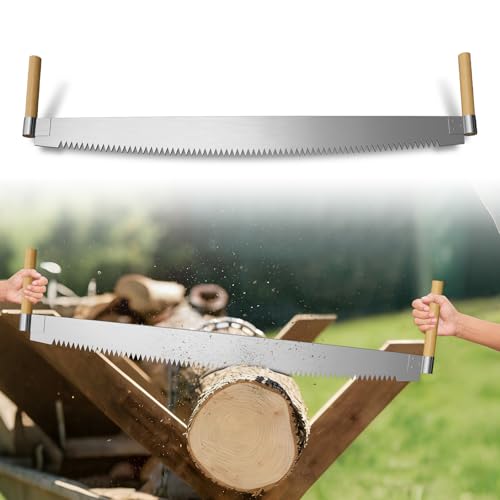
This 4-foot double crosscut saw emphasizes high-efficiency cutting with a wooden handle designed for two-person use. The blade is 1.5 mm thick steel, offering corrosion resistance and rigidity, plus easy disassembly for maintenance. It suits users who frequently work with wet or dry logs and seek faster two-person operation for large diameters.
Corona RazorTOOTH Pruning Saw

The Corona RazorTOOTH 18-inch pruning saw uses triple-ground teeth to maximize cutting efficiency on branches and smaller logs. Its curved blade and D-Handle enable gloved or two-handed operation, delivering strong performance on branches up to 9–10 inches in diameter while maintaining control and comfort during extended use.
Buying Guide: Key Purchase Considerations
- Intended use: Solo bucking vs. two-person crosscuts. Choose a saw with the appropriate handle configuration and blade geometry for your typical job size.
- Blade design and material: High-carbon steels and SK-5 blades offer durability and edge retention. Teeth count and pattern (Great American Tooth, triple-ground) affect cutting speed and ease of waste removal.
- Durability and portability: Foldable sawhorses and lightweight designs improve field usability, especially for remote jobs or camping scenarios.
- Handle comfort and control: Beech handles, auxiliary grips, and ergonomic D-handles reduce fatigue during long sessions.
- Maintenance: Sharpening accessibility and compatibility with common files ensures longer tool life and consistent performance.
Additional Perspectives
- Budget vs. performance: Higher-quality saws often justify their cost through durability, faster cutting, and safer operation, especially on tougher woods.
- Environment and wood type: Hardwoods require sharper teeth and stouter blades, while softwoods may benefit from lighter, quicker cuts.
- Storage and transport: Folding saw horses and collapsible designs save space in vehicles or packs for fieldwork.