Starting a woodworking hobby requires the right tools that are forgiving for beginners yet capable enough to produce quality results. The following picks focus on simplicity, safety, and versatility for new woodworkers. Each option—from compact hand saws to beginner-friendly power saws—helps you learn basic cuts, bevels, and measuring accuracy without overwhelming features. This guide compares five beginner-friendly saws, highlighting what makes them suited for first projects and how they can grow with your skills over time.
| Product | Brand | Best For |
|---|---|---|
| RUITOOL Japanese Hand Saw 6 Inch Ryoba | RUITOOL | Precise flush cuts and finish work |
| SKIL 15 Amp 10 Inch Table Saw with Folding Stand | Skil | Portable table work and repeated ripped cuts |
| SKIL 15 Amp 7-1/4 Inch Circular Saw | Skil | Lightweight, versatile handheld cuts |
| Metabo HPT 10-Inch Single Bevel Miter Saw | Metabo HPT | Precise miter and bevel cuts on framing or trim |
| SUIZAN Ryoba Double Edge Saw 9.5″ | SUIZAN | Clean pull-cuts for fine joinery and hobby work |
RUITOOL Japanese Hand Saw 6 Inch Ryoba

The RUITOOL 6-inch Ryoba is a double-edge pull saw designed for precise flush and finish cuts, a key need for beginners practicing accurate woodworking. The blade is constructed from SK5 high-carbon steel and undergoes high-frequency hardening, resulting in a hardness of HRC60-63. This combination supports clean crosscuts and rip cuts with less binding. The compact size makes it suitable for delicate trimming, dovetails, and trimming joints. The beech handle provides a comfortable grip for longer sessions and improved control for beginners refining their technique.
SKIL 15 Amp 10 Inch Table Saw with Folding Stand

This table saw offers a foldable stand for easy transport and storage, making it well-suited to beginners who need a stable workstation at home or in a small shop. The rack-and-pinion fence rails help ensure the fence stays parallel to the blade for accurate cuts, while micro-adjustment features enable precise alignment with the rip fence and miter slot. The combination of portability, a robust 10-inch blade, and straightforward setup helps new users build confidence in ripping, cross-cutting, and repeated tasks on larger pieces of stock.
SKIL 15 Amp 7-1/4 Inch Circular Saw
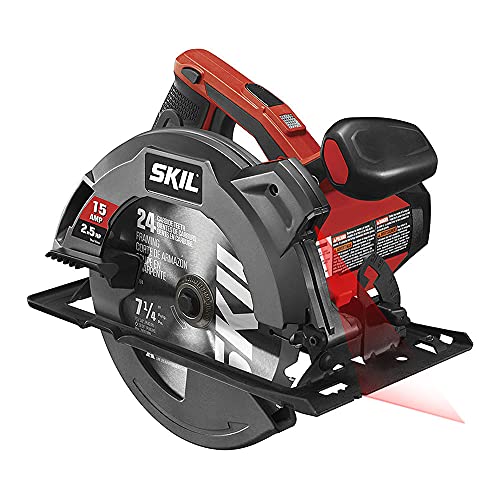
This circular saw provides a balance of power and manageability for beginners. The 15-amp motor enables faster, cleaner cuts, with a carbide-tipped 7-1/4-inch blade included for immediate use on common woods. A spindle lock simplifies blade changes, while a bevel capacity of 51 degrees with a positive stop at 45 degrees supports a variety of angles for first projects. Lightweight handling helps new woodworkers control kickback and maintain straight cuts as they learn to guide the tool along measure marks.
Metabo HPT 10-Inch Single Bevel Miter Saw

This miter saw is built for accuracy in framing and trim work with a 15-amp motor delivering up to 5,000 RPM. It includes an improved miter scale and a large table for better material support, plus a secure vice clamping system. Weighing about 24 pounds, it remains portable without sacrificing power, making it suitable for beginner projects that require precise angled cuts and repeatable results across multiple pieces.
SUIZAN Ryoba Double Edge Saw 9.5″

The SUIZAN Ryoba is crafted as a traditional Japanese pull saw with a double edge for versatility in fine joinery and general woodworking. Pull-cut design helps reduce effort and creates a cleaner edge, particularly on delicate cuts. The saw uses high-quality Japanese steel and is manufactured in Japan, aligning with long-standing craft traditions. Beginners can use it for precise tasks such as small dadoes, tenons, and trimming edges, which builds confidence in manual cutting skills before transitioning to powered tools.
Buying Guide: Key Purchase Considerations
- Cut Type and Finish: For beginners, hand saws like Ryoba models improve control on small parts and fine trim work, while circular saws enable faster stock preparation, and miter saws help with accurate angle cuts for frames and trim.
- Power vs. Manual: Start with a manual pull saw for learning texture and line quality, then introduce powered options for efficiency. Consider a compact table saw or a lightweight circular saw if you plan larger projects.
- Blade Quality and Material: High-carbon steel blades offer sharp, durable cuts. Japanese blades often deliver finer, cleaner edges with minimal effort, while carbide-tipped blades tolerate tougher wood with longer life.
- Safety and Handling: Look for blades with protective covers, low kickback designs, and balanced weight distribution. A stable cutting platform or folding stand can reduce user fatigue and improve accuracy.
- Bevel and Miter Features: For beginners, a saw with simple bevel stops or intuitive adjustment helps learners practice consistent angles, especially when building frames or trim.
- Portability and Storage: If space is limited, prioritize tools with fold-away stands or lighter weight. Consider a modular setup that can scale with growing projects.
- Upgrade Path: Choose tools that share blades or accessories to reduce the need for multiple tool-specific components as your workshop expands.
When selecting a beginner-friendly saw set, consider your typical project types, available workspace, and how each tool complements manual skills with powered efficiency. The highlighted products balance ease of use, accuracy, and learning potential, enabling a steady progression from simple cuts to more complex joinery.