Choosing The Right Saw Blade For MDF affects cut quality, tearout, and finish time. Below is a quick comparison of the top blades selected for smooth, low‑chip cuts in MDF and similar engineered boards.
| Product | Teeth / Arbor | Best For |
|---|---|---|
| Echo Corner 6-1/2″ 60-Tooth Fine Finish | 60T / 5/8″ | Fine finish crosscuts on MDF, veneer, laminate |
| WEN 10″ 80-Tooth Ultra-Fine Finish | 80T / 5/8″ | Miter/table saw ultra-fine finishing on panels |
| UXACE 5-1/2″ 40-Tooth Thin Kerf (2-Pack) | 40T / 10mm | Thin‑kerf portable saw clean rip/crosscuts on MDF |
| Luckyway 7-1/4″ 60T Finish | 60T / 5/8″ | General finish cuts on MDF and panels |
| Echo Corner 7-1/4″ TCG 60-Tooth Aluminum & MDF | 60T / 5/8″ | Low chip cuts on brittle materials and MDF |
Echo Corner 6-1/2 Inch Fine Finish 60-Tooth Circular Saw Blade
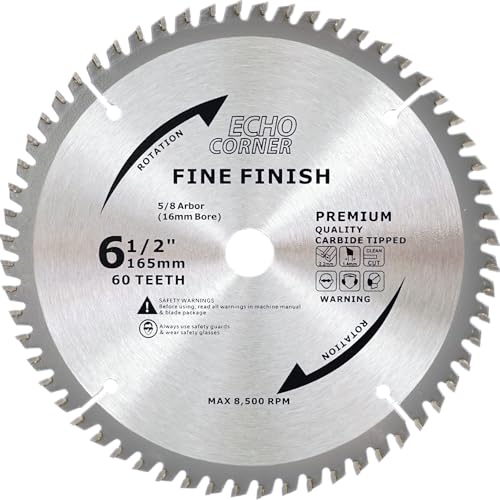
This 60‑tooth blade uses an alternating top bevel (ATB) geometry with C3 tungsten carbide tips for long life and a fine surface finish. The high tooth count limits tearout on MDF edges and veneers, making it suited for crosscuts, finish trim, and laminated panels. The blade’s design emphasizes smooth cuts over aggressive material removal; use slower feed rates for best results.
WEN 10-Inch 80-Tooth Ultra-Fine Finish Carbide-Tipped Blade
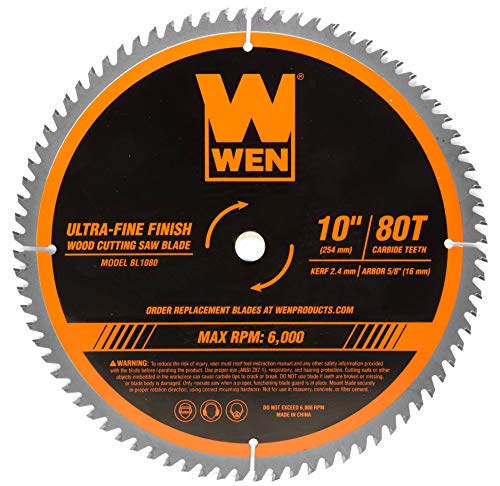
Designed for table and miter saws, this 80‑tooth blade delivers an ultra‑thin 1/10‑inch kerf and a very fine finish ideal for MDF, veneered panels, and edgework. The higher tooth count and thin kerf minimize chipout and produce near‑ready surfaces, reducing sanding time. Intended for blades rated up to 6000 RPM; pair with stable fences and slow, steady feed for best performance.
UXACE 5-1/2-Inch 40-Tooth Thin Kerf Carbide Tip (2-Pack)

With a 1.6 mm kerf and TiCo hi‑density carbide tips, this 40T blade is optimized for compact and cordless circular saws. The thin kerf reduces motor load and waste while providing cleaner edges in MDF and plywood. The 40T balance offers a compromise between smoothness and cutting speed, and the hardened steel body resists bending for truer cuts on jobsite saws.
Luckyway 7-1/4 Inch 60-Tooth Finish TCT Circular Saw Blade

This 60‑tooth TCT blade is built from fully hardened steel for rigidity and features carbide tips for durability. It’s intended for both crosscutting and ripping on panel materials including MDF, laminated panels, and plywood. The higher tooth count helps deliver a finished edge with limited tearout when used with proper feed and support for the workpiece.
Echo Corner 7-1/4 Inch TCG 60-Tooth Aluminum & MDF Blade

Featuring a Triple Chip Grind (TCG) tooth geometry and 60 teeth, this blade is designed to reduce chipout on brittle materials like MDF, laminates, and non‑ferrous metals. TCG teeth produce a shearing action that minimizes tearout on cut edges. Laser control and balanced design reduce vibration and heat build‑up for more consistent cuts on portable saw platforms.
Buying Guide: How To Choose The Best Saw Blade For MDF
- Tooth Count And Geometry: High tooth counts (60–80T) with ATB or TCG geometries produce the smoothest edges on MDF; 40–60T can work for portable saws where balance of cut speed and finish is needed.
- Kerf Thickness: Thin kerf blades (≈1.6 mm–2.4 mm) reduce material waste and motor load, improving cutting efficiency in handheld saws and compact tools.
- Carbide Tip Quality: Look for durable carbide (C3, TiCo or similar) for longer life when cutting abrasive engineered boards.
- Tooth Grind Type: ATB is good for clean crosscuts and veneers; TCG excels on brittle, laminated, or coated MDF to avoid chipping.
- Blade Diameter & Arbor Compatibility: Match blade diameter and arbor size to your saw (e.g., 5/8″, 10mm) and confirm RPM rating compatibility.
- Heat Management: Laser-cut expansion slots and balanced construction reduce heat and vibration, preserving tooth life and cut quality.
- Machine Type: For table and miter saws prefer very high tooth counts (80T) for ultra-fine finishes; for circular or cordless saws choose thin‑kerf high‑quality carbide blades with 40–60T.
- Purpose — Crosscut vs Rip: For pure rip cuts on MDF, fewer teeth (lower T) can be acceptable. For crosscuts and finished edges, prioritize higher T and ATB/TCG shapes.
- Support & Feed: Use sacrificial backing boards, zero‑clearance inserts, or anti‑chip supports and maintain steady feed speed to minimize tearout on MDF.
- Dust And Health: Cutting MDF produces fine dust containing resins; use dust extraction and respiratory protection regardless of blade choice.
Comparison Perspectives: Consider blade life vs finish: ultra‑fine blades reduce sanding but may cut slower and need more power. Portable users should weigh thin‑kerf blades for battery efficiency. For laminated MDF, TCG teeth reduce surface damage versus ATB.