Choosing the right sandpaper is essential for achieving a flawless polyurethane finish. The best picks for polyurethane projects combine durable abrasive materials, a range of grits for multiple sanding steps, and compatibility with both wet and dry sanding. Below is a curated set of sandpapers designed to smooth, refine, and polish polyurethane on wood, metal, and composite surfaces. Each option offers distinct grit ranges and formats to fit handheld and block sanding needs.
| Product | Brand | Grit Range | Format | Notes |
|---|---|---|---|---|
| SPOTJINNYUU 24 PCS Sand Paper | SPOTJINNYUU | 120–3000 (12 grits) | Sheets | Wide grit range, two sheets per grit; resilient to cracking or tearing |
| 3M Sandpaper, 220 Grit | 3M | 220 | Sheets | General purpose, aluminum oxide, suitable for paint/wood/metal |
| Romeda 8-Pack Sandpaper Block | Romeda | 60–220 | Blocks (sponge) | Washable, reusable sanding blocks in four grit levels |
| MOWPOG 8 Pack Sanding Sponge | MOWPOG | 60–220 | Sanding sponges | Durable, flexible, reusable in handheld sanding |
| BAISDY 45Pcs Wet Dry Sandpaper | BAISDY | 400–3000 | Sheets | Wide, fine to ultra-fine grits for finish polishing |
For polyurethane finishes, you often move from rougher grits to very fine ones to prepare the surface, remove dust nibs, and achieve a glass-like sheen. The following sections highlight five highly compatible options. Each product is suited for steps like initial scuff sanding, intermediate smoothing, and final polish of polyurethane on wood and other surfaces.
SPOTJINNYUU 24 PCS Sand Paper

The SPOTJINNYUU 24-piece set offers a broad grit spectrum from 120 through 3000, with two sheets per grit to cover a typical polyurethane workflow. The papers are designed not to crack, tear, or collapse during use, which is critical when smoothing cured polyurethane surfaces. The 9 x 3.6 inch sheets are easy to handle for manual sanding, and their resilience supports repeated passes without frequent replacements. This range is especially useful when transitioning from mechanical sanding to finish polishing on wood or metal surfaces.
3M Sandpaper, 220 Grit

The 220-grit 3M sheet is a staple for preparing polyurethane-coated surfaces. Its aluminum oxide mineral provides reliable cutting action for initial smoothing after stain or sealant application. This size is well-suited for hand sanding or a sanding block, enabling controlled material removal without gouging delicate finishes. While not a finishing grit, it effectively levels minor imperfections before moving to finer grits. It’s compatible with wood, paint, metal, and general-purpose prep work in small to medium DIY projects.
Romeda 8-Pack Sandpaper Block

Romeda’s eight-sponge sanding blocks cover a coarse-to-ultra-fine range (60/80/120/220) with two blocks of each grit, color-coded for quick identification. The high-density sponge resists tearing and ensures long-term durability, making it ideal for polyurethane surfaces that require uniform pressure and consistent contact. The blocks are versatile for woodworking, drywall, metal finishing, and furniture refinishing. Their washable construction suits ongoing projects where multiple sanding sessions are necessary before applying a new coat of polyurethane.
MOWPOG 8 Pack Sanding Sponge

The MOWPOG set includes four grit levels (60/80/120/220), with two blocks per grit. The sponges are molded from high-elasticity material to deliver flexible, abrasion-friendly sanding without leaving deep scratches on polyurethane finishes. They are easy to use by hand, fit into tight spaces, and can be cleaned for repeated use. This option is especially helpful when scuffing for adhesion between coats or removing micro-imperfections in curved or decorative surfaces.
BAISDY 45Pcs Wet Dry Sandpaper
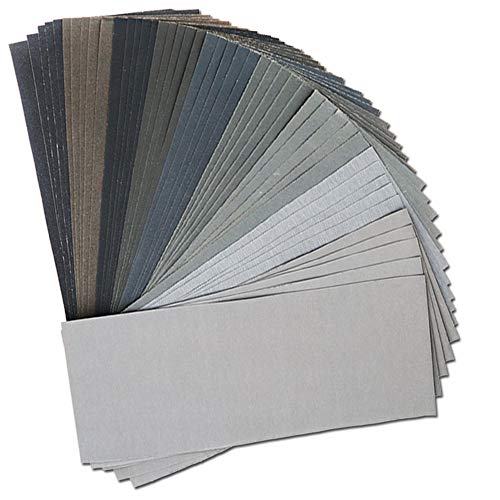
BAISDY’s 45-sheet set spans a wide range from 400 to 3000 grit, including multiple sheets per grit for fine finishing and polishing polyurethane surfaces. This assortment supports the full finishing sequence: rough sanding of raised grain, smoothing of cured coats, and final polish to a glass-like sheen. The 9 x 3.6 inch sheets are suitable for hand use and can be cut to fit intricate workpieces. The set’s high-quality silicon carbide and electrostatic coating promote even grit distribution and long service life, essential for efficient polyurethane work.
Buying Guide: Key Considerations For Polyurethane Projects
When selecting sandpaper for polyurethane, consider the following factors to maximize finish quality and efficiency.
- Grit progression: Start with a coarser grit to remove imperfections and other coatings, then move through intermediate grits to fine grits for a smooth finish. Common sequences include 120/180, 220, 320/400, and 600–3000 for final polishing.
- Material and coating: Aluminum oxide and silicon carbide are common, with silicon carbide often favored for wet sanding and finishing due to durability and smooth action. Electrostatic or coated guffs improve grit distribution and lifespan.
- Wet vs dry use: Wet sanding reduces dust and helps achieve a finer finish; dry sanding can be faster for initial smoothing but may raise dust and leave scratches if not done carefully.
- Pad and block compatibility: For polyurethane projects, sponge blocks and sanding pads help maintain even pressure over curved or irregular surfaces, reducing the risk of gouging.
- Durability and reuse: Reusable sanding blocks and washable sponges save costs on longer projects, especially when refining multiple coats of polyurethane.
- Sheet size and flexibility: 9 x 3.6 inch sheets are common and easy to cut for tight spaces. For larger flat surfaces, full sheets or larger blocks speed up the process.
- Project scope: Consider the material being sanded (wood, metal, or composites) and the complexity of the surface when choosing grit diversity and sanding formats.
In summary, a balanced kit that combines a broad grit range with durable blocks or sponges tends to deliver the best polyurethane results. For beginners, starting with a mid-range set and adding a few ultra-fine sheets for finish polishing is a practical approach. For seasoned DIYers, a complete assortment covering rough to ultra-fine grits can streamline the workflow and improve consistency across coats.