Quick Summary: This guide reviews five sanding belts and compatible mini belt sander kits that work well for knife making. Below is a compact comparison table of the selected items to help you scan options quickly.
| Product | Brand | Key Feature |
|---|---|---|
| Mini Electric Belt-Sander Knife-Sharpener | SI FANG | 7-speed mini sander + 20 belts (120–1000) |
| Blissthrill Aluminum Oxide Sanding Belts | Blissthrill | Three bundles, open-coat aluminum oxide, antistatic |
| 1×30 Silicon Carbide Belt Sander Belts | Donanim | Waterproof silicon carbide belts for wet/dry use |
| 3 Pack 2×72 Ceramic Sanding Belts | Tonmp | Ceramic abrasive for heavy metal removal (2×72 in) |
| Red Label Abrasives 2×42 Ceramic Belts | Red Label Abrasives | Assorted coarse ceramic grits (P36–P120) |
Mini Electric Belt-Sander Knife-Sharpener (SI FANG)
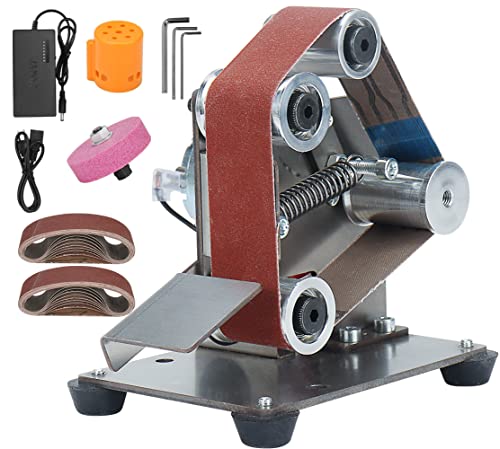
This compact bench sander kit includes a small vertical belt sander with a set of 20 sanding belts (330×30mm) in grits 120, 320, 600, 800, 1000 (4 each). The unit offers 7-speed adjustment, a dustproof cover, a grinding wheel and polishing accessories for multi-function use.
Features highlight adjustability of the worktable, a reported no-load speed range (4000–9000 RPM), and the ability to mount grinding or cloth wheels to expand function. The compact footprint suits small-scale knife profiles, bevel shaping, and finishing steps where a vertical mini sander fits the workflow.
Blissthrill Aluminum Oxide Sanding Belts

Sold as 3 bundles of 10 belts (13×1.18 inches) across five grit levels (120, 320, 600, 800, 1000). Constructed from open-coat aluminum oxide, these belts are designed to resist loading and deliver consistent sanding on metal and wood.
Additional attributes include antistatic and washable construction, heat-resistant resin bond, and suitability for mini belt sanders or bench grinders common in knife-making setups. Good choice for mid- to fine-stage finishing and frequent belt changes during project work.
1×30 Sanding Belts For Knife Sharpening (Donanim)

This set focuses on silicon carbide belts in fine grits (600, 800, 1000) with a heavy polyester cloth backing and closed coat grain. The belts are fully waterproof so they can be used wet or dry, reducing heat and clogging during prolonged grinding.
Silicon carbide performs well on hard materials and produces a sharp scratch pattern suitable for fine polishing stages. The robust backing and stearate anti-clogging treatment extend belt life during tool rest and finishing operations.
3 Pack 2×72 Inch Ceramic Sanding Belts (Tonmp)

These 2×72 inch ceramic belts are engineered for aggressive metal removal and prolonged life on tough steels including stainless and tool steels. Ceramic abrasives deliver faster stock removal and are typically preferred for initial profiling and heavy bevel shaping.
Manufacturer notes include enhanced durability, higher material removal rate versus aluminum oxide, and a bi-directional tape joint for smooth operation. Best used on 2×72 belt grinders where heavy shaping speed and long belt life matter most.
Red Label Abrasives 2×42 Inch Ceramic Belts

This set includes six ceramic belts in coarse grits (P36, P40, P60, P80, P100, P120) on a heavy-duty polyester backing. Designed for knife making and sharpening, they feature a closed coat, resin-over-resin bonding, bi-directional joint and anti-clogging stearate.
The assortment supports aggressive stock removal through to initial refinement stages. These 2×42 belts are commonly used on smaller grinders and combo bench sanders for shaping, beveling, and preparing edges before finer finishing belts are applied.
Buying Guide: Choosing Sanding Belts For Knife Making
Belt Size And Machine Compatibility: Confirm the belt dimensions for your grinder (common sizes: 2×72, 2×42, 330×30mm for mini verticals, and 13×1.18 inches). A mismatch can cause poor tracking, joint failure, or vibration.
Abrasive Type: Ceramic is best for fast, aggressive metal removal and long life; Aluminum Oxide is versatile and economical for general use; Silicon Carbide works well for hard or brittle materials and wet/dry finishing.
Grit Progression: Use a coarse-to-fine progression: coarse grits (36–60) for profiling, medium (80–240) for refining bevels, and fine (320–1000+) for polishing and final edge preparation. Choose kits that provide the grit range you need.
Coating And Bonding: Open-coat belts help prevent clogging when working soft materials or heavy stock removal. Closed-coat belts provide consistent cut for harder metals. Resin-over-resin bonds and heat-resistant resins improve belt longevity under high load.
Joint Type And Backing: Bi-directional tape joints enhance durability and allow reversed running; heavy cloth/polester backings resist tearing. For wet/dry use choose waterproof/backing-rated belts.
Heat And Clogging Management: Anti-clog stearates and washable/antistatic finishes reduce loading and heat build-up—important when working stainless or prolonged passes on an edge.
Machine Speed And Power: Higher belt speeds increase removal rate but can generate more heat. Match abrasive choice to your machine’s RPM/FPMin and use cooling or wet methods when needed to protect steel temper.
Intended Stage: Select belts based on stage of work: coarse ceramic for profiling, aluminum oxide for intermediate smoothing, silicon carbide or fine aluminum oxide for finishing.
Durability Vs. Cost: Ceramic belts often cost more but last longer on aggressive tasks. For frequent replacement during prototyping, economy aluminum oxide packs may reduce short-term cost.
Wet Vs. Dry Use: If you plan wet grinding, verify belts are waterproof and rated for wet use to avoid delamination or backing failure.
Multiple Comparison Perspectives:
- Performance: Ceramic > Aluminum Oxide for aggressive removal; Silicon Carbide excels at fine wet finishing.
- Longevity: Ceramic typically outlasts aluminum oxide on hard steels; resin bonds and anti-clog coatings improve life.
- Versatility: Open-coat aluminum oxide belts and multi-grit kits offer flexible use across stages and materials.
- Machine Fit: Match belt width/length and joint type to your grinder to avoid operational issues.