Choosing the right sander for metalworking can improve finish quality and efficiency. The following selections focus on motors, belt speed, dust control, and durability to help you find a reliable tool for metal polishing, deburring, and shaping. Each option is suitable for hobbyist projects or professional metalwork, offering different speeds, belt sizes, and mounting versatility.
| Product | Brand | Key Feature |
|---|---|---|
| SKIL 5” Random Orbital Sander SR211601 | Skil | 3-piece sanding sheets; cyclone dust box; 13,000 OPM |
| Bucktool Pro 1HP BD4801-M | Bucktool | 1HP direct-drive; 4 x 36 belt; heavy-duty metalworking |
| WEN 6502T Benchtop Belt & Disc Sander | WEN | 4 x 36 belt, 6 x 6 disc; cast iron base |
| Seesii Belt Sander 1/2″ x 18″ | Seesii | 2.0Ah battery; 6 speeds; tight-space work |
| Bucktool 2.3A Belt Sander, 1×30″ | Bucktool | Low-speed precision; knife sharpening angle guide |
SKIL 5” Random Orbital Sander SR211601

The SKIL SR211601 delivers a balanced combination of speed and controllable power for metal sanding tasks. Its 2.8-amp motor and up to 13,000 OPM provide a smooth finish on metal surfaces, while the X-flow dust container uses cyclone force to keep dust contained and easy to empty. The variable speed control lets users tailor performance to different materials, contributing to minimized gouging and better surface prep.
Bucktool Pro 1HP BD4801-M Belt Sander
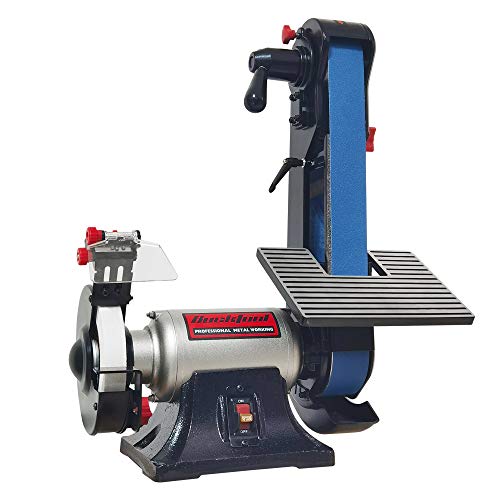
Designed for metalworking and polishing, the Bucktool BD4801-M features a 1HP direct-drive motor for steady, robust performance and a 4 x 36 inch belt plus an 8 inch disc. It supports metal polishing and knife-related tasks and includes a dust outlet to help manage debris. The switch box sits on top for easy access, while the belt tension can be adjusted to suit different belts and long workpieces. This model emphasizes efficiency and stability for continuous metal sanding work.
WEN 6502T Benchtop Belt & Disc Sander
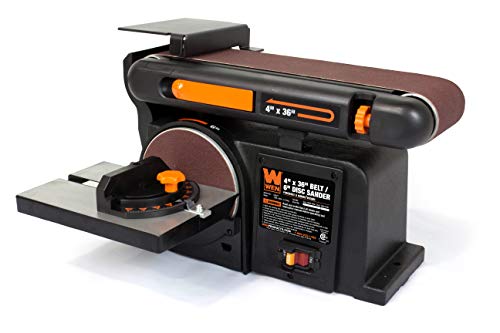
The WEN 6502T combines a belt sander and a disc sander in a single benchtop unit, offering 4 x 36 inch belts and a 6 x 6 inch disc. It features a tilting belt mechanism from 0 to 90 degrees and a sturdy cast-iron base that minimizes vibration during heavy metal sanding tasks. This setup supports contour shaping and edge cleanup, making it versatile for metalworking, automotive body work, and craft projects.
Seesii Belt Sander 1/2″ x 18″

Seesii’s belt sander is designed for tight spaces and detailed work. Its slim profile and single-handed operation make it ideal for corners, welds, and holes on metal and other materials. With a 6-speed adjustable control ranging up to 1700 feet per minute, users can switch between grinding, deburring, and finishing tasks. The tool-free belt change simplifies belt swapping, supporting efficient workflow on metal projects and small fabrication tasks.
Bucktool 2.3A Belt Sander, 1×30″
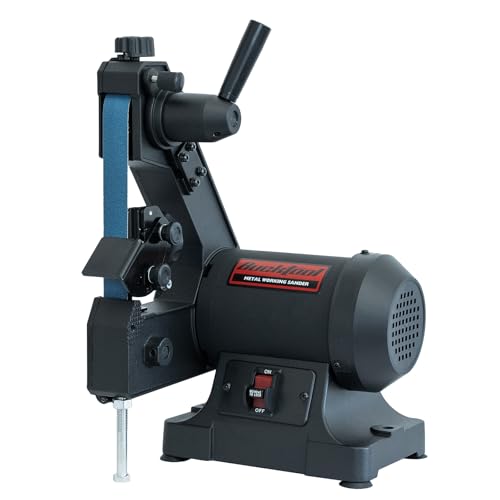
The Bucktool 2.3A belt sander provides a low-speed, precision-focused option suitable for metalwork and knife-making projects. Its 1×30 inch belt runs at a steady 1790 RPM, offering steady material removal for controlled shaping and edge work. The unit features a one-button belt cover removal and a quick-release system for easy belt changes, along with reliable belt tracking to maintain straight sanding paths. This model emphasizes accuracy and workflow efficiency in metal finishing tasks.
Buying Guide: Key Considerations For Metal Sanding
When selecting a sander for metal, consider power, speed control, belt size, dust management, and stability. Higher amperage motors deliver stronger material removal but may generate more heat and vibration; a belt sander with adjustable speed helps tailor performance to metal hardness and coating types.
- Power and torque: Look for motors in the 1/2 HP to 1 HP range for metal work. Direct-drive configurations typically offer consistent power transfer.
- Speed range and control: Variable speeds reduce burn marks and improve finish on different metals and coatings. Auto-tracking belts simplify setup.
- Belt and disc options: A combination belt-disc model increases versatility for flat surfaces, edges, and contours. Consider belt width (e.g., 4 x 36 inches) for mid- to large-scale projects.
- Dust collection: Effective dust containment minimizes cleanup and improves visibility. A cyclone or integrated dust system is beneficial for metalworking.
- Stability and build quality: Cast iron or sturdy aluminum bases reduce vibration and improve precision during long sanding sessions.
- Accessibility and maintenance: Tool-free belt changes and easy belt tracking adjustments save time on frequent belt swaps.
- Accessories: Included sanding belts, discs, and knife-sharpening accessories can add immediate value for metal projects.
From a practical standpoint, heavier benchtop models with dual sanding surfaces (belt and disc) are well-suited for metal finishing, deburring, and edge cleanup. For detailed work in tight spaces, a compact belt sander with adjustable speed and a lightweight profile can offer better control. When evaluating options, balance power, versatility, and durability to fit your typical metalworking tasks and project scale.