Finding the right sander for auto body work means balancing power, control, and compatibility with pads and grit sizes. The table below summarizes five top pneumatic orbital sanders suited to car paint, filler shaping, and polishing tasks.
| Product | Type / Size | Key Feature |
|---|---|---|
| ZFE 1/2/3 Inch Random Orbital Air Sander | Mini (1/2/3″) | Supplied pads & sandpapers, 15,000 RPM |
| 5 Inch Air Random Orbital Sander (UPWOOD) | 5″ | Semi-industrial continuous use, 5/16″-24 thread |
| Autolock 6 Inches Air Random Orbital Sander | 6″ | Palm-style 6″ DA sander for larger areas |
| VEVOR 1/2/3 Inch Random Orbital Air Sander | Mini (1/2/3″) | 58-piece kit, wavy foam pads for curves |
| TCP Global 6″ Dual-Action Random Orbit Air Palm Sander | 6″ | Both PSA and hook & loop backing pads, heavy-duty build |
ZFE 1/2/3 Inch Random Orbital Air Sander
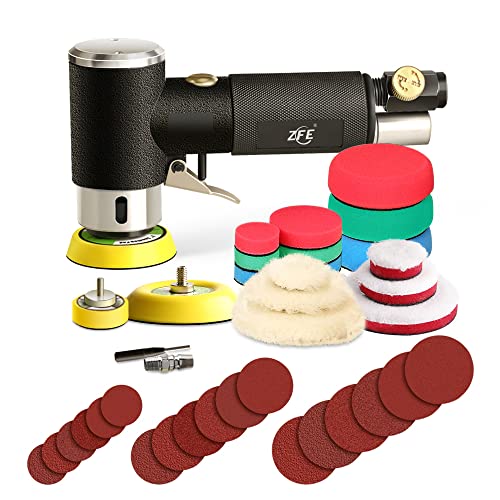
This mini pneumatic random orbital sander is designed for detail sanding and polishing on curved or small panels. The kit includes 15 buffing pads, 18 sandpapers, three backing plates, plus basic mounting accessories. The stated speed is up to 15,000 RPM, and the unit emphasizes low vibration and stable operation. Multiple pad sizes let you switch between close-detail work and slightly larger surfaces. This model targets trim work, spot repairs, and polishing in tight areas where larger 5–6″ sanders can’t reach.
5 Inch Air Random Orbital Sander For Auto Body Work (UPWOOD)

This 5-inch pneumatic palm sander is marketed for auto and wood work with a semi-industrial design for longer runtime. The kit contains 10 five-inch 120-grit papers and 10 sanding wheels. The pad thread is 5/16″-24, and the sander supports switching to different backing pad types (sold separately). Its palm grip and continuous operation capability make it suitable for medium-area body sanding, removing paint edges, and preparing panels for filler or primer.
Autolock 6 Inches Air Random Orbital Sander
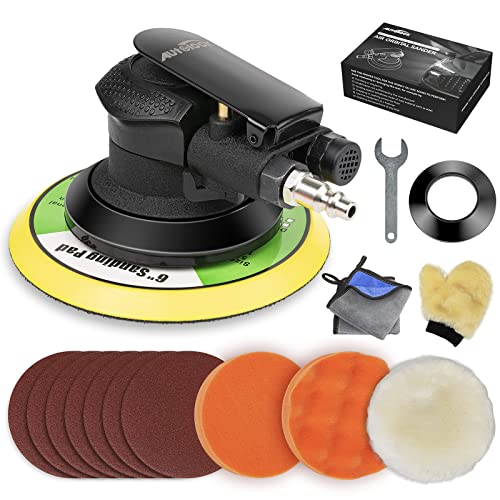
The Autolock 6-inch DA sander is positioned as a professional palm sander with a larger 6″ backing plate for covering wider surfaces. It aims to be easy to handle and suitable for both spot and panel sanding. The product listing emphasizes a newer model and professional-grade intent. A 6″ sander is commonly used for initial paint leveling, blocking, and blending large panels on cars where a swirl-free finish is desired.
VEVOR 1/2/3 Inch Random Orbital Air Sander Kit

VEVOR supplies a mini air sander with a claimed free speed of 15,000 RPM and an extensive 58-piece kit. Included are 36 sandpapers (80/120/240 grit) and wavy foam pads meant to conform to curves—useful when working on fenders, door edges, and contoured trim. The listing highlights low vibration and manageable single-hand operation, making it another option for detailed sanding tasks and finishing work on rounded surfaces.
TCP Global Professional 6″ Dual-Action Random Orbit Sander
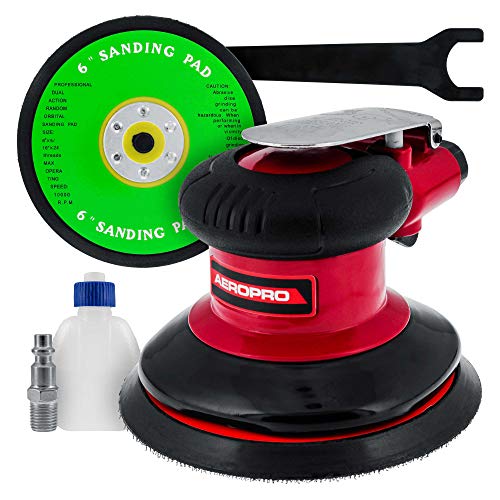
This 6-inch dual-action pneumatic palm sander includes both PSA (adhesive) and hook-and-loop backing pads, increasing compatibility with different disc types. The unit is described as lightweight with a rubber grip, heavy-duty ball-bearing construction, and a thumb lever for air regulation. These features support smoother, vibration-reduced sanding across larger panels and longer sessions in a body shop environment.
Buying Guide: Choosing A Sander For Body Work
Selecting the right sander for auto body tasks depends on the stage of the job, surface size, and desired finish. Below are key considerations and comparison perspectives.
1. Sander Size And Intended Use
- 1–3 inch mini sanders: Best For Detail Work — edges, trim, door jambs, and curved areas. Compact and easier to control for spot repairs.
- 5-inch sanders: Versatile Mid-Size — good balance for both panel prep and some detail work. Useful for medium panels and blending repairs.
- 6-inch sanders: Large Area Efficiency — faster coverage for hoods, doors, and full panels; better for blocking and final finishing.
2. Random Orbital vs Dual-Action vs DA
- Random Orbital: Minimizes swirl marks and is common for body shops. Useful across most stages from sanding filler to final primer prep.
- Dual-Action (DA): Produces a smooth, swirl-free finish and is preferred for final leveling and polishing.
- Mini Random Orbital: Combines orbit control with compact pads for precision work on curves.
3. RPM, Air Consumption, And Control
- RPM: Higher speeds (e.g., 15,000 RPM) can remove material faster but demand good technique to avoid over-sanding.
- Air Consumption/CFM: Confirm your compressor supports the tool. Mini sanders often require lower CFM while 5–6″ units may need more airflow for sustained use.
- Speed Regulator: Onboard regulators or thumb levers help match speed to material and grit for controlled sanding.
4. Backing Pads, Disc Types, And Grit Selection
- Hook & Loop vs PSA: Hook & Loop pads let you quickly change discs; PSA discs offer firm adhesion for heavier work. Choose kits or sanders that support both if you need flexibility.
- Grit Range: Coarse (80–120) for paint/filler removal, medium (120–240) for smoothing, fine (320+) for primer/finish prep. Kits that include multiple grits improve workflow.
- Conforming Pads: Wavy or foam pads help on curved panels to maintain contact without gouging.
5. Build Quality, Ergonomics, And Vibration
- Material: Aluminum bodies provide durability; rubber grips reduce fatigue.
- Vibration Reduction: Lower vibration improves control and reduces user fatigue—important for longer sanding sessions.
- Weight And Balance: Lighter sanders are easier to maneuver for detail work; heavier, well-balanced units help steady large-area sanding.
6. Kit Contents And Value
- Kits that include a variety of pads, backing plates, and multiple grit papers are convenient for a full repair workflow.
- Ensure included pads match the sander’s pad sizes and mounting threads (e.g., 5/16″-24).
7. Safety And Technique
- Always wear proper PPE: respirator, eye protection, and hearing protection.
- Use progressive grits and avoid excessive pressure—let the sander and abrasive do the work.
- Test on scrap pieces or hidden areas to dial in speed and grit before working on visible panels.
8. Matching Compressor And Shop Setup
- Check required CFM and working pressure before purchase. Mini sanders usually have lower demands; larger 5–6″ units need higher airflow for sustained tasks.
- Accumulator tanks and inline regulators can smooth airflow and maintain consistent performance.
Comparison Perspectives
- Detail vs Coverage: Pick mini 1–3″ sanders for tight curved areas; choose 5–6″ for blocking and large panel work.
- Speed vs Control: Higher RPMs remove material quickly but require careful control; variable-speed models are more adaptable.
- Kit Completeness: Kits with multiple grits and pad types reduce additional purchases and speed up workflow for body repair and polishing.