Finding the right router bit and circle cutting jig makes circular cuts cleaner, faster, and safer. Below is a quick comparison of selected products that work well for cutting circles in wood—router jigs for guiding the tool and specialty bits for clean edges and bowls.
| Product | Type | Cut Range / Bit Size |
|---|---|---|
| Milescraft 1219 Circle Guide Kit | Circle Jig | 1.5″–52″ |
| Jasper 390 XLC Router Circle Cutter Jig | Circle Jig | 7″–52¾” |
| Jasper 290 PRO Router Circle Jig | Circle Jig | 1.5″–18 3/16″ |
| HQMaster Extra Long Spiral Router Bit | Router Bit (Upcut) | 1/4″ Shank, 1/4″ Dia, 2″ Cut Length |
| SICWOOD Bowl & Tray Template Router Bit Set | Router Bit Set (bowl/tray) | 1/4″ Shank, Multiple Radii |
Milescraft 1219 Circle Guide Kit
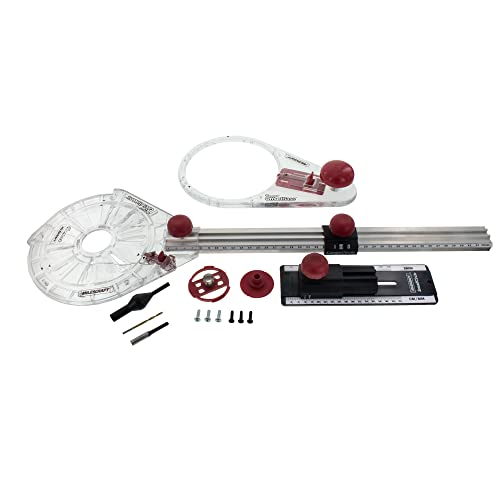
This kit combines small and large circle jigs to cover a wide diameter range. The small jig cuts circles from 1.5″ to 12″ while the large jig handles 10″ to 52″. Both include metric and imperial scales and an easy readout window for precise diameter settings. The jigs attach via the included turn-n-lock circle guide head for compatibility with many router bases. Ideal for users who need a single solution spanning small accents to large tabletops, speaker cutouts, and decorative rings.
Jasper 390 XLC Router Circle Cutter Jig

The Jasper 390 XLC is a heavy-duty acrylic circle jig that cuts 184 circle sizes from 7″ to 52¾” in 1/4″ increments. Constructed from hardened workshop-grade acrylic, it includes a centering calibration disc, pivot pins, and mounting hardware for repeatable setups. Its transparency aids alignment, and the incremental stops let you quickly dial in common diameters for larger projects such as tables, speaker fronts, and hoops.
Jasper 290 PRO Router Circle Jig
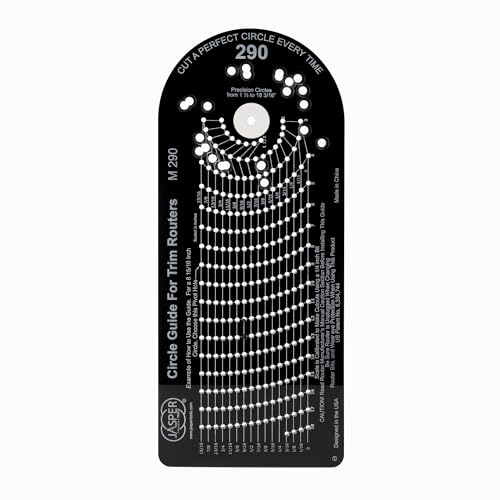
The Jasper 290 PRO focuses on fine-grain sizing with 268 circle options ranging from 1½” to 18 3/16″. Made from industrial-grade polycarbonate, it ships with a calibration disc, centering pin, pivot pins, and screws to ensure accurate, one-pass cuts with compact, trim, and cordless routers. This jig is suited to small-to-medium circle tasks like recessed speaker cutouts, round frames, and decorative medallions where tight tolerances matter.
HQMaster Extra Long Spiral Router Bit Upcut 1/4 Inch Shank

This solid carbide, extra-long upcut spiral bit has a 1/4″ shank, 1/4″ cutting diameter, and 2″ cutting length—useful for deeper plunges and through-cuts when routing circles. The two-flute up-cut profile evacuates chips efficiently, reduces vibration, and improves edge and bottom finish. The longer cutting length is helpful when routing thick stock or when circle jig geometry forces a deeper plunge angle.
SICWOOD Bowl & Tray Template Router Bit Set

This 4-piece carbide-tipped set targets bowls, trays, and rounded cavities. With a 1/4″ shank and multiple cutting heights and radii, it allows controlled profiling for circular troughs and shallow bowls. The bits use premium C3 micro-grain carbide for longer life, and tungsten-bearing bodies for steady rotation and reduced vibration. Recommended when your circle project needs a concave profile rather than a straight-edge rim.
Buying Guide: How To Choose The Best Tools For Cutting Circles
Selecting the right combination of jig and bit depends on material, circle size, finish expectations, router type, and shop workflow. Below are focused considerations to guide purchases.
1. Define Circle Diameter Range
- Small Circles (Under 2″): Use jigs with fine increments or specialty templates. Some large jigs don’t register below certain sizes.
- Medium Circles (2″–18″): Compact jigs like the Jasper 290 PRO are tuned for tight tolerances in this range.
- Large Circles (Over 18″): Look for jigs with extended reach (Milescraft, Jasper 390 XLC) and robust anchoring for stable arcs.
2. Router Compatibility And Mounting
- Check the jig’s mounting method—some mount to router base plates directly while others use a universal guide head. Confirm the pivot pin and screw spacing fit your router base.
- For plunge routers, ensure the jig can accommodate plunge movement and clear the bit at maximum depth.
3. Bit Selection Based On Cut Type
- Upcut Spiral Bits: Good for deep cuts and chip evacuation when cutting through stock; they may cause slightly rougher top edges on thin veneers.
- Downcut Spiral Bits: Compress chips downward for cleaner topside edges—useful for veneered sheets or laminated panels.
- Profile/Bowl Bits: Use template bits like the SICWOOD set when you need rounded troughs, bowl interiors, or tray profiles.
4. Material And Edge Finish
- For hardwoods, carbide-tipped bits produce longer life and cleaner edges.
- Coated bits (e.g., nano coatings) resist heat and extend cutting life for demanding jobs.
- For plywood and veneer, prefer downcut or compression bits to minimize tearout on the face veneer.
5. Accuracy And Repeatability
- Look for jigs with indexed increments, centering discs, and positive pivot pins to reproduce the same circle repeatedly.
- Transparent or clearly scaled jigs can speed alignment when centering workpieces.
6. Safety And Setup Tips
- Always secure the workpiece with clamps or a sacrificial table; let the jig and router do the work—avoid forcing the cut.
- Use a slow, steady feed rate for template-guided cuts to reduce burning and bit wear.
- Mark the center clearly and test on scrap before committing to final material.
7. Compare Based On Project Workflow
- Single-Piece Precision Work: Choose a jig with fine adjustment and a clean-finish bit (downcut or compression).
- Large Furniture Components: Opt for jigs that span large diameters and robust bits that handle thicker stock (upcut spiral with longer flute length).
- Bowl Or Tray Making: Use template-specific bowl bits or router bits designed for concave profiling.