Choosing the right reciprocating saw blade for pruning affects cut quality, safety, and blade life. This guide compares top pruning blades designed for tree trimming, wet wood, and heavy-duty limb removal. Below is a quick summary table for the selected products to help you scan options fast.
| Product | Brand | Key Feature |
|---|---|---|
| EZARC 15″ Japanese Teeth Pruning Blade (3-Pack) | EZARC | Extra-long arc edge, aggressive Japanese tooth, 15″ |
| HORUSDY 9″ Wood Pruning Blades (5-Pack) | HORUSDY | HCS carbon steel, 9″, 5 TPI, rough outdoor cutting |
| Diablo Demo Demon Carbide Tipped 9″ (3-Pack) | Diablo | TiCo carbide tips, Perma-SHIELD coating, long life |
| EZARC 9″ R931GS 5TPI (5-Pack) | EZARC | Chrome vanadium heat-treated, smooth cuts, durable |
| WORKPRO 6″ Pruning Blade Set (5-Pack) | WORKPRO | 6″ wet-wood blades with organizer case, 5 TPI |
EZARC 15 Inch Japanese Teeth Reciprocating Saw Blade (3-Pack)

This 15-inch blade targets larger branches and heavier pruning tasks. The arc edge design and triple-ground offset teeth create multiple cutting angles to reduce friction and help maintain a controlled cut on big limbs. The aggressive Japanese fleam-ground teeth and deep gullets support fast chip clearance and are promoted for extended life compared to standard pruning blades.
- Best for: Large-diameter branches, extended reach pruning.
- Material/Design: Arc edge, fleam-ground teeth, deep gullets.
- Performance Notes: Long blade length increases reach but requires stable handling for control.
HORUSDY 9-Inch Wood Pruning Reciprocating Saw Blades (5-Pack)
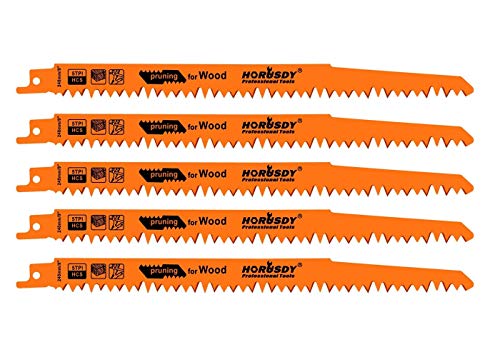
These 9-inch blades use high carbon steel (HCS) construction with 5 teeth per inch (TPI), a common configuration for pruning. The tooth design and alloy choice aim to balance cutting speed and durability for outdoor rough cutting and tree branch removal. Pack quantity makes them convenient for routine garden pruning.
- Best for: General pruning, medium branches, and fast rough cuts.
- Material/Design: HCS alloy, 5 TPI aggressive tooth profile.
- Performance Notes: Suitable for green/damp wood; expect moderate wear on heavier or abrasive materials.
Diablo Demo Demon Carbide Tipped Reciprocating Blades (9″, 3-Pack)
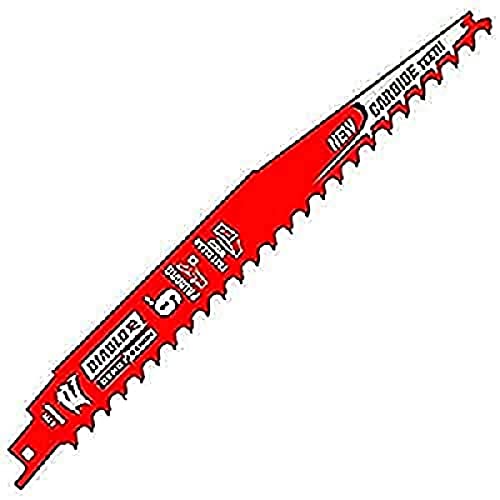
Diablo’s Demo Demon blades use TiCo carbide tips for a significant durability bump over standard HCS blades. The Perma-SHIELD non-stick coating reduces gumming and friction, which helps when cutting resinous or sticky woods. Oversized blade bodies add strength for demanding pruning and clean wood tasks.
- Best for: Heavy-duty pruning, repeated cuts, or abrasive/hard woods.
- Material/Design: Carbide-tipped teeth, non-stick coating, robust blade body.
- Performance Notes: Higher wear resistance extends useful life; designed for productivity on tough cuts.
EZARC 9-Inch Wood Pruning Reciprocating Saw Blade R931GS (5-Pack)
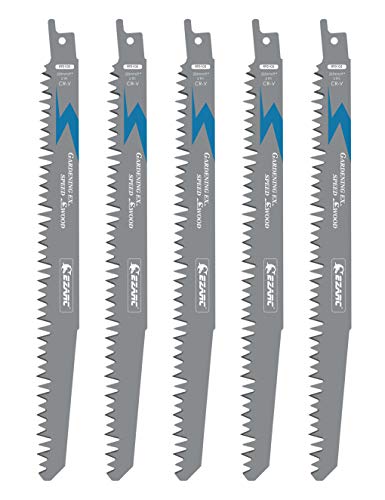
This 9-inch set emphasizes durability and smooth cuts through heat-treated chrome vanadium steel. The advanced tooth geometry targets efficient pruning performance with reduced resistance. The manufacturer positions these blades for fast cutting speeds and longer lifetimes than typical HCS blades.
- Best for: Frequent pruning where blade longevity and smooth finish are priorities.
- Material/Design: Chrome vanadium heat-treated steel, 5 TPI tooth design.
- Performance Notes: Suitable for outdoor rough cutting with improved wear resistance versus basic carbon blades.
WORKPRO 6-Inch Wood Pruning Reciprocating Saw Blade Set (5-Pack)

WORKPRO’s 6-inch set is optimized for wet wood and smaller branches. The shorter blade length provides better control for close-in pruning and hedge work. The kit includes an organizer case, which helps keep blades protected and accessible on job sites.
- Best for: Wet wood, smaller diameter branches, and controlled cuts near structures.
- Material/Design: HCS with ground teeth for improved sharpness, 5 TPI.
- Performance Notes: Shorter length increases maneuverability but limits reach for larger limbs.
Buying Guide: How To Choose Pruning Reciprocating Saw Blades
Choosing the right blade depends on wood type, branch size, required reach, and expected blade life. Below are key considerations with comparison perspectives to help match blades to tasks.
Blade Length And Reach
Longer Blades (12″–15″): Better For Larger Branches And Reaching Higher Limbs From The Ground. They Offer Increased Reach But Require More Control To Prevent Flexing.
Shorter Blades (4″–9″): Provide Increased Maneuverability For Close-In Work And Wet Wood But Limit Maximum Cutting Diameter.
Tooth Pitch (TPI)
Low TPI (3–5): Aggressive Cutting For Rapid Material Removal; Ideal For Pruning And Green Wood.
High TPI (10+): Finer Cuts For Clean Wood Or Finish Work; Not Intended For Fast Pruning.
Material And Tooth Type
HCS (High Carbon Steel): Common For Pruning; Good For Green/Damp Wood But Wear Faster On Abrasive Materials.
Heat-Treated Steel (Chrome Vanadium): Improved Durability And Strength Compared To Basic HCS.
Carbide-Tipped: Offers Significantly Longer Life And Better Performance On Hard Or Abrasive Wood, But At Higher Cost.
Coatings And Friction Control
Non-Stick or Low-Friction Coatings Reduce Gumming On Resinous Wood And Lower Heat Build-Up, Improving Cut Speed And Blade Longevity.
Tooth Geometry And Chip Clearance
Triple-Ground Or Fleam-Ground Teeth Provide Multiple Cutting Angles And Faster Cutting. Deep Gullets Help Evacuate Chips, Which Aids In Continuous Cutting Without Binding.
Wet Wood Vs. Dry Wood
Wet/Green Wood: Choose aggressive tooth geometry and gullet design to clear chips; shorter blades help control movement in damp conditions.
Dry/Hard Wood: Consider heat-treated or carbide-tipped options to resist wear and keep teeth sharp longer.
Durability And Use Frequency
Occasional Home Use: HCS or heat-treated blades in multi-packs are cost-effective.
Frequent Or Professional Use: Carbide-tipped blades or premium heat-treated alloys reduce downtime and replacement frequency.
Safety And Handling Considerations
Longer blades tend to flex — use steady, controlled strokes and proper PPE. Secure branches where possible; consider pruning from a stable position or using pole-mounted reciprocating tools designed for arborist work.
Compatibility And Fit
Most blades fit common reciprocating saws and Sawzall-style clamps, but verify shank type and universal fit notes if using specialty quick-change systems.
Value Factors
Compare pack quantity, expected blade life, and specific performance claims (e.g., carbide life multiplier, coating benefits). A higher up-front cost may be justified by longer service life in demanding conditions.
Final Selection Tips
- Match blade length to the branch diameter and reach needed.
- Choose 3–5 TPI or 5 TPI for general pruning; drop to 3 TPI for very aggressive, fast removal of large limbs.
- Prioritize carbide or heat-treated blades for frequent or professional pruning; HCS is suitable for occasional homeowner use.
- Look for anti-gumming coatings and deep gullets when cutting resinous or wet wood.