When tackling wood-cutting projects, the right reciprocating saw blade makes all the difference. This guide highlights high-quality blades designed to deliver clean cuts, extended life, and faster performance across pruning, tree trimming, and rough wood cutting. We’ve chosen five blades that balance durability, versatility, and value for American homeowners and professionals alike.
Summary of selected products:
| Product | Brand | Key Strengths |
|---|---|---|
| EZARC Japanese Teeth Reciprocating Saw Blade 15 Inch | EZARC | Arc edge design, 3 cutting angles, fleam-ground teeth |
| HORUSDY 9-Inch Wood Pruning Reciprocating Blades (5 Pack) | HORUSDY | 5 TPI, durable HCS steel, outdoor pruning versatility |
| EZARC Wood Pruning Reciprocating Saw Blade 9-Inch | EZARC | Best-in-class pruning speed, smooth cuts, durable chrome vanadium steel |
| DEWALT Reciprocating Saw Blades, 10 Piece | DEWALT | Bi-metal construction, versatile set, durable edge |
| WORKPRO 32-Piece Recip Saw Blade Set | WORKPRO | Comprehensive assortment for wood, metal, and pruning |
EZARC 15 Inch Arc Edge Wood Pruning Blades

EZARC’s 15-inch arc-edge blade is designed for aggressive pruning and larger branch cuts. The extended length provides leverage for deep cuts, while the Japanese-tooth profile delivers fast, coarse action with cleaner finishes. Its triple-ground, offset teeth reduce friction and help maintain a controlled cut when working through thicker limbs. The fleam-ground teeth and deep gullets contribute to longer blade life, balancing speed with durability for regular outdoor use.
HORUSDY 9-Inch Wood Pruning Blades, 5 Pack
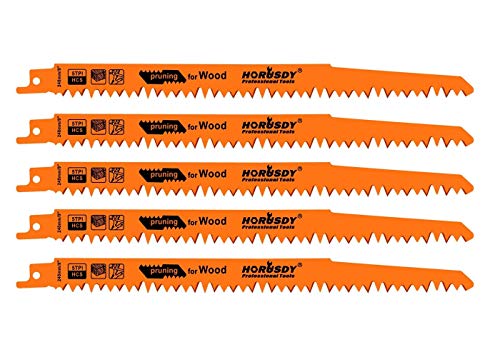
This five-pack of 9-inch blades by HORUSDY is tailored for outdoor pruning and fast wood cutting. Each blade uses high-speed carbon steel (HCS) construction to balance durability with flexibility for rough cuts. The 5 TPI design is ideal for pruning tasks and simple wood demolition, delivering quicker action without excessive heat build-up. The set’s versatility makes it a practical addition to any pruning toolkit.
EZARC 9-Inch Wood Pruning Reciprocating Blade
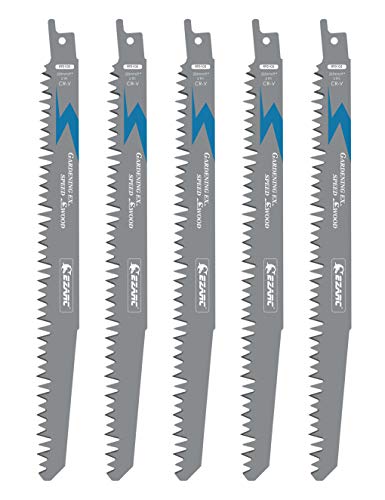
EZARC’s 9-inch pruning blade emphasizes a best-in-class blend of speed and longevity. Built with advanced alloys and tooth designs, this blade aims for smoother cuts and reduced resistance during outdoor pruning or rough wood cutting. The chrome vanadium steel base adds robustness, helping the blade resist bending or dulling through repeated use on tough wood tasks.
DEWALT Reciprocating Saw Blades, 10 Piece

This DEWALT combination set provides a broad blade selection for common wood and demolition tasks. The set emphasizes durable bi-metal construction, which delivers blade flexibility and a long-lasting cutting edge. It is particularly well-suited for mixed jobs where both pruning and rough wood cuts are required. The robust case keeps blades organized in a tool kit or job box.
WORKPRO 32-Piece Reciprocating Saw Blade Set
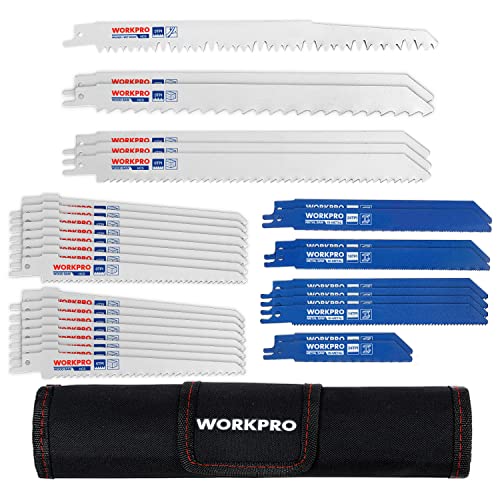
WORKPRO’s 32-piece collection covers a wide range of applications, including metal, wood, pruning, and drywall. The wood-cutting blades are crafted from Cr-V steel for solid performance and durability, while pruning blades are designed for clean, fast cuts on branches with smaller diameters. The organizer pouch helps keep blades accessible and protected, making it a convenient option for frequent projects.
Buying Guide: What To Consider When Choosing Wood Cutting Blades
Blade design and material significantly impact cutting speed, durability, and finish. Use these considerations to compare options and select the best blade for your needs.
- Blade length and tooth pattern: Longer blades provide reach for thick branches; finer teeth (lower TPI) cut faster but wear quicker on hard wood. For pruning and rough wood, mid-to-low TPI blades are often preferred.
- Tooth geometry and coatings: Fleam-ground teeth deliver smoother cuts and chip clearance. Coatings like non-stick or chrome vanadium increase durability and reduce gumming during use.
- Material: Bi-metal blades are flexible and durable for metal and wood mixing tasks; chrome vanadium and HCS blades offer good durability for wood cuts and pruning tasks.
- Arc-edge vs straight-edge designs: Arc-edge blades typically reduce friction on larger cuts, enabling controlled pruning and less motor strain.
- Blade life vs. cost: Higher-quality blades may have a higher upfront cost but longer life in demanding tasks, reducing overall project cost per cut.
Usage Scenarios And Performance Perspectives
For pruning and tree trimming, prioritize blades with arc-edge design and fleam-ground teeth to handle branches with less friction and cleaner finishes. For mixed tasks—wood cutting, metal, drywall—the DEWALT and WORKPRO sets offer versatile blades with durable construction and broad compatibility with common reciprocating saws.
Safety And Maintenance Tips
Always wear eye protection and gloves when using reciprocating saws. Secure the workpiece, avoid twisting the blade, and allow the saw to cut at a steady pace. Regularly inspect blades for dullness or damage; replace blades showing signs of missing teeth, warping, or excessive heat wear. Clean blades after use to remove sap and debris that can reduce efficiency.