Choosing a reliable random orbit sander can dramatically improve finish quality and reduce work time on wood projects. This guide highlights five leading models, based on motor power, dust management, vibration control, and versatility. Each product section below includes direct access to the official listing for quick comparison and a concise feature summary to help you decide faster.
| Product | Brand | Key Feature |
|---|---|---|
| DEWALT DWE6423 | DEWALT | 8,000–12,000 OPM, dust-sealed switch |
| BOSCH ROS20VSC | Bosch | Pad dampening system, hook-and-loop discs |
| Makita BO5041 | Makita | 3.0 AMP, 4,000–12,000 OPM, ergonomic grip |
| Makita BO5030K | Makita | 12,000 OPM, ergonomic design |
| RYOBI One+ 5″ | RYOBI | 10,000 OPM, 40% reduced vibration |
These models are commonly favored for woodworking, cabinetry, and DIY projects, balancing power, control, and dust management. The following sections provide detailed overviews of each selected sander, followed by a buying guide with practical considerations for choosing the right tool for your needs.
DEWALT DWE6423 Random Orbit Sander

The DEWALT DWE6423 features a 3-Amp motor with a sanding pad speed of 8,000 to 12,000 OPM, suitable for a wide range of materials and finishes. A separate counterweight design helps reduce vibration, enhancing user comfort during extended sessions. The dust-sealed switch protects internal components from debris, contributing to longer tool life. This model emphasizes a balance between power and control, making it a dependable choice for mid- to heavy-duty tasks while maintaining a comfortable grip and maneuverability.
BOSCH ROS20VSC Palm Sander
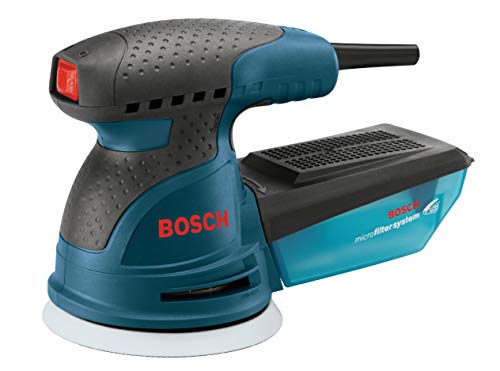
The Bosch ROS20VSC offers a pad dampening system to minimize swirl marks on flat and contoured surfaces. Its Hook and Loop disc attachment makes disc changes quick and secure, while a robust 2.5 AMP motor delivers 7,500–12,000 no-load OPM. The variable speed control enables precise matching of sanding speed to the task, helping achieve smooth finishes with less effort and improved control over vibration.
Makita BO5041 5″ Random Orbit Sander

The Makita BO5041 emphasizes a 3.0 AMP motor and a variable speed control dial ranging from 4,000 to 12,000 OPM. An ergonomic rubberized palm grip provides comfort and precise control during long sanding sessions. The design focuses on smoother, faster sanding with a good balance of power and operator comfort, making it a strong option for varied woodworking tasks, including curved and flat surfaces.
Makita BO5030K 5″ Random Orbit Sander

The Makita BO5030K provides a smooth and fast sanding experience driven by a 3.0 AMP motor capable of up to 12,000 OPM. A rubberized grip enhances operator comfort and control, with a large 1/8″ random orbit action that supports rapid material removal while maintaining a refined surface finish. This model is well-suited for tasks requiring consistent swirl-free results on varied textures.
AVID POWER 5-Inch Orbital Sander

The AVID POWER orbital sander features a 3.0 Amp motor with six variable speeds from 7,000 to 14,000 RPM. It is designed for woodworking tasks that require quick material removal with controlled finish quality, offering a low-profile body to reduce vibration and allow closer access to work surfaces. The dust collection bag helps keep the work area cleaner, supporting better visibility while sanding and reducing cleanup time after tasks.
Buying Guide: How To Choose The Right Random Orbit Sander
Key considerations when selecting a random orbit sander include power, speed range, and motor durability. A higher RPM range generally translates to faster surface removal on soft woods, while lower settings help control heat buildup on hardwoods. The balance between speed and control matters for achieving swirl-free finishes without creating gouges.
Dust management is critical for both health and finish quality. Look for models with effective dust collection systems, such as cyclone features or bagless containers, and consider whether you will connect to a shop vacuum for optimal debris removal. A reliable dust-sealed switch can extend tool life in dusty environments.
Ergonomics and vibration control influence comfort during longer sessions. Palm grip design, weight distribution, and balanced construction help reduce user fatigue. Many models use counterweights or dampening mechanisms to minimize chatter, improving control over delicate surfaces.
Compatibility and accessory ecosystem are practical factors. Check disc attachment systems (Hook and Loop vs. Velcro-like solutions) and ensure availability of compatible sanding discs. Compatibility with existing cordless platforms (for brands like Ryobi or Makita) can add convenience if you prefer a system approach.
For beginners or casual hobbyists, budget and ease of use may be paramount. In contrast, professionals might prioritize durability, extended motor life, and consistent performance at higher duty cycles. Consider warranty terms and the availability of replacement parts when evaluating long-term value.