Finding Comfortable, Low-Force Pruners can make gardening possible and enjoyable for people with arthritis or weak hands. Below is a compact comparison table of five hand pruners selected for ergonomic design, low cutting effort, and rust-resistant blades.
| Product | Key Feature | Best For |
|---|---|---|
| Fiskars PowerGear2 Pruning Shears | Multiplying gearing reduces hand force | Maximum leverage for thicker stems |
| EZ Kut Ratcheting Pruning Shears | Ratcheting action for heavy branches | Very limited hand strength; thick cuts |
| Haus & Garten ClassicPRO Titanium Bypass | Ergonomic handle, shock-absorbing pads | Seniors and arthritis sufferers |
| gonicc 8″ Titanium Bypass Pruners | Lightweight, forged body, titanium blade | Comfortable, precise cutting with less weight |
| Ultra Sharp Japanese Steel Pruning Shears (Craft911) | SK5 steel, titanium coating, non-slip grip | Sharp cuts with low effort and rust resistance |
Fiskars Pruning Shears With PowerGear2 Technology

Features: PowerGear2 multiplies cutting force, UltraBlade coating for long edge life, 3/4-inch cut capacity, soft-grip handle, durable DuraFrame construction. The modified gear and cam mechanism reduce the hand effort required to slice through branches compared with traditional bypass pruners. The UltraBlade coating helps maintain sharpness and reduce gumming.
This tool is designed to convert limited hand strength into greater cutting power through mechanical advantage. Soft grips and reduced weight help lower wrist strain during repeated cuts. Suitable for users who need extra leverage while still wanting a standard pruner footprint.
EZ Kut Ratcheting Pruning Shears

Features: Ratcheting mechanism that breaks a cut into multiple light-effort steps, SK5 hardened carbon steel blade with non-stick coating, cushioned non-slip handle, shock-absorbing pads, cuts up to 1.5 inches. The ratchet reduces peak grip force by allowing several small squeezes per cut.
Ratcheting pruners are a common recommendation for people with severe arthritis or very weak grips. They trade single-squeeze speed for lower per-squeeze force and controlled progress through thicker stems. The non-slip grips and shock pads improve comfort during longer sessions.
Haus & Garten ClassicPRO 8.5″ Premium Titanium Bypass

Features: Japanese high-carbon steel blade with titanium coating, ergonomic handle, non-slip grips, shock-absorbing pads, corrosion-resistant anodized aluminum body. The design explicitly mentions reduced wrist strain and suitability for smaller hands and seniors.
This bypass pruner emphasizes comfort and clean cuts to promote plant health while lowering hand fatigue. The ergonomic shape and shock absorption are practical for gardeners who want a familiar pruner style but need gentler handling forces.
gonicc 8″ Professional Titanium Bypass Pruning Shears
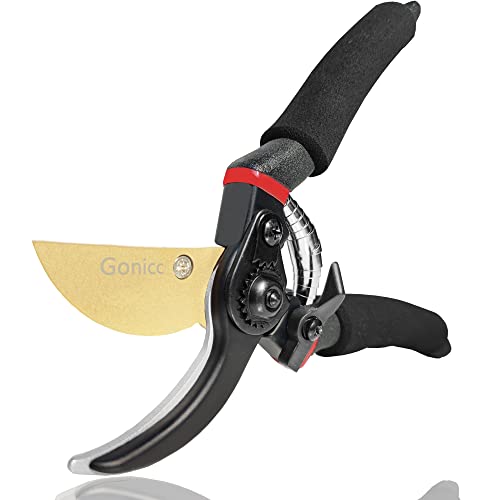
Features: Drop-forged body and handles for strength, premium titanium-coated blade with ultra-fine polishing, ergonomically designed non-slip handles that are lightweight and comfortable. The titanium finish reduces friction and improves corrosion resistance.
gonicc pruners balance lightweight construction with a sharp cutting edge, reducing the energy needed to position and operate the tool. The non-slip ergonomic handles make it easier to maintain control without gripping excessively hard.
Ultra Sharp Japanese Steel Pruning Shears (Craft911)

Features: SK5 steel with titanium coating, ultra-sharp edge for lower cutting effort, rust-resistant finish, non-slip textured handles, rated to cut up to 3/4 inch. The combination of a hard steel core and low-friction coating is intended to reduce the squeeze force per cut.
Sharp blades are crucial for people with arthritis because a dull blade requires added force and twisting. These pruners focus on edge retention and comfortable grips to help users make clean cuts with less exertion.
Buying Guide: Choosing Pruners For Arthritic Hands
When selecting pruning tools for arthritis or weak hands, focus on mechanics, ergonomics, and blade quality. Each factor below affects how much effort and pain you’ll experience.
Cutting Mechanism
- Ratcheting — Best For Very Weak Hands: Breaks a cut into incremental steps so each squeeze needs less force.
- Gear-Assisted (PowerGear) — Best For Extra Leverage: Uses gearing to multiply force, making thicker stems easier to cut in one motion.
- Standard Bypass — Best For Precision: Pairs with very sharp blades and ergonomic handles; best if you can apply moderate force.
Handle Design And Grip
- Look for ergonomic contours that fit your hand size and reduce pressure points.
- Soft or non-slip grips prevent excessive clamping force and improve control in wet conditions.
- Shock-absorbing pads reduce impact on knuckles and joints when clipping thicker stems.
Blade Sharpness And Material
- Sharp, high-carbon or SK5 steel and titanium or Teflon coatings reduce friction and the force needed per cut.
- Choose blades with good edge retention or the ability to be resharpened.
- Rust-resistant finishes lower maintenance and keep cutting smooth over time.
Weight And Size
- Lighter pruners are easier to maneuver and reduce wrist fatigue.
- Consider overall length and handle spacing — too wide or too narrow can increase strain.
Cut Capacity
- Match maximum cut capacity to the thickest stems you typically prune.
- For anything above 3/4″ consider gear-assisted or ratcheting models to avoid excessive force.
Maintenance And Safety
- Keep blades clean and oiled to reduce gumming and required squeeze force.
- Use proper locking mechanisms and safety features to prevent accidental injuries.
- Regular sharpening preserves low-effort cutting performance.
Comparison Perspectives
- Effort Reduction: Ratcheting and gear-assisted pruners score highest for minimal hand force.
- Precision And Plant Health: Sharp bypass blades give cleaner cuts; better for delicate stems.
- Comfort For Long Sessions: Ergonomic handles, soft grips, and shock pads reduce cumulative joint stress.
- Durability: Forged bodies and corrosion-resistant blades last longer with consistent performance.
Assess your typical pruning tasks and hand strength, then prioritize mechanism (ratchet vs. gear vs. bypass), blade quality, and handle comfort. Testing a friend’s pruner or trying different grip styles can help determine the right balance between leverage and control for your needs.