Whether you’re prepping firewood for a chilly winter or keeping your woodpile well-stocked, a portable log splitter can save time and effort. This guide reviews five reliable options designed for portability without sacrificing power. Each product section includes a concise overview, key features, and what to consider before buying.
| Product | Brand | Suggested Use | Key Benefit |
|---|---|---|---|
| WEN Electric Log Splitter | WEN | Home garage or small job sites | Compact, 6.5-ton capacity with portable stand |
| BILT HARD Log Splitter 6.5 Ton | BILT HARD | Residential firewood prep | Heavy-duty electric splitter with portable wheels |
| Kindling Cracker Firewood Splitter | Kindling Cracker | Kindling production | No moving blade, ultra-safe kindling maker |
| Ezasin Portable Log Splitter 16 Ton | Ezasin | Medium to large logs | High tonnage with transport wheels |
| SuperHandy Log Splitter Portable 20 Ton | SuperHandy | Heavy-duty outdoor use | Gas-powered, rapid auto-return ram |
WEN Electric Log Splitter, 6.5-Ton Capacity
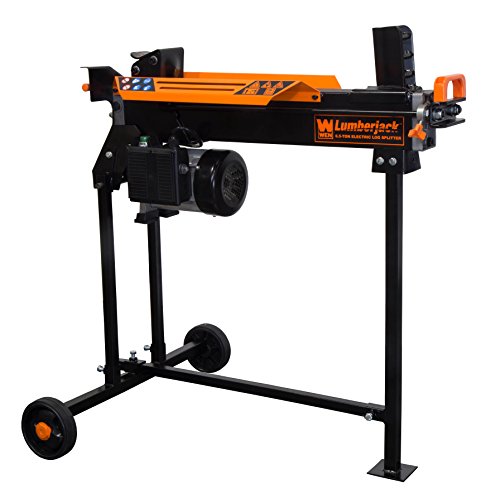
The WEN 6.5-ton electric log splitter combines portability with practical power. Its 15A motor delivers substantial log-cracking pressure for firewood tasks at home or on small job sites. A 34-inch stand offers elevated operation, but the unit can be used without the stand if you prefer a lower profile. The unit includes a pull handle and 5.5-inch never-flat wheels, making it straightforward to transport between locations. This design emphasizes quiet, emission-free operation, ideal for residential settings and garages.
Key considerations:
– Tonnage suitability for typical hardwoods and softwoods.
– Weight and stability with or without the stand.
– Noise level and maintenance needs for a compact electric unit.
BILT HARD 6.5 Ton Log Splitter

The BILT HARD 6.5-ton electric splitter provides a robust option for household wood prep. It features a 15A motor capable of 6.5 tons of splitting force and a hydraulic ram designed to quickly reset for successive cuts. Notable is its emphasis on safe operation with two-hand controls and a relatively quiet, fume-free design compared with gas-powered machines. The unit’s wheel kit enhances portability across varied terrains, including uneven ground and lawns.
Key considerations:
– Ease of transport across different work sites.
– Degree of log diameter and length it can handle efficiently.
– Safety features and required electrical circuit protection.
Kindling Cracker Firewood Splitter

The Kindling Cracker is a unique, non-gas, non-electric option designed for safe, simple kindling creation. It uses a manual wedge approach, reducing risk by eliminating moving blades near hands. This product is ideal for users who want to produce kindling efficiently with minimal effort and no power source. Its 6.5-inch top ring opening is suited for small-diameter wood pieces, making it a specialized tool rather than a full-scale log splitter.
Key considerations:
– Best fit for kindling and small-diameter logs.
– Safety-focused design without moving blades.
– Not a replacement for larger log splitting tasks requiring higher tonnage.
Ezasin Portable Log Splitter 16 Ton

The Ezasin 16-ton portable splitter offers substantial capacity in a transport-friendly package. Powered by a 2.5eHP, 17.4A motor, it delivers a robust 16-ton thrust with a dual-gear aluminum pump and auto-return feature for efficient cycle times—stated as around 18 seconds per cycle. Its design emphasizes portability via a horizontal full beam frame and 8-inch transport wheels, making it suitable for larger logs while still being movable between sites.
Key considerations:
– Suitability for logs up to 20.5 inches long and 16 inches in diameter.
– Cycle time and motor efficiency during continuous use.
– Weight and maneuverability on rougher terrain.
SuperHandy 20-Ton Log Splitter

The SuperHandy 20-ton horizontal log splitter runs on a 7HP gas engine and uses a Bucher hydraulic gear pump for reliable power. Its rapid auto-return ram is designed to cut logs up to 20 inches long and 16 inches in diameter. Weighing around 130 pounds, it balances raw power with portability for outdoor use, making it a strong option for users handling larger wood piles in forests, campsites, or job sites far from power sources.
Key considerations:
– Gas-powered performance and maintenance requirements.
– Towing or trailering capabilities for field work.
– Handling length and diameter limits for typical hardwoods.
Buying Guide: Key Purchase Considerations
Choosing the right portable log splitter involves balancing power, portability, and safety. Consider these factors to align a model with your wood-splitting needs and environment.
-
<liPower source and noise: Electric units are quiet and emission-free, ideal for residential use. Gas models deliver more power but require maintenance and produce noise and fumes.
<liTonnage and log size: Tonnage determines the maximum log diameter and species you can split. For typical firewood, 6.5–20 tons covers most needs; larger logs call for higher tonnage or hydraulic systems.
<liPortability and weight: Look for wheels, compact dimensions, and whether the unit includes a stand. Heavier machines may require a vehicle or trailer for transport.
<liSafety features: Two-hand controls, emergency shutoffs, and stable bases reduce risk. For kinds of use around kids or in tight spaces, prioritize safety-first designs.
<liDurability and maintenance: Steel construction, quality seals, and straightforward access to the ram assembly extend service life. Check for easy lubrication and service intervals.
<liLog dimensions and cycle time: Measure the typical log length and diameter you process. Shorter cycle times improve efficiency on large projects, especially with higher-tonnage units.
<liPortability vs. power trade-off: Gas-powered units offer more raw power but are bulkier and noisier. Electric units are easier to move and operate in tight spaces but may struggle with very large hardwoods.
<liAccessories and setup: Some models include stands or wheels; others require separate purchases. Ensure compatibility with your workspace and power outlets.
<liWarranty and support: Check manufacturer warranties and the availability of parts, service centers, and replacement components in your region.
Across these five options, users should be able to identify a suitable tool based on whether portability, power, or specialized use (like kindling) is the primary goal. For frequent outdoor jobs or larger firewood projects, a higher-tonnage gas splitter may be worth the investment. For garage or shed setups with limited space and a need for quiet operation, an electric unit often provides a better balance of practicality and performance.