Quick Overview: This guide compares top portable band saw blades built for cutting metal, highlighting blade length, tooth pitch (TPI), material, and compatibility. Below is a compact comparison table of the selected products to help you scan options fast.
| Product | Blade Size / TPI | Material / Feature |
|---|---|---|
| Morse Master Cobalt Bi-Metal | 44-7/8″ x 1/2″ x .020″ — 14/18 TPI | Made in USA, Shock Resistant Edge, Variable Tooth Pitch |
| Milwaukee Alloy Steel Sub-Compact Blade | Length Fit For Sub-Compact — 18 TPI | Matrix II High Speed Steel Teeth, Alloy Backing |
| DEWALT 32-7/8″ 18 TPI (3-Pack) | 32-7/8″ x .020″ — 18 TPI | Matrix II HSS Edge, 8% Cobalt, High Tooth Hardness |
| Lenox 44-7/8″ 14 TPI (5-Pack) | 44-7/8″ x 1/2″ x .020″ — 14 TPI | Bi-Metal, Shatter Resistant, High Speed Steel Teeth |
| Makita 44-7/8″ 18 TPI (3-Pack) | 44-7/8″ — 18 TPI | Bi-Metal Construction, Longer Life Than Carbon Blades |
Morse Master Cobalt Bi-Metal Portable Band Saw Blade 44 7/8 x 1/2 x .020 14/18 TPI

Brand: MK Morse. This blade features a cobalt bi-metal construction with a shock-resistant cutting edge designed for machinable metals. The variable tooth pitch (14/18 TPI) provides flexibility across a range of metal thicknesses and reduces chattering on different cuts. Being Made in the USA may indicate consistent manufacturing standards. Use this blade when you need an all-purpose metal-cutting blade with enhanced edge toughness for intermittent impact or tougher ferrous materials.
Milwaukee Alloy Steel 48-39-0572 18 TPI Sub-Compact Portable Band Saw Blade

Brand: Milwaukee. This pack emphasizes Matrix II high speed steel teeth and an alloy backing steel for extended life. The precision formed 18 TPI teeth are intended for fast, clean cuts in metal, particularly useful in sub-compact portable band saws. The alloy backing design helps resist stretching and improves fatigue life. Choose this option for clean finishing cuts on thinner metal stock and situations where blade longevity against wear is important.
DEWALT Portable Band Saw Blade 32-7/8-Inch .020-Inch 18 TPI (3-Pack)

Brand: DEWALT. These blades use Matrix II high speed steel cutting edges with 8% cobalt content for improved heat and wear resistance, plus high tooth hardness (Rc 65–67). With an 18 TPI profile and shorter 32-7/8″ length, they suit compact or specific models that require this length while delivering sustained edge performance on metal. They are designed for high durability under frequent cutting and higher temperatures.
LENOX Tools Portable Band Saw Blades 44-7/8″ x 1/2″ x .020″ 14 TPI (5-Pack)
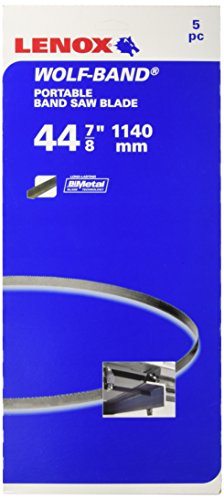
Brand: Lenox. These bi-metal blades pair high speed steel teeth with a flexible backing to resist breaking and shattering, extending service life. The 14 TPI profile favors moderate-to-thicker metal cutting where tooth spacing balances feed rate and finish. The 5-pack format supplies multiple replacements for frequent users or professional crews. Ideal for general shop or field work where blade resilience and fewer changeovers are priorities.
Makita T-05608 44-7/8″ 18 TPI Bi-Metal Portable Band Saw Blade (3/Pack)

Brand: Makita. The bi-metal construction is promoted to deliver up to 3x longer life than carbon blades, with an 18 TPI setup suitable for clean cuts in both ferrous and non-ferrous metals up to roughly 1/4″ thick. This configuration is useful when you need a balance between cutting speed and surface finish. The 3-pack provides replacements for ongoing jobs or frequent use.
Buying Guide: How To Choose Portable Band Saw Blades For Metal
Selecting the right blade depends on a few core parameters. Below are the key considerations and comparison perspectives to help you decide.
Blade Length And Machine Compatibility
Always confirm the exact blade length, width, and thickness required by your portable band saw model. A mismatch can cause poor tracking or damage. Common lengths here include 44-7/8″ for many full-size portable saws and 32-7/8″ for compact models.
Tooth Pitch (TPI) And Material Thickness
- Lower TPI (e.g., 10–14) — Faster cutting on thicker metal; rougher finish.
- Higher TPI (e.g., 18–24) — Better for thin materials and improved finish; slower feed.
- Variable pitch blades can reduce vibration and work across more material thicknesses.
Tooth Material And Coatings
Bi-metal and Matrix II HSS teeth with cobalt additions offer higher heat and wear resistance than standard carbon teeth. Consider these for continuous cutting, abrasive metals, or high-temperature operations.
Backing Steel And Blade Construction
Alloy backing or flexible backing steels increase fatigue life and resistance to cracking. If your work includes frequent impacts, choose shatter-resistant or flexible bi-metal blades to avoid premature failure.
Cut Quality Versus Speed
Decide whether finish or speed is the priority. For structural steel where speed matters, lower TPI blades are efficient. For thin tubing or finish-sensitive parts, higher TPI blades reduce burrs and give cleaner edges.
Durability And Replacement Frequency
Consider pack sizes (single, 3-pack, 5-pack) relative to how often you change blades. Professional or heavy users benefit from multi-pack offerings and blades with superior tooth metallurgy to extend service life.
Compatibility With Materials
Check manufacturer notes for compatibility with stainless steel, aluminum, nonferrous metals, and coated materials. Some blades are tuned for specific metals; others are generalized for machinable metals.
Application Scenarios
- Field Fabrication: Prefer shatter-resistant, bi-metal blades with an aggressive tooth pitch for thicker materials.
- Plumbing/HVAC: Higher TPI blades provide cleaner cuts on tubing and thin walls.
- Workshop Production: Durable Matrix II or cobalt-enhanced blades reduce downtime from changes.
Maintenance And Tensioning
Proper blade tension, tracking, and periodic cleaning will extend blade life regardless of brand. Inspect teeth for wear and replace blades showing tooth wear, chip-out, or loss of cutting speed.
Safety And Best Practices
Always follow the saw manufacturer’s recommendations for blade installation, and wear appropriate PPE. Use suitable cutting speeds, steady feed pressure, and lubricant or coolant if recommended for the material.