Finding the right polishing pad for oxidation makes paint correction faster and safer. This guide reviews five top pads that target oxidation removal, cutting, polishing, and finishing across DA and rotary machines. Below is a compact summary table of the selected products for quick comparison.
| Product | Type | Best For |
|---|---|---|
| Autolock 5″ Buffing Polishing Pads (6Pcs) | Sponge & Wool Combo | Multi-step polishing and sealing |
| IPELY 6 Pcs 6 Inch Buffing Pads | Waffle/Open-Cell Foam | Oxidation, scratches, finishing |
| SPTA 8″ 100% Natural Wool Buffing Pad | Wool Cutting Pad | Heavy oxidation, cutting and compounding |
| Meguiar’s 5″ Soft Buff DA Foam Cutting Disc | Low-Profile Foam Cutting | Moderate oxidation, swirl removal |
| Lake Country HDO Heavy Cutting Microfiber Pad (6.5″) | Microfiber Cutting Pad | Heavy to medium defect removal |
Autolock 5″ Buffing Polishing Pads, 6Pcs

Autolock supplies a mixed set of sponge and woolen pads designed for broad polishing workflows. The dual-sided size design combines a 5.6″ face with a 5″ back to reduce surface abrasion and improve compatibility with common backing plates. The pads boast a locking feature to retain compound during high-speed use and claim improved heat dissipation. They fit DA, rotary, and other polishers and are washable and reusable. This kit suits multi-step detailers who want a flexible pad set that holds polish and works across cutting, polishing, and waxing stages.
IPELY 6 Pcs 6 Inch Buffing Pads

These IPELY pads use open-cell foam with a waffle pattern that increases airflow and reduces heat buildup while holding polish securely to minimize sling. The set targets oxidation removal, scratches, swirl marks, and sun damage, and includes various firmness levels for cutting, polishing, and finishing. Suitable for cars, boats, and glass, these pads are versatile for both DIY and professional tasks. The improved airflow helps protect sensitive paint during extended passes on oxidized panels.
SPTA 8″ 100% Natural Wool Buffing Pad
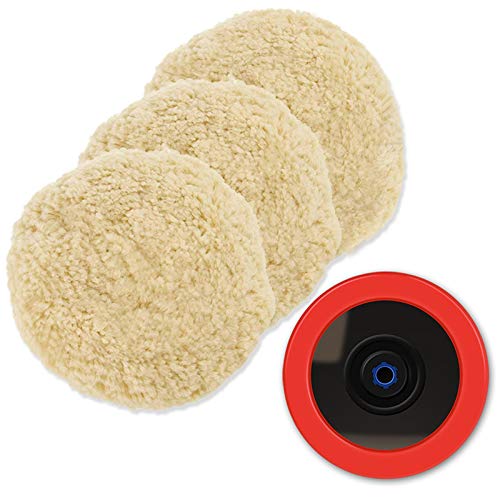
This SPTA pad is made from 100% natural wool and is intended for aggressive cutting tasks like heavy oxidation, orange peel, and deep scratches. The wool construction is suited to cutting compounds and provides economical repeated use when washed properly. It pairs with standard polishers and includes a 5/8-11 thread backing plate for easy attachment. Wool pads generate more cutting power than foam but require careful technique to avoid finish marring when used aggressively.
Meguiar’s 5″ Soft Buff DA Foam Cutting Disc

Meguiar’s Soft Buff low-profile foam cutting disc is engineered for DA polishers and offers improved cutting with minimized swirl creation. The disc targets moderate surface defects, oxidation, and swirl marks while maintaining finishing capability. Its design increases tool efficiency and reduces the risk of introducing new defects, making it a common choice for detailers who need reliable cutting performance without sacrificing finish quality.
Lake Country HDO Heavy Cutting Microfiber Pad

Lake Country’s HDO microfiber cutting pad pairs a custom microfiber blend with a blue foam interface to maximize cutting performance. Designed for random orbital polishers, it excels at removing moderate to heavy defects including oxidation when used with medium-to-heavy cut compounds. Microfiber pads often cut faster than standard foam and can reduce required compound and time for severe oxidation correction, though technique and compound choice remain important to avoid overcutting.
Buying Guide: Choosing Polishing Pads For Oxidation
Removing oxidation requires matching pad type, pad firmness, and compound to the defect level. Consider these key factors:
- Pad Material: Wool and microfiber provide aggressive cutting for heavy oxidation. Foam (open-cell or waffle) offers gradations from cutting to finishing. Choose based on defect severity.
- Pad Size: Larger pads cover more surface area faster but can generate more heat and require more control. Smaller pads offer precision in tight areas.
- Density/Firmness: Heavy-cut pads have higher density for defect removal. Softer pads are for polishing and finishing. Multi-density kits allow stepwise correction.
- Airflow And Heat Management: Open-cell or waffle designs improve airflow and reduce heat buildup, lowering burn risk to clear coat during extended passes.
- Backing And Attachment: Ensure pad diameter matches your backing plate and polisher. Hook-and-loop backing allows quick changes; threaded backing plates suit some wool setups.
- Pad Shape And Profile: Low-profile pads reduce leverage and are safer on edges; domed pads can provide more surface contact. Waffle or honeycomb textures help compound retention.
- Compound Compatibility: Match aggressive pads with appropriate cutting compounds and follow with polishing/finishing pads and finer polishes to restore gloss.
- Washability And Durability: Reusable pads that wash clean extend value. Look for reinforced binding or special interlayers to prevent separation under shear.
- Tool Type: Verify pad is appropriate for DA (dual action), rotary, or orbital polishers. Some pads are optimized for one machine type.
- Techniques: Use overlapping passes, appropriate speed and pressure, and test on an inconspicuous area. Start less aggressive and increase cutting if required.
Comparison Perspectives
- Best For Heavy Oxidation: Wool and microfiber cutting pads (SPTA 100% wool, Lake Country HDO).
- Best For Versatility: Combo kits or pads with multiple densities (Autolock, IPELY sets).
- Best For Controlled Cutting On DA: Low-profile foam cutting discs like Meguiar’s to reduce swirl risk.
- Best Heat Management: Open-cell or waffle-structured foam (IPELY, some Maxshine-style pads) to reduce heat and sling.
- Best For Multi-Step Detailers: Kits that include cutting, polishing, and finishing pads to progress through correction stages.
Use the above guide to match pad material, pad size, and compound to the level of oxidation you need to correct. Proper technique, compound selection, and stepping through cutting-to-finishing pads are critical for restoring oxidized paint while protecting the clear coat.