Finding the right mouse trap for an attic requires balancing sensitivity, safety, and ease of disposal. Below is a quick comparison table of the five selected attic-appropriate traps from the provided list to help you scan options before reading individual reviews.
| Product | Type | Key Strength | Pet/Child Safe |
|---|---|---|---|
| Feeke Mouse Traps (6 Pack) | Reusable Cup Snap | High sensitivity, touch-free | Yes |
| Victor Wooden Snap Traps (12 Pack) | Classic Wooden Snap | Precision trigger, proven performance | Moderate |
| Kat Sense Covered Tunnel Traps | Covered Snap Tunnel | Enclosed, reduces accidental triggering | Yes |
| Victor Humane Easy Set (6 Pack) | Reusable Easy-Set Snap | One-click set/release, humane kill | Yes |
| OWLTRA Indoor Electric Mouse Trap | Electronic Zapper | Infrared activation, high-voltage quick elimination | Yes (sensor prevents false zaps) |
Feeke Mouse Traps, Mice Traps For House – 6 Pack

Type: Reusable Cup-Style Snap Trap. The Feeke traps use a covered cup and internal snap mechanism to capture mice without direct contact. Features show a no-glue, no-touch design and a sensitivity that triggers at about 0.025 lbs.
Strengths: High sensitivity makes these suitable for lightweight attic mice and small entryways. The design emphasizes safety during setup and disposal, and claims easy cleaning of odors and blood. These attributes are useful in confined attic spaces where multiple placements and discreet disposal matter.
Considerations: Cup-style traps require proper bait placement inside the bait cup and periodic checking to avoid decomposition in hard-to-reach attic corners. They are intended for small mice rather than larger rats.
Victor Mouse Traps M035-12, Wooden Mouse Traps – 12 Pack

Type: Classic Wooden Snap Trap. Victor’s time-tested design features a precision trigger system and strong snap bar intended for quick, instant kills.
Strengths: Proven performance and a precision trigger make these effective along attic runways and near insulation where mice travel. The pack quantity supports multiple placements across large attic areas or repeated use.
Considerations: Wooden snap traps expose the metal bar and can be accidentally triggered by pets or humans in accessible attics. Proper placement inside tamper-resistant boxes or under rafters reduces accidental contact. These are best for users comfortable with standard snap traps and routine disposal.
Kat Sense Covered Rat & Chipmunk Tunnel Traps
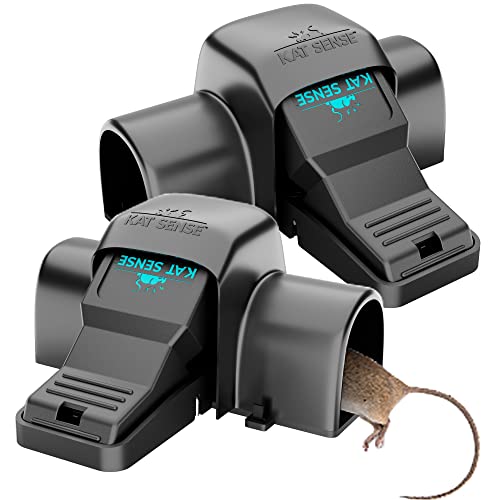
Type: Covered Tunnel Snap Trap. The design places the snapping mechanism inside a tunnel to reduce accidental triggering and keep captured rodents enclosed.
Strengths: Tunnel design improves targeting along narrow attic pathways and minimizes accidental contact for children and pets. The covered mechanism also reduces visible mess and handling exposure, which is helpful in attics where access is limited or insulation could be disturbed during disposal.
Considerations: These traps are intended for both mice and smaller rats; verify sizing for the species in your attic. Proper baiting and placement against likely travel routes yield the highest capture rates.
Victor Humane Mouse Traps M393SSR – Easy Set Reusable – Pack Of 6

Type: Reusable Easy-Set Snap Trap. This model emphasizes a one-click set and release with a high-impact kill bar for a swift catch.
Strengths: The easy-set mechanism reduces the risk of accidental snaps during setup, and the reusable design is practical for repeated attic use. The product notes suitability around family areas due to absence of chemicals and quick humane performance.
Considerations: As with other snap traps, positioning matters. For attic use, place these along baseboards, rafters, or in tamper-resistant enclosures to reduce non-target interactions and protect insulation.
OWLTRA Indoor Electric Mouse Trap – Instant Eliminate Zapper

Type: Battery-Powered Electronic Zapper. Infrared sensor-activated chamber delivers high-voltage elimination when a rodent enters.
Strengths: Infrared activation reduces false triggers; the enclosed chamber and pet-safe sensor make it a fit for attics that are occasionally accessed by pets or family. High-voltage quick elimination and no chemical use are advantages for indoor attic environments where poison or glue are undesirable.
Considerations: Requires batteries and periodic maintenance. Ensure the trap is rated for the rodent size you encounter; some large rats may not be suited. Placement should consider weather exposure — use indoors or in dry attic spaces only.
Buying Guide: Choosing The Right Attic Mouse Trap
Attic pest control has distinct considerations: limited access, insulation, wiring, varied rodent sizes, and occasional human or pet presence. Use this guide to choose based on those factors.
Type And Target Species
- Snap Traps: Fast kill, reusable or disposable. Effective for mice; choose heavier-duty snaps for larger rodents.
- Covered/Tunnel Traps: Enclosed snaps reduce accidental contact and visible mess—good for attics with limited access or where children/pets may be present.
- Electronic Zappers: Quick, hygienic, and often safer around pets due to sensors. Require batteries and dry placement.
- Glue Traps: Effective in certain situations but less humane and can be problematic in attics due to decomposition and non-target catches.
Sensitivity, Placement, And Coverage
- Sensitivity: Choose traps that activate at low weights if dealing with small mice in attics.
- Placement: Position traps along walls, rafters, and near entry points. Use multiple traps spaced along travel routes for best coverage.
- Quantity: Attics can hide multiple entry points—larger multi-packs allow broader coverage and staggered placement.
Safety And Non-Target Risks
- Pets and Children: Use covered traps, tamper-resistant housings, or electronic traps with sensors to limit accidental activation.
- Handling: Reusable traps that minimize direct contact during disposal reduce exposure to pathogens commonly found in attics.
Durability And Environmental Factors
- Dry vs. Damp Attics: Electronic and plastic traps handle humidity better than wooden traps. Glue boards may degrade in humid conditions unless specified otherwise.
- Longevity: Reusable traps can be more cost-effective long-term, but disposable boards or glue may be preferred for one-time heavy infestations.
Humane Considerations
- Swift Elimination: Snap and electronic traps are generally faster than glue traps and reduce prolonged suffering.
- Live Catch: If live removal is required, choose purpose-built live traps and follow local regulations for release.
Maintenance, Bait, And Monitoring
- Bait Selection: Use peanut butter, grains, or seeds for most mice; place bait inside cups or bait wells to prevent theft by non-target animals.
- Regular Checks: Attic traps should be checked frequently to avoid decomposition and odors that attract other pests.
- Inspection: Combine trapping with attic inspections for entry points, droppings, and nesting materials to guide trap placement and exclude future access.
Comparison Perspectives
- Effectiveness vs. Safety: Classic wooden snap traps are effective and inexpensive but less safe around non-targets. Covered and electronic options emphasize safety while maintaining effectiveness.
- Cost vs. Reusability: Multi-packs of reusable traps may cost more upfront but reduce long-term expense compared to disposable boards.
- Ease Of Use vs. Maintenance: Electronic traps offer hands-off operation but require battery upkeep. Simple snap traps require manual resets and disposal.
Use the attributes above to align trap choice with your attic’s conditions, safety priorities, and willingness to perform regular checks and maintenance.